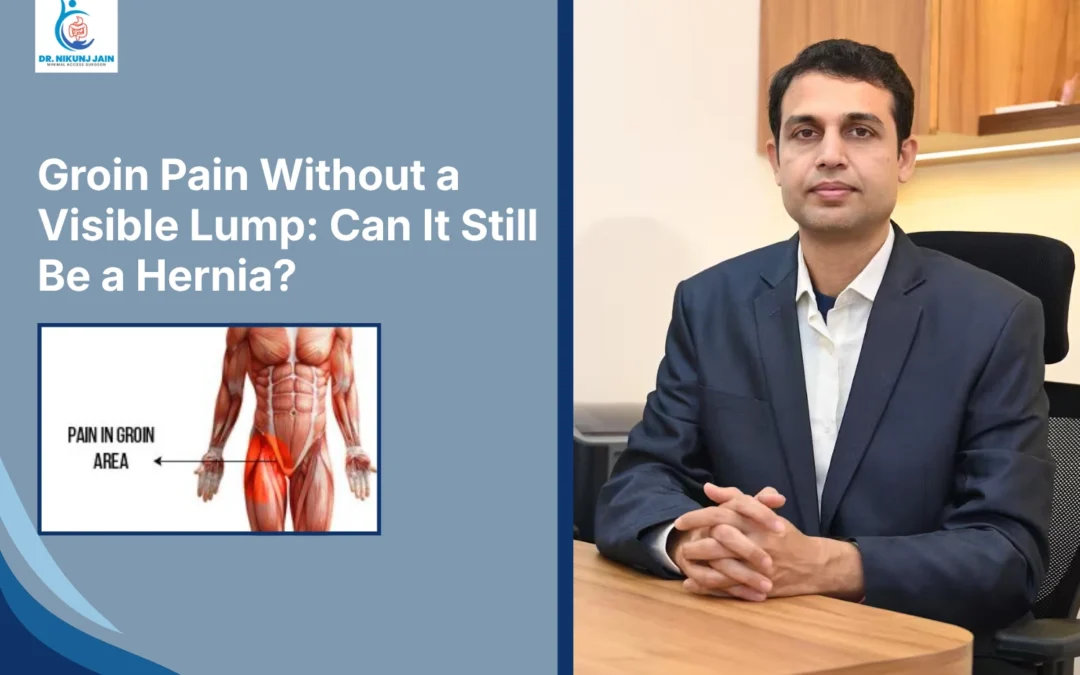
Groin pain often accompanies a hernia; however, there may not always be a visible bulge. If a person has chronic discomfort, heaviness, a pulling sensation, or pain in the groin without any obvious swelling, the cause could be an early or small hernia.
At the same time, several other conditions can also cause groin pain. Therefore, it is important to identify whether the pain is related to a hernia or another underlying problem.
If you are experiencing persistent groin pain, discomfort, or heaviness, consult Dr. Nikunj Jain, a surgical gastroenterologist and one of the best doctors for groin pain in Indore, for proper evaluation, diagnosis, and appropriate treatment.
Table of Contents
A Hernia May Exist Without a Visible Lump
A hernia develops when tissues such as fat or parts of the intestine push through weaknesses in the abdominal muscles. However, a hernia lump might not always be visible or palpable. Small hernias may only cause groin discomfort without any protrusion. Moreover, some hernias may only be visible when one is standing or coughing. If a hernia is small or deep, it may cause groin pain without causing any swelling.
Symptoms of Hernia
Groin pain caused by hernias can often take a variety of forms. It may range from occasional to constant and mild to severe. Some people may experience discomfort during physical activities while others may feel pain even at rest. Moreover, each person may experience hernia-related groin pain differently. The following are some examples of pain that may occur during a hernia:
• Aching or burning discomfort in the groin
• Heaviness in the lower abdomen
• Pain when coughing or sneezing
• Discomfort when lifting something heavy
• Pulling sensation around the groin
• Pain when standing for a long time
• Groin discomfort when exercising
• Groin pain that goes away when lying down
These symptoms, however, cannot be used to confirm a hernia because several other conditions may also lead to similar groin discomfort or pain.
Occult Hernias Can Be Difficult to Notice
A hernia with symptoms but without a visible lump is also known as an occult hernia. Most often, individuals with occult hernias are unaware that they have a hernia. Usually, a lump can only be seen or felt when coughing or straining. A hernia may also be detected when the doctor asks the patient to stand or cough.
Proper diagnosis is important to identify the exact cause and decide the right treatment.
How a Hernia Is Diagnosed
The initial evaluation for a hernia consists of obtaining a detailed history of symptoms. The doctor may ask if one feels pain while coughing, lifting, or exercising. Next, the physician will conduct a thorough physical examination of the groin while the patient is standing. The doctor may also ask them to cough or strain to see if they can see or feel a hernia.
If the symptoms suggest hernia, but the diagnosis is not clear on physical examination, an ultrasound scan of the groin may be advised. In certain circumstances, an MRI or CT scan may also be necessary to rule out other causes of groin discomfort or pain.
When Groin Pain Needs Medical Attention
Groin pain that occurs frequently when exercising or working out, or persists for several days, should not be ignored since it may be a sign of a hernia. The same goes for groin pain that is progressively getting worse. One should seek immediate medical attention in case of sudden, severe groin pain or pain that comes with nausea or vomiting. In addition, if the person notices a swollen groin area that does not seem to be improving, it is best to see a doctor.
Treatment Depends on the Diagnosis
• Muscle strain: Usually improves with rest, reduced activity, and appropriate care.
• Hernia:Hernias generally do not heal on their own and may require surgical repair.
• Surgical options: Hernia surgery may be performed using open, laparoscopic, or robotic-assisted techniques.
• Choice of surgery: The most suitable approach depends on the type and size of the hernia, symptoms, overall health, and individual patient factors.
• Proper diagnosis is important: A detailed examination helps determine whether surgery is needed and which treatment approach is most appropriate.
Conclusion
Yes, it is absolutely possible to have groin pain from a hernia with no visible lump. Small hernias or those that are concealed may cause groin discomfort as well as pain while coughing, lifting, or exercising. However, there are several other causes of groin pain.
One should see Dr. Nikunj Jain, Best Hernia Surgeon in Indore, for an examination if they are suffering from chronic or recurring groin discomfort or pain. It is crucial to detect the precise cause of groin pain since it will help identify the kind of treatment that is necessary to get better.
FAQs
Q1. Can you have a hernia without a lump? Yes. Small or hidden hernias may cause pain or discomfort without producing an obvious swelling.
Q2. What does a hidden hernia feel like? It may cause aching, burning, heaviness, pressure or a pulling sensation in the groin.
Q3. Can an inguinal hernia cause pain without swelling? Yes. An early or small inguinal hernia may cause symptoms before a noticeable bulge appears.
Q4. Does hernia pain increase while coughing? It can. Coughing increases pressure inside the abdomen and may make hernia-related discomfort more noticeable.
Q5. Can gym workouts cause groin pain? Yes. Muscle strains and hernias can both cause groin discomfort after exercise or heavy lifting.
Q6. How is a hidden hernia diagnosed? Diagnosis may involve physical examination and, when necessary, imaging such as ultrasound, MRI or CT.
Q7. Can a hernia disappear while lying down? Some reducible hernias become less noticeable or disappear temporarily when a person lies down.
Q8. Does every groin hernia need surgery? Treatment depends on the type of hernia, symptoms and individual circumstances. A surgeon can advise whether surgery is appropriate.
Q9. When is groin pain an emergency? Sudden severe pain, vomiting, abdominal swelling or a painful lump that cannot be pushed back requires urgent medical attention.
Q10. Who should I consult for hernia symptoms in Indore? You can consult Dr. Nikunj Jain, best hernia doctor in indore, for evaluation and appropriate treatment.
A hernia develops when an internal organ or tissue pushes through a weak area in the surrounding muscle or abdominal wall. It may present as a visible swelling or bulge and can cause pain, heaviness or discomfort, especially while coughing, lifting weights or standing for long periods.
For people looking for hernia surgery in Indore, it is important to get the condition assessed early. While a hernia may seem small initially, it does not heal on its own and can gradually become more troublesome.
Surgery is the definitive treatment for most symptomatic hernias. Depending on the type, size and complexity of the hernia, Dr. Nikunj Jain may recommend open, laparoscopic or robotic hernia surgery in Indore.
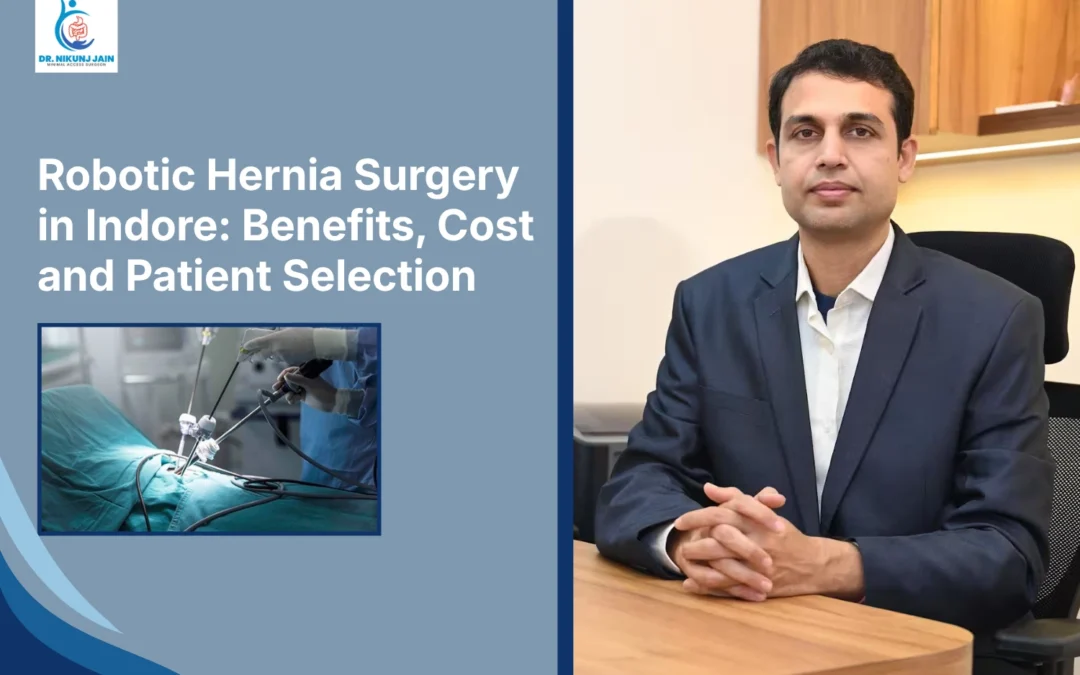
Robotic hernia surgery is a minimally invasive approach performed through small incisions. It gives the surgeon enhanced visualisation and greater precision while repairing the hernia, making it a suitable option for selected patients. For expert evaluation and laparoscopic hernia surgery in Indore, consult Dr. Nikunj Jain.
Table of Contents
Understanding Robotic Hernia Surgery
During robotic hernia surgery, small incisions are made in the abdomen through which a camera and specialised surgical instruments are inserted.
The surgeon sits at a console and controls the robotic instruments throughout the procedure. The robot does not perform the operation independently. Every movement is controlled by the surgeon.
Depending on the type of hernia, the weak area may be closed and surgical mesh may be placed to strengthen the abdominal wall. Robotic surgery can be used for selected inguinal, ventral, incisional and recurrent hernias.
Benefits of Robotic Hernia Surgery
Robotic surgery is a type of minimally invasive surgery. Compared with conventional open surgery, minimally invasive hernia repair may offer certain benefits in suitable patients.
These may include:
Smaller incisions
Less postoperative pain in some patients
Lower risk of wound-related complications
Shorter hospital stay in selected cases
Faster return to routine activities
Smaller scars
Better visualisation of the surgical area
Greater movement and precision of surgical instruments
The exact benefits vary according to the type of hernia, complexity of the operation and the patient’s overall health.
Professional surgical guidance also notes that robotic and laparoscopic hernia repair in Indore can have similar outcomes in many situations, so robotic surgery is not automatically the preferred option for every patient.
Hernias That May Be Treated Robotically
Robotic surgery may be considered for different types of hernias, including:
Inguinal hernia
Ventral hernia
Umbilical hernia
Incisional hernia
Recurrent hernia
Certain complex abdominal wall hernias
The choice of surgical technique depends on the size and location of the hernia, previous operations, whether the hernia has returned and the surgeon’s assessment. Dr. Nikunj Jain, best hernia surgeon in Indore, gives you a treatment plan tailored according to your condition. Previous hernia repairs, larger defects and incarcerated hernias can increase the complexity of minimally invasive repair and need to be considered when planning surgery.
Patient Selection for Robotic Hernia Surgery
Not every patient with a hernia requires robotic surgery. Before recommending an approach, the surgeon usually considers:
Type and location of the hernia
Size of the hernia defect
Whether it is a first-time or recurrent hernia
Previous abdominal surgeries
Body weight
Other medical conditions
Symptoms and their severity
Risk of complications
Overall fitness for anaesthesia and surgery
Some patients may be better suited for open or conventional laparoscopic surgery. A personalized evaluation helps determine which approach is appropriate rather than choosing surgery based only on the technology being used.
Cost of Robotic Hernia Surgery in Indore
The cost of robotic hernia surgery in Indore is not the same for every patient.
General hernia surgery estimates in Indore vary considerably depending on the hospital and procedure. Current online estimates for hernia surgery in the city start around ₹70,000 and may range higher depending on the case. Robotic surgery may cost more than conventional laparoscopic or open surgery because of specialised equipment, robotic operating systems and related hospital charges.
The final cost may depend on:
Type and complexity of hernia
Robotic procedure selected
Hospital and room category
Surgeon and anaesthesia fees
Mesh and surgical materials
Preoperative investigations
Duration of surgery
Length of hospital stay
Medicines
Additional medical conditions
Therefore, an exact cost estimate of hernia surgery in Indore, should be given only after clinical examination and evaluation of the hernia.
Robotic Surgery Compared with Laparoscopic Surgery
Both robotic and laparoscopic hernia surgery are minimally invasive approaches performed through small incisions.
Robotic surgery provides the surgeon with articulated instruments and enhanced visualisation, which may be useful during selected technically complex repairs. However, evidence does not suggest that robotic surgery is necessarily better for every routine hernia. The American College of Surgeons notes that robotic and laparoscopic ventral hernia repairs have similar outcomes, while robotic procedures can involve higher costs.
The appropriate approach should therefore be selected according to the individual hernia and the surgeon’s clinical judgement.
When to Consult a Hernia Surgeon
A hernia should be evaluated if you notice a swelling or bulge in the abdomen or groin, particularly when associated with pain or discomfort. Medical evaluation is particularly important when the swelling is increasing in size or interfering with daily activities.
Sudden severe pain, vomiting or a hernia swelling that becomes painful and cannot be pushed back may indicate an incarcerated or obstructed hernia and requires urgent medical attention. If you are considering robotic hernia surgery in Indore, consult Dr. Nikunj Jain for evaluation of the hernia and guidance regarding the most suitable surgical approach.
Conclusion
Robotic hernia surgery is one of the minimally invasive options available for treating selected hernias. Small incisions, enhanced visualisation and greater instrument movement can be useful in appropriate patients, particularly in certain complex repairs.
However, robotic surgery is not required for every hernia. The type, size and complexity of the hernia, previous surgeries, overall health and expected benefits should all be considered before choosing an approach.
The cost of robotic hernia surgery in Indore can also vary according to the procedure, hospital, mesh, medical requirements and length of stay.
For personalised evaluation, treatment options and an accurate cost estimate for hernia surgery in Indore, consult Dr. Nikunj Jain, best hernia doctor in Indore.
FAQs
Q1. What is robotic hernia surgery? Robotic hernia surgery is a minimally invasive procedure in which the surgeon controls specialised robotic instruments through small abdominal incisions to repair the hernia.
Q2. Does the robot perform hernia surgery automatically? No. The robotic system does not operate independently. The surgeon controls all movements of the instruments throughout the procedure.
Q3. Which hernias can be treated with robotic surgery? Selected inguinal, ventral, umbilical, incisional and recurrent hernias may be suitable for robotic repair.
Q4. What are the benefits of robotic hernia surgery? Possible benefits include smaller incisions, enhanced surgical visualisation, precise instrument movement, a shorter hospital stay and potentially faster recovery in suitable cases.
Q5. Is robotic hernia surgery better than laparoscopic surgery? Not necessarily. Both are minimally invasive techniques, and studies and surgical guidance indicate comparable outcomes in many situations. The suitable approach depends on the individual case.
Q6. How much does robotic hernia surgery cost in Indore? The cost varies according to the type of hernia, hospital, mesh, robotic equipment, surgeon fees, tests and length of hospital stay. A personalised estimate can be provided after examination.
Q7. How long is the hospital stay after robotic hernia surgery? Hospital stay varies according to the procedure and the patient’s recovery. Many minimally invasive hernia repairs involve a short hospital stay.
Q8. Can a recurrent hernia be treated robotically? Some recurrent hernias can be treated using robotic surgery, but previous repairs can make surgery more complex. Patient selection requires proper evaluation.
Q9. Is mesh used in robotic hernia surgery? Mesh is commonly used in many hernia repairs to strengthen the weakened area, although the decision depends on the type of hernia and individual clinical situation.
Q10. Who should I consult for robotic hernia surgery in Indore? You can consult Dr. Nikunj Jain in Indore for evaluation of your hernia and guidance regarding robotic, laparoscopic or other suitable surgical treatment options.
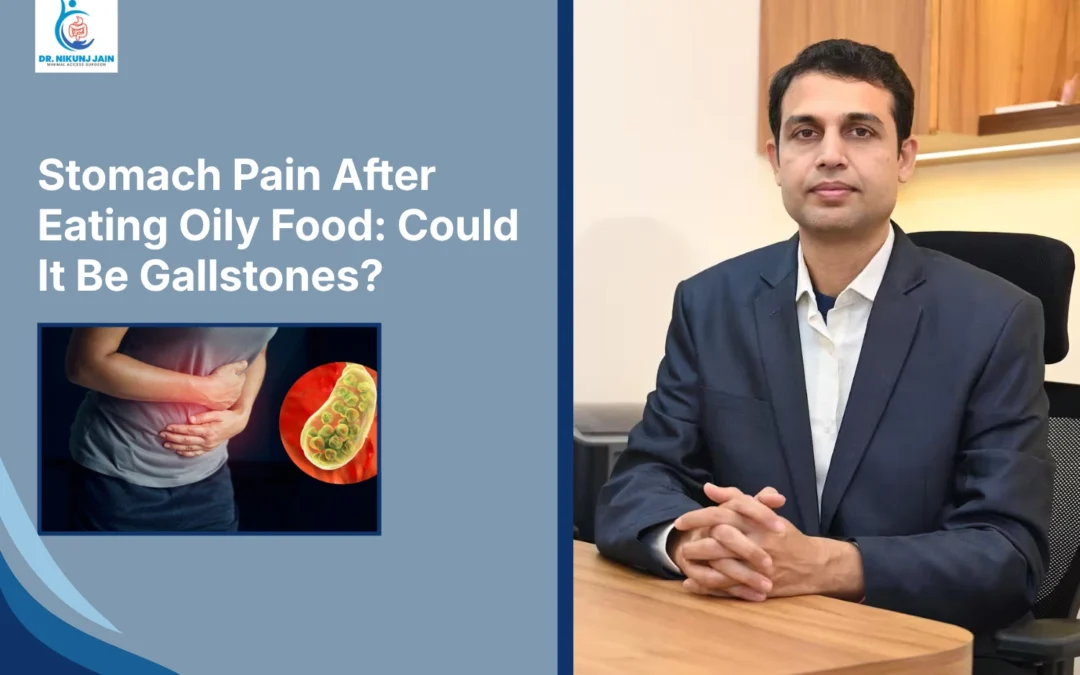
Experiencing stomach pain after eating fatty food is a common complaint. Sometimes this pain may be caused by indigestion, acidity or overeating. However if pain keeps returning after meals after fried, oily or high-fat foods pain may be related to gallbladder stones.
Gallstones are hardened deposits that form inside the gallbladder, an organ below the liver. The gallbladder stores bile, a fluid that helps the body break down fats. When gallbladder stones block the flow of bile, gallstones can cause pain and other digestive symptoms.
For persistent pain after oily food, consult Dr. Nikunj Jain for gallbladder stones treatment in Indore and gallbladder surgery in Indore.
Table of Contents
Why Oily Food Can Trigger Gallbladder Stones Pain
After a fatty or oily meal, the gallbladder contracts to release bile into the intestine to help digest fat. If gallstones are present, one gallstone may block the opening through which bile flows. This blockage can cause pressure inside the gallbladder and lead to pain. This type of pain is often called colic. Pain may begin after a heavy or fatty meal and can last from several minutes to a few hours.
Not every person with gallbladder stones has symptoms. Some people may have gallstones for years without knowing about them. Problems usually begin when a gallstone blocks the bile duct or causes inflammation.
Common Symptoms of Gallstones
The common symptom of gallstones is pain in the upper-right side or upper-middle part of the abdomen. Other symptoms may include:
Pain After Eating Fatty Food
Pain That Spreads Towards The Right Shoulder or Back
Nausea
Vomiting
Abdominal Bloating
Indigestion
Feeling Unusually Full After Meals
Burping Or Discomfort After Eating
Pain may appear suddenly and become intense. In some patients, symptoms may improve after a few hours and then return after another fatty meal.
How Gallstone Pain Is Different from Acidity
gallbladder stones pain and acidity can sometimes feel similar which is why people may ignore symptoms for some time. Acidity usually causes a burning sensation in the abdomen or chest. Acidity may be associated with belching, heartburn or a burning feeling in the throat.
Gallbladder stones pain is usually deeper and more intense. gallbladder stones pain commonly occurs in the upper-right abdomen or just below the ribs and may spread to the back or right shoulder. If pain keeps appearing after meals it is better to get evaluated rather than assuming pain is only gas or acidity.
When Gallstones Become Serious?
Gallbladder stones may become more serious if they block the bile duct for a longer period or lead to inflammation of the gallbladder. Seek attention if abdominal pain is accompanied by:
Fever or Chills
Persistent Vomiting
Yellowing Of The Eyes or Skin
Severe Pain That Does Not Improve
Dark Urine
Pale Stools
Increasing Abdominal Tenderness
These symptoms may indicate complications such as gallbladder inflammation, infection, blockage of the bile duct or pancreatitis. Severe or rapidly worsening pain should be evaluated urgently.
Treatment of Gallstones
Treatment depends on whether gallstones are causing symptoms. Gallstones that do not cause any symptoms may not always require treatment. However if repeated pain inflammation or complications occur treatment may be advised.
The common treatment for symptomatic gallstones is removal of the gallbladder through laparoscopic surgery. This procedure is known as laparoscopic cholecystectomy. The surgery is performed through cuts in the abdomen and is commonly used for patients with repeated gallstone attacks.
The gallbladder is not essential for survival. Most people can digest food normally after its removal.
Can Diet Prevent Gallstone Pain?
Dietary changes may help reduce symptoms but they do not remove existing gallbladder stones. Patients who experience pain after meals may be advised to reduce:
Fried Foods
Oily Meals
High-Fat Dairy Products
Processed Foods
Heavy Or Very Large Meals
Eating Smaller Balanced Meals May Help Reduce Discomfort
However if symptoms keep returning dietary changes alone should not replace evaluation.
When to Consult a Gastro Surgeon in Indore
Recurring stomach pain after eating food should not be ignored, especially if the pain is in the upper-right abdomen or comes with nausea or vomiting.
If you are experiencing symptoms that may be related to gallstones in Indore, you can consult Dr. Nikunj Jain for evaluation and guidance regarding suitable treatment.
Conclusion
Stomach pain after eating oily food can have several causes but repeated pain after fatty meals may be a sign of gallstones. Gallbladder stones pain commonly occurs in the right side of the abdomen and may be associated with nausea, vomiting, bloating or pain spreading towards the back or shoulder.
If the symptoms keep returning, proper medical evaluation is important. Ultrasound and other tests can help confirm the diagnosis and determine whether treatment is required. If you are experiencing recurring pain after oily food consult Dr. Nikunj Jain, best gastro surgeon in Indore, for appropriate diagnosis and treatment. Severe pain, fever, persistent vomiting or jaundice should be treated as warning signs. Evaluated without delay.
FAQs
Q1. Can gallstones cause pain after eating oily food? Yes. Fatty or oily foods cause the gallbladder to contract, which may trigger pain if gallstones are blocking the flow of bile.
Q2. Where is gallstone pain usually felt? Gallstone pain is commonly felt in the upper-right or upper-middle abdomen and may spread towards the back or right shoulder.
Q3. How long can gallstone pain last? Gallstone pain may last from several minutes to a few hours, depending on the degree and duration of blockage.
Q4. Can gallstone pain feel like acidity or gas? Yes. Gallstone symptoms can sometimes resemble indigestion, acidity or gas, which is why proper medical evaluation is important.
Q5. Which test is commonly used to detect gallstones? An abdominal ultrasound is one of the most commonly used tests for detecting gallstones and checking the gallbladder.
Q6. Do all gallstones require surgery? No. Gallstones that do not cause symptoms may not always require treatment. Surgery is commonly considered when stones cause repeated pain or complications.
Q7. What is the surgery for gallstones called? The common operation is laparoscopic cholecystectomy, in which the gallbladder is removed through small incisions.
Q8. Can diet dissolve existing gallstones? Dietary changes may reduce symptoms in some people, but they generally do not remove or dissolve existing gallstones.
Q9. When should gallstone pain be treated as an emergency? Severe persistent pain, fever, repeated vomiting, jaundice or increasing abdominal tenderness requires urgent medical attention.
Q10. Which doctor should I consult for gallstones in Indore? You can consult Dr. Nikunj Jain in Indore for evaluation, diagnosis and guidance regarding suitable treatment for gallstones.
Bariatric surgery is another name for weight loss surgery or metabolic surgery. This is an option for some people who have high body weight and have not been able to lose weight with changes in lifestyle and traditional ways of managing weight. These surgeries can help people lose a lot of weight and also improve health problems that come with being very overweight.
One of the common questions people ask before starting treatment is how much does bariatric surgery cost in Indore. The price is not the same for everyone. It can change based on the kind of surgery, the hospital, the health of the person, the tests needed, how long they stay in the hospital and other medical things.
Some estimates say the cost of surgery in Indore can be between about 200,000 rupees and 600,000 rupees. Dr. Nikunj Jain, best bariatric surgeon in Indore, says laparoscopic bariatric surgery costs around 250,000 to 450,000 rupees.
Table of Contents
What is Bariatric Surgery?
Bariatric surgery includes operations that change the stomach, some also change the tract to help with weight loss. Depending on the person’s health, weight and needs the surgery can include:
Laparoscopic Sleeve Gastrectomy
Gastric Bypass
Mini Gastric Bypass or One-Anastomosis Gastric Bypass
Other bariatric or metabolic procedures when needed
Hospitals in Indore offer Sleeve Gastrectomy, Roux-en-Y Gastric Bypass (RYGB), and Mini Gastric Bypass/One Anastomosis Gastric Bypass (MGB/OAGB) as bariatric surgery options.
Cost of Bariatric Surgery Cost in Indore?
The cost of surgery in Indore can be between 250,000 rupees and 500,000 rupees or even more depending on the surgery and the hospital.
This range is just an estimate and it is not the final price.
Some health care estimates say the range in Indore is between 220,000 rupees and 600,000 rupees depending on the hospital and what is needed. The final cost can only be known after the person is checked and the right procedure is chosen.
Factors affecting the Cost of Bariatric Surgery
There are things that can change the total cost.
1. Type of Bariatric Procedure
Each type of surgery has different steps and needs, so the cost can be different.
2. Hospital and Room Category
The hospital’s facilities, the operating room, the room chosen and how long the person stays can affect the bill.
3. Medical Team Fees
The total price might include the cost of the surgeon, the anaesthetist and other medical people involved in the surgery.
4. Pre-Surgery Tests
Before surgery, people usually have to get tests to check their health and see if they are ready for surgery. These tests can be different for each person and can add to the total cost.
5. Medical Conditions
People with diabetes, blood pressure, sleep apnoea or other health issues related to weight may need more checks or care before and after surgery.
6. Hospital Stay
How long a person is in the hospital depends on the type of surgery, and also how they recover. A longer stay can make the cost higher.
7. Medicines and Surgical Supplies
Anaesthesia, medicines, special tools and other supplies can also add to the cost.
8. Follow-Up and Nutrition Support
Bariatric treatment does not end after surgery. Follow-up visits, diet advice, vitamins and checking are part of long-term care.
Inclusions in Bariatric Surgery Package
What is included can be different for each hospital. A bariatric surgery package usually includes:
Hospital admission
Surgeon fees
Anaesthesia fees
Operating theatre fees
Standard surgical supplies
Room fees for the time needed
Medicines during hospital stay
Initial care after surgery
Patients should always ask what is included and what is not before moving forward with treatment.
Pre-Surgery Tests and Their Cost for Bariatric Surgery
Not always. Some hospitals include tests in their package while others charge separately.
Based on the person’s health, tests can be blood tests, heart checks, scans and other tests the doctors think are needed.
So patients should ask for a cost estimate instead of just looking at the price of the surgery.
Is bariatric surgery the best choice?
Cost is important but it should not be the only thing to think about when choosing bariatric treatment. The right surgery should be chosen based on the person’s weight, health, eating habits, past treatments and overall health.
Patients should also think about:
Getting the right check-up
Hospitals facilities
Anaesthesia and care after surgery
Follow-up care
Nutrition support
The experience of the doctors
Choosing the right surgery and getting proper follow-up after is very important in bariatric treatment.
When should you talk to a surgeon?
If being very overweight is making health, movement or life quality worse after trying lifestyle and medical weight loss methods, a qualified bariatric surgeon near you can help decide if surgery is right.
Dr. Nikunj Jain, best gastro surgeon in Indore, can look at the person’s history, weight, health issues and what is needed before discussing the right bariatric surgery options and a cost estimate.
Conclusion
The cost of surgery in Indore changes based on the surgery type, hospital, tests, health and how long the hospital stay is. Current estimates are very different with private surgeries costing about 250,000 to 500,000 rupees or more. The exact cost should be checked after a check-up and medical check.
Cost should not be the only thing to think about when choosing weight loss surgery. Choosing the right bariatric procedure for each patient and ensuring proper follow-up care are equally important.
If you are thinking about surgery in Indore talk to Dr. Nikunj Jain, top weight loss surgeon in Indore, for a personal check, a discussion, on the best weight loss surgery options and an exact cost estimate.
FAQs
Q1. What is the cost of bariatric surgery in Indore?
Bariatric surgery in Indore may approximately cost ₹2.5 lakh to ₹5 lakh or more depending on the procedure, hospital and individual medical requirements. Published estimates vary, so an individual quotation is necessary.
Q2. Why does bariatric surgery cost vary between different patients?
The total cost depends on the type of surgery, hospital category, investigations, patient’s medical condition, surgical consumables and duration of hospitalisation.
Q3. What is the cost of laparoscopic bariatric surgery in Indore?
Dr. Nikunj Jain’s published information lists laparoscopic bariatric surgery at approximately ₹2.5 lakh to ₹4.5 lakh, although actual costs depend on the individual case.
Q4. Which bariatric surgeries are commonly performed?
Common procedures include sleeve gastrectomy, gastric bypass and mini or one-anastomosis gastric bypass. The suitable procedure depends on individual medical assessment.
Q5. Are tests included in the bariatric surgery package?
This varies between hospitals. Some packages include routine investigations, while specialised tests may be charged separately.
Q6. How long is the hospital stay after bariatric surgery?
The duration varies according to the procedure and recovery. Some bariatric centres in Indore advertise approximately three-day packages, although individual hospitalisation may be shorter or longer.
Q7. Does health insurance cover bariatric surgery?
Coverage depends on the medical indication and terms of the insurance policy. Patients should obtain pre-authorisation or confirmation from their insurer before surgery.
Q8. Is bariatric surgery available under Ayushman Bharat in Indore?
As reported in February 2026, Maharaja Yashwantrao Hospital in Indore began offering bariatric surgery services with coverage for eligible Ayushman beneficiaries. Eligibility and current availability should be confirmed with the hospital.
Q9. Is bariatric surgery only for weight loss?
Bariatric surgery primarily supports significant weight loss but may also help improve certain obesity-associated health conditions in appropriately selected patients.
Q10. Who should I consult for bariatric surgery in Indore?
If you are considering bariatric surgery, you can consult Dr. Nikunj Jain in Indore for evaluation, discussion of suitable procedures and a personalised estimate of treatment costs.
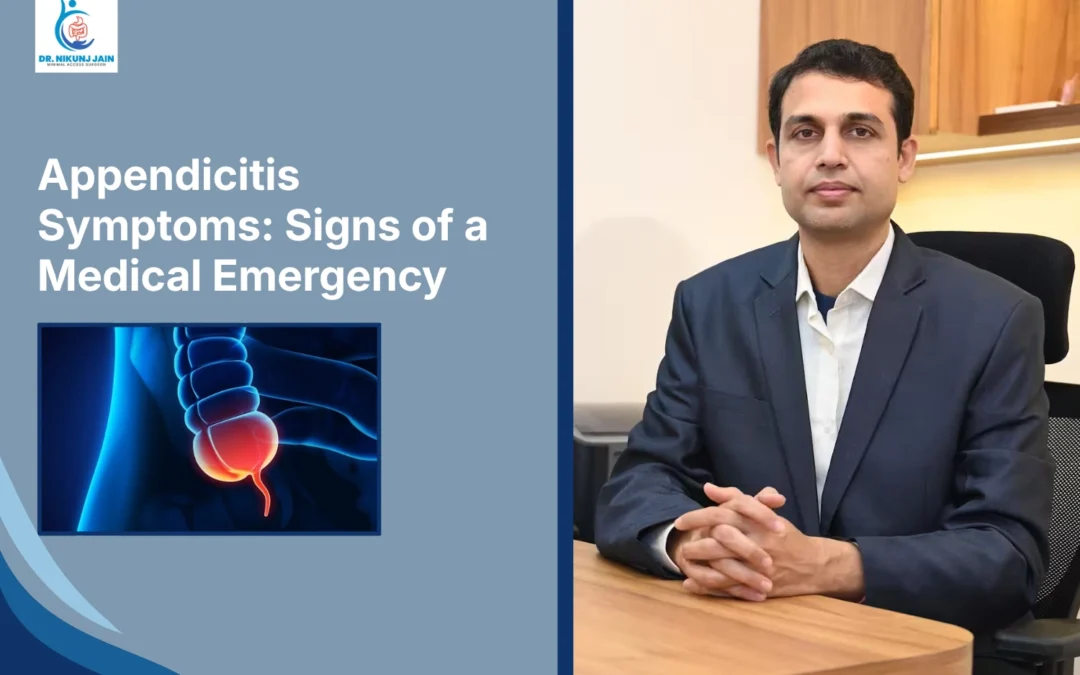
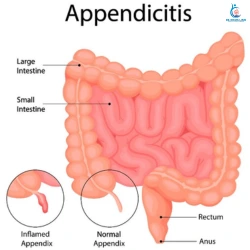
Appendicitis is a disease in which the appendix, a pouch that is attached to the large intestine, becomes inflamed or infected. Appendicitis is a cause of sudden abdominal pain and usually requires urgent medical care. If treatment is delayed, the appendix can cause serious complications.
Recognising the signs of appendicitis is important. Abdominal pain is usually the main symptom of appendicitis, but the location and intensity of the pain can differ from one person to another.
If you experience persistent or worsening abdominal pain, nausea, vomiting, fever, or pain that shifts towards the lower right side of the abdomen, timely medical evaluation is important. For proper diagnosis and treatment of appendicitis, consult Dr. Nikunj Jain, Surgical Gastroenterologist in Indore. Early evaluation can help prevent complications and ensure appropriate treatment.
Table of Contents
Early Symptoms of Appendicitis
Appendicitis often starts with discomfort or pain around the belly button. Over the few hours the pain can shift toward the lower-right side of the abdomen and gradually become more severe.
Common symptoms may include:
Pain around the belly button that moves toward the abdomen
Increasing pain
Pain that becomes worse while walking, coughing or making movements
Nausea
Vomiting
Loss of appetite
Fever
Abdominal bloating
Constipation or diarrhoea
Not all people experience the same symptoms of appendicitis. The location of the pain may also differ in children, older adults and pregnant women.
Location of Appendicitis Pain
A feature of appendicitis is pain that begins around the belly button and later moves toward the lower-right side of the abdomen.
The pain of appendicitis usually becomes more intense over time. Walking, coughing, sudden movements or pressure over the area can make the pain worse.
However appendicitis does not always follow this pattern. The exact position of the appendix can differ slightly between individuals, which means the pain of appendicitis may sometimes be felt in an area of the abdomen.
Appendicitis as a Medical Emergency
Appendicitis requires medical evaluation because an untreated appendix can rupture. A ruptured appendix can allow infection to spread inside the abdomen and can lead to complications such as peritonitis, an abdominal abscess or sepsis.
Seek medical attention if abdominal pain is:
Getting worse instead of improving
Moving toward the side of the abdomen
Accompanied by fever
Associated with repeated nausea or vomiting
Making the abdomen very tender or swollen
Suddenly spreading across the abdomen
Abdominal pain should never be ignored or self-diagnosed.
Sudden Improvement in Appendicitis Pain
A reduction in pain does not always mean that the condition of appendicitis is getting better.
If the appendix ruptures the pain of appendicitis may briefly become less intense before returning as widespread abdominal pain when the infection begins to spread.
For this reason any sudden or unusual change in abdominal pain of appendicitis should be medically evaluated.
Causes of Appendicitis
Appendicitis usually develops when the opening of the appendix becomes blocked. Once the blockage occurs, mucus and bacteria can build up inside the appendix, leading to increased pressure, swelling, inflammation and infection.
The blockage may occur due to hardened stool, swelling of the lymphatic tissue after an infection, or, less commonly, other material obstructing the appendix. As the pressure inside the appendix increases, its blood supply may become reduced and the infection can worsen.
If appendicitis is not treated in time, the appendix may eventually rupture, allowing infection to spread into the abdomen.
Appendicitis can affect people of any age, although it is more commonly seen in children, teenagers and young adults.
Diagnosis of Appendicitis in Indore
The symptoms of appendicitis can resemble other abdominal conditions so proper diagnosis of appendicitis usually requires a medical examination.
The doctor may examine the abdomen for tenderness, swelling and the location of the pain of appendicitis. Depending on the symptoms further tests may be advised to confirm the diagnosis or rule out conditions.
These may include:
Blood tests
Urine tests
Ultrasound
CT scan
Pregnancy testing when appropriate
There is no test that can diagnose every case of appendicitis. Doctors usually consider the symptoms of appendicitis, the physical examination and the investigation results together before deciding on treatment.
Treatment of Appendicitis
Treatment of appendicitis depends on the patient’s symptoms, condition and the severity of the inflammation.
Surgery to remove the appendix, known as an appendectomy or appendicectomy is one of the common treatments, for appendicitis. Antibiotics may also be used depending on the case of appendicitis.
If the appendix of appendicitis has already ruptured or an abscess has formed additional treatment may be required to control the infection.
Early diagnosis and treatment of appendicitis can help reduce the risk of complications.
Waiting for Appendicitis Pain to Go Away
Persistent or worsening abdominal pain should not simply be ignored when appendicitis is a possibility.
Many other conditions can also cause pain, including kidney stones, urinary tract infections, gallstones and certain intestinal or gynaecological conditions. Because the symptoms of appendicitis can overlap, a proper medical assessment is important.
It is better not to diagnose appendicitis based on where the pain is located.
When to Consult a Surgeon
I have seen patients who were unsure about their abdominal pain. If you develop abdominal pain especially when the pain moves to the lower-right side and is accompanied by nausea, vomiting, fever or loss of appetite seek medical advice promptly.
If you notice symptoms that may suggest appendicitis in Indore consult Dr. Nikunj Jain, best GI surgeon in Indore, for evaluation and guidance on suitable treatment. Severe or rapidly worsening pain must be treated as an emergency and evaluated at a hospital without delay.
Conclusion
Appendicitis may begin with abdominal discomfort but appendicitis can become more serious within a short period of time. Pain that starts around the belly button and moves towards the side of the abdomen especially when accompanied by nausea, vomiting, fever or loss of appetite should not be ignored.
Without treatment the appendix may rupture and cause serious complications. Early medical evaluation can help ensure diagnosis and correct treatment.
If you are concerned about appendicitis symptoms consult Dr. Nikunj Jain, best laparoscopic surgeon in Indore, for appropriate evaluation and treatment. In cases of severe or rapidly worsening pain seek emergency medical care immediately.
FAQs
Q1. What are the first symptoms of appendicitis?
Appendicitis may initially cause pain around the belly button, which commonly moves towards the lower-right abdomen. Nausea, loss of appetite and fever may also occur.
Q2. Where is appendicitis pain usually located?
Appendicitis pain commonly becomes concentrated in the lower-right side of the abdomen, although the exact location can vary.
Q3. How do I know if abdominal pain could be appendicitis?
Pain that becomes progressively worse, moves from around the belly button towards the lower-right abdomen and occurs with nausea, vomiting, fever or loss of appetite may require urgent medical assessment.
Q4. Can appendicitis occur without fever?
Yes. Not every patient experiences every typical symptom, so the absence of fever does not by itself rule out appendicitis.
Q5. Can appendicitis cause vomiting?
Yes. Nausea and vomiting are commonly associated with appendicitis, particularly when they occur along with worsening abdominal pain.
Q6. Can appendicitis pain come and go?
Appendicitis pain generally becomes progressively worse, but symptoms can vary between individuals. Persistent or worsening abdominal pain should be medically assessed.
Q7. What happens if the appendix bursts?
A ruptured appendix may spread infection inside the abdomen and lead to complications such as peritonitis, abscess formation or sepsis. This requires urgent medical treatment.
Q8. How is appendicitis diagnosed?
Diagnosis may involve abdominal examination, blood and urine tests and imaging such as ultrasound or CT scan, depending on the individual case.
Q9. Does appendicitis always require surgery?
Surgery to remove the appendix is a common treatment, while antibiotics may also form part of management in selected situations. Treatment should be decided after medical evaluation.
Q10. Who should I consult for appendicitis treatment in Indore?
If you have symptoms suggestive of appendicitis, you can consult Dr. Nikunj Jain, best gastro surgeon in Indore for evaluation and appropriate treatment guidance. Severe abdominal pain or rapidly worsening symptoms require immediate hospital assessment.
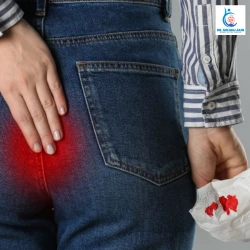
Piles, medically known as haemorrhoids, are swollen blood vessels in or around the anus or lower rectum. They may cause bleeding during bowel movements, itching, discomfort, swelling, pain, or a lump around the anus. Some individuals may experience only mild symptoms, whereas others may develop prolapsing piles that require medical or surgical treatment.
One of the most common questions patients ask is, “How much does piles treatment cost in Indore?” According to Dr. Nikunj Jain, best piles doctor in Indore, the cost of treatment can vary depending on the severity and grade of piles, response to medication, type of procedure required, selected hospital, and several other factors. A proper medical evaluation is important to determine the most suitable treatment option and expected cost for each patient.
Table of Contents
What Are Piles?
Piles, also known as haemorrhoids, are swellings or inflamed vascular tissues located inside or around the anus. They are broadly classified as:
Internal piles: Develops inside the lower rectum and may cause painless bleeding or prolapse.
External piles: Develops under the skin around the anus and may cause pain, swelling or itching.
Internal piles are also classified into four grades.
Grade 1: The haemorrhoids remain inside the anal canal.
Grade 2: The piles may come out during bowel movements but return inside on their own.
Grade 3: The piles prolapse and usually need to be manually pushed back inside.
Grade 4: The piles remain permanently prolapsed and cannot normally be pushed back inside.
Treatment and cost can vary substantially depending upon the grade.
Piles Treatment Cost in Indore
An approximate comparison is:
Treatment
Approximate Cost
Medication and conservative care
Lowest-cost option
Rubber band ligation
Approximately ₹25,000 onwards
Laser piles treatment
Approximately ₹40,000–₹65,000+
Conventional haemorrhoidectomy
Approximately ₹48,000–₹85,000
Stapler procedure
Approximately ₹40,000–₹70,000
These figures are only indicative. The surgeon should first examine the patient and determine the type and grade of haemorrhoids before providing an exact cost estimate.
Treatment Options for Piles
1. Medication for Piles
Medication and lifestyle changes are generally the first approach for mild piles.
Treatment may involve:
Increasing dietary fibre
Fibre supplements
Stool softeners when required
Adequate fluid intake
Warm sitz baths
Medicines for pain or discomfort
Topical creams or ointments
Avoiding excessive straining during bowel movements
Medication is generally much cheaper than a surgical procedure. Individual creams and piles-related products may cost from roughly ₹100 to several hundred rupees. However, prescription combinations, supplements, doctor’s consultation and duration of treatment can increase the overall expense.
Medication primarily helps control symptoms and may not adequately treat advanced prolapsing haemorrhoids.
2. Laser Piles Treatment Cost in Indore
Laser treatment has become a commonly discussed option for piles because selected laser techniques aim for shrinking haemorrhoidal tissue using controlled laser energy.
Laser piles treatment in Indore generally ranges from around ₹40,000 to ₹65,000 or more depending upon the grade of piles, hospital and complexity of the procedure.
The cost may include:
Surgeon charges
Laser equipment
Anaesthesia
Operation theatre charges
Diagnostic investigations
Hospital charges
Medicines
Postoperative consultation
Laser treatment may provide benefits such as reduced tissue trauma and potentially quicker return to routine activities in appropriately selected cases. However, lasers are not automatically the best treatment for every patient.
It remains an important treatment, particularly for patients with substantial external haemorrhoids or advanced combined internal and external disease.
Open haemorrhoidectomy in Indore may approximately cost ₹48,000–₹85,000, depending upon the hospital, surgeon, anaesthesia, severity of piles and hospital stay.
Traditional surgery may involve more postoperative discomfort and a longer recovery period than some minimally invasive approaches, but it can provide effective treatment for advanced disease.
Laser vs Surgery vs Medication
Factor
Medication
Laser Treatment
Surgery
Suitable for
Mild/early piles
Selected piles
Advanced piles
Anaesthesia
Usually not required
Usually required
Required
Hospitalisation
No
Often day-care
May be required
Recovery
No surgical recovery
Relatively quicker
Usually longer
Approximate cost
Lowest
₹40,000–₹65,000+
₹48,000–₹85,000
The treatment should be selected according to the patient’s condition rather than cost alone.
Factors Affecting Piles Treatment Cost in Indore
The final cost may depend upon:
Grade of piles
Type of procedure
Surgeon’s experience
Hospital or surgical centre
Type of anaesthesia
Diagnostic tests
Hospital stay
Medicines and follow-up
Associated conditions such as fissure or fistula
Which Piles Treatment Is Best?
There is no single procedure that is best for every patient.
For mild symptoms, fibre, improved bowel habits and medication may be sufficient. For persistent Grade 1–2 piles and selected Grade 3 disease, office procedures may be considered. For advanced Grade 3–4 haemorrhoids, large external piles or combined disease, surgical treatment may be more appropriate.
Conclusion
The cost of piles treatment in Indore depends largely on the severity of the condition and the type of treatment required. Medication and lifestyle changes are generally the least expensive options and may be effective for early-stage piles. Laser treatment in Indore may commonly range from approximately ₹40,000–₹65,000 or more, while conventional surgical treatment may cost around ₹48,000–₹85,000, depending on the hospital, procedure, and individual case.
However, cost should not be the only factor when choosing treatment. A proper diagnosis and assessment of the grade and type of haemorrhoids are important before deciding between medication, laser treatment, or surgery.
If you are experiencing bleeding, pain, swelling, itching, or recurring piles symptoms, consult Dr. Nikunj Jain, piles doctor in Indore, for a detailed evaluation and personalised treatment guidance. Book your consultation with Dr. Nikunj Jain to understand the most suitable treatment option and expected cost based on your condition.
FAQs
Q1. How much does piles treatment cost in Indore?
Piles treatment costs vary significantly. Medication is generally the least expensive option, while surgical procedures may broadly cost around ₹40,000–₹85,000 or more in Indore depending on the procedure, hospital and severity of piles.
Q2. What is the cost of laser piles treatment in Indore?
Published estimates commonly place laser piles treatment in Indore at approximately ₹40,000–₹65,000 or more. Advanced Grade 4 disease may cost more.
Q3. Is laser piles treatment better than surgery?
Not necessarily. Laser techniques can be useful in selected cases, but conventional haemorrhoidectomy remains an important treatment for advanced external or combined Grade 3–4 haemorrhoids. Treatment should be selected based on clinical findings rather than technology alone.
Q4. Can Grade 1 piles be treated without surgery?
Yes. Many mild cases can initially be managed with fibre, adequate fluid intake, improved bowel habits and symptomatic medication.
Q5. Can Grade 3 piles be treated with medication?
Medication may reduce symptoms but may not correct significant prolapse. Selected Grade 3 patients may be treated with office-based procedures, while others may require surgery depending on their symptoms and examination findings.
Q6. Is piles laser treatment painful?
Some patients experience less postoperative discomfort with minimally invasive techniques, but pain varies according to the procedure, severity of disease and individual recovery.
Q7.Who is the best piles doctor in Indore?
Dr. Nikunj Jain is a well-known piles doctor in Indore who provides evaluation and treatment for haemorrhoids, including medical management, minimally invasive procedures, and surgical options when required. The most suitable treatment depends on the grade of piles, symptoms, and the patient’s overall condition.
Q8. Can piles come back after treatment?
Yes. Recurrence is possible after any treatment, particularly if contributing factors such as constipation, prolonged straining and unhealthy bowel habits continue. Maintaining adequate fibre intake and healthy bowel habits remains important after treatment.
Q9. How do I know whether I need laser treatment or surgery?
The decision depends on whether the piles are internal, external or combined, their grade, amount of prolapse and bleeding, previous treatment and examination findings. A surgeon should assess these factors before recommending a procedure.
Q10. Should every case of rectal bleeding be assumed to be piles?
No. Rectal bleeding can have several causes. Current guidelines recommend appropriate evaluation, and selected patients with rectal bleeding may require further examination of the colon rather than assuming that piles are responsible.