Upper abdominal discomfort is often blamed on gas or acidity. While gas and acidity are common digestive problems, similar symptoms can also be caused by gallstones. Knowing the difference between gas and acidity and understanding when pain may be related to the gallbladder can help you decide when medical evaluation is needed.
Gas, acidity and gallstones can all cause discomfort, bloating or pain after eating. However, the location, nature and duration of these symptoms are often different. Understanding gas vs acidity vs gallstones can make it easier to recognise symptoms that may require medical attention.
If you experience repeated upper abdominal pain, especially on the right side or after meals, consult Dr. Nikunj Jain, Surgical Gastroenterologist in Indore, for proper evaluation and appropriate treatment.
Table of Contents
What Does Gas Usually Feel Like?
Gas forms when air or other gases gather inside the tract. Gas can cause bloating, a feeling of fullness, burping, the release of gas and cramp-like discomfort.
Gas pain can appear in parts of the abdomen and may shift from one spot to another. The discomfort often eases after passing gas, burping or having a bowel movement.
Eating quickly, drinking fizzy drinks, overeating and eating certain foods can raise gas production. When you look at the bloating and acidity difference, bloating usually means a feeling of abdominal swelling. Acidity normally causes a burning or irritated sensation in the digestive tract.
What Are the Symptoms of Acidity?
Acidity usually means reflux or too much acid irritation. Common signs are a burning feeling in the abdomen or chest, a sour taste in the mouth, burping and discomfort after eating.
Symptoms often worsen after spicy or oily food meals, lying down soon after eating or eating late at night.
An important difference between gas and acidity is that acidity usually creates burning, heartburn or sour regurgitation. Gas on the other hand usually brings bloating, pressure and cramping. However, gas and acidity can happen at the same time.
What Are Gallstones?
Gallstones are deposits that form inside the gallbladder. Many people have gallstones and do not feel any symptoms.
When a gallstone blocks bile flow for a time, it can cause typical abdominal pain. Knowing the symptoms of gallbladder stones is very important because repeated pain should not be assumed to be gas.
Typical gallstone pain usually appears in the abdomen, most often on the right side or in the center below the ribs. The discomfort can sometimes travel toward the back or the right shoulder.
Gas Pain or Gallbladder Pain: How Can You Tell?
Gas Pain
Can occur in different parts of the abdomen.
Pain may shift from one area to another.
Often comes with bloating or a feeling of fullness.
May improve after burping, passing gas or having a bowel movement.
Usually does not remain fixed in one spot for a long time.
Gallbladder Pain
Usually occurs in the right upper abdomen or central upper abdomen.
Pain tends to stay in one area rather than move around.
May appear after eating, especially after a fatty or heavy meal.
Can last from several minutes to a few hours.
May not improve after passing gas, burping or changing position.
Can sometimes spread towards the back or right shoulder.
Because gas and gallbladder symptoms can overlap, repeated or persistent upper abdominal pain should not be self-diagnosed.
If you frequently experience right upper abdominal pain or discomfort after meals, consult Dr. Nikunj Jain, Surgical Gastroenterologist in Indore, for proper evaluation and treatment guidance.
Gallstone Pain After Eating
A pattern for gallstones that cause pain is abdominal pain after a meal, especially a heavy or fatty meal. Gallstone pain after eating happens because the gallbladder squeezes to release bile while you digest. If a stone blocks bile flow, pressure inside the gallbladder triggers pain. Therefore, repeated right upper abdominal pain after meals, especially after oily or fatty foods, should be talked about with a doctor.
Acidity vs Gallstones Symptoms
When you compare acidity vs gallstones symptoms, the place and type of pain can give clues.
Acidity usually brings burning behind the breastbone or in the abdomen, sour burps and reflux into the throat.
Gallstones usually bring pain in the right upper or central abdomen. Some people may also feel nausea or vomit.
Severe gallbladder inflammation can also bring fever and lasting tenderness. Symptoms alone are not always enough for a diagnosis. An abdominal ultrasound is often used when gallstones are suspected.
When Should Upper Abdominal Pain Be Evaluated?
Occasional mild gas or acidity may get better with diet and lifestyle changes. Repeated or strong pain should not be treated again and again with over-the-counter medicines without knowing what causes it.
You should think about seeing an upper abdominal pain doctor in Indore if pain happens again after meals, gets severe, lasts for several hours or comes with vomiting, fever or jaundice.
Sudden strong abdominal pain, fever, ongoing vomiting or yellowing of the eyes or skin needs quick medical assessment.
Conclusion
Gas, acidity and gallstones can sometimes give digestive complaints but their treatment is very different. Correct diagnosis helps figure out whether symptoms come from the stomach, intestines or gallbladder.
For pain in the right upper belly or suspected gallstones, see Dr. Nikunj Jain, surgical gastroenterologist and gallstone specialist in Indore for evaluation and a proper treatment plan.
FAQs
Q1. How can I tell the difference between gas and gallstone pain?
Gas pain may move around the abdomen and improve after passing gas or burping. Gallstone pain is often more persistent and typically occurs in the upper-right or central abdomen.
Q2. Where is gallstone pain usually felt?
Gallstone pain is commonly felt beneath the ribs on the right side or in the central upper abdomen and can sometimes spread to the back or right shoulder.
Q3. Can gallstones feel like acidity?
Yes. Some people initially mistake gallstone discomfort for acidity, indigestion or gas, particularly when symptoms occur after meals.
Q4. Does gallstone pain happen after eating?
It can. Gallstone attacks may occur after meals, particularly meals containing a higher amount of fat.
Q5. How long does gallstone pain last?
Pain can last from several minutes to a few hours. Persistent or severe pain requires medical evaluation.
Q6. Does gallstone pain improve after passing gas?
Typically, gallstone pain does not reliably improve after passing gas or having a bowel movement.
Q7. Can acidity cause right-sided abdominal pain?
Acidity generally causes upper abdominal or chest burning, but abdominal symptoms can overlap. Repeated right upper abdominal pain should be evaluated.
Q8. What test detects gallstones?
An abdominal ultrasound is commonly used to detect gallstones and evaluate the gallbladder.
Q9. Do all gallstones require surgery?
No. Gallstones that are not causing symptoms may not always require treatment. Symptomatic or complicated gallstones need individual medical assessment.
Q10. Which doctor should I consult for repeated gallbladder pain?
A surgical gastroenterologist or GI surgeon like Dr. Nikunj Jain can evaluate recurrent upper abdominal pain and determine whether gallstones or another digestive condition is responsible.
Experiencing stomach pain after eating fatty food is a common complaint. Sometimes this pain may be caused by indigestion, acidity or overeating. However if pain keeps returning after meals after fried, oily or high-fat foods pain may be related to gallbladder stones.
Gallstones are hardened deposits that form inside the gallbladder, an organ below the liver. The gallbladder stores bile, a fluid that helps the body break down fats. When gallbladder stones block the flow of bile, gallstones can cause pain and other digestive symptoms.
For persistent pain after oily food, consult Dr. Nikunj Jain for gallbladder stones treatment in Indore and gallbladder surgery in Indore.
Table of Contents
Why Oily Food Can Trigger Gallbladder Stones Pain
After a fatty or oily meal, the gallbladder contracts to release bile into the intestine to help digest fat. If gallstones are present, one gallstone may block the opening through which bile flows. This blockage can cause pressure inside the gallbladder and lead to pain. This type of pain is often called colic. Pain may begin after a heavy or fatty meal and can last from several minutes to a few hours.
Not every person with gallbladder stones has symptoms. Some people may have gallstones for years without knowing about them. Problems usually begin when a gallstone blocks the bile duct or causes inflammation.
Common Symptoms of Gallstones
The common symptom of gallstones is pain in the upper-right side or upper-middle part of the abdomen. Other symptoms may include:
Pain After Eating Fatty Food
Pain That Spreads Towards The Right Shoulder or Back
Nausea
Vomiting
Abdominal Bloating
Indigestion
Feeling Unusually Full After Meals
Burping Or Discomfort After Eating
Pain may appear suddenly and become intense. In some patients, symptoms may improve after a few hours and then return after another fatty meal.
How Gallstone Pain Is Different from Acidity
gallbladder stones pain and acidity can sometimes feel similar which is why people may ignore symptoms for some time. Acidity usually causes a burning sensation in the abdomen or chest. Acidity may be associated with belching, heartburn or a burning feeling in the throat.
Gallbladder stones pain is usually deeper and more intense. gallbladder stones pain commonly occurs in the upper-right abdomen or just below the ribs and may spread to the back or right shoulder. If pain keeps appearing after meals it is better to get evaluated rather than assuming pain is only gas or acidity.
When Gallstones Become Serious?
Gallbladder stones may become more serious if they block the bile duct for a longer period or lead to inflammation of the gallbladder. Seek attention if abdominal pain is accompanied by:
Fever or Chills
Persistent Vomiting
Yellowing Of The Eyes or Skin
Severe Pain That Does Not Improve
Dark Urine
Pale Stools
Increasing Abdominal Tenderness
These symptoms may indicate complications such as gallbladder inflammation, infection, blockage of the bile duct or pancreatitis. Severe or rapidly worsening pain should be evaluated urgently.
Treatment of Gallstones
Treatment depends on whether gallstones are causing symptoms. Gallstones that do not cause any symptoms may not always require treatment. However if repeated pain inflammation or complications occur treatment may be advised.
The common treatment for symptomatic gallstones is removal of the gallbladder through laparoscopic surgery. This procedure is known as laparoscopic cholecystectomy. The surgery is performed through cuts in the abdomen and is commonly used for patients with repeated gallstone attacks.
The gallbladder is not essential for survival. Most people can digest food normally after its removal.
Can Diet Prevent Gallstone Pain?
Dietary changes may help reduce symptoms but they do not remove existing gallbladder stones. Patients who experience pain after meals may be advised to reduce:
Fried Foods
Oily Meals
High-Fat Dairy Products
Processed Foods
Heavy Or Very Large Meals
Eating Smaller Balanced Meals May Help Reduce Discomfort
However if symptoms keep returning dietary changes alone should not replace evaluation.
When to Consult a Gastro Surgeon in Indore
Recurring stomach pain after eating food should not be ignored, especially if the pain is in the upper-right abdomen or comes with nausea or vomiting.
If you are experiencing symptoms that may be related to gallstones in Indore, you can consult Dr. Nikunj Jain for evaluation and guidance regarding suitable treatment.
Conclusion
Stomach pain after eating oily food can have several causes but repeated pain after fatty meals may be a sign of gallstones. Gallbladder stones pain commonly occurs in the right side of the abdomen and may be associated with nausea, vomiting, bloating or pain spreading towards the back or shoulder.
If the symptoms keep returning, proper medical evaluation is important. Ultrasound and other tests can help confirm the diagnosis and determine whether treatment is required. If you are experiencing recurring pain after oily food consult Dr. Nikunj Jain, best gastro surgeon in Indore, for appropriate diagnosis and treatment. Severe pain, fever, persistent vomiting or jaundice should be treated as warning signs. Evaluated without delay.
FAQs
Q1. Can gallstones cause pain after eating oily food? Yes. Fatty or oily foods cause the gallbladder to contract, which may trigger pain if gallstones are blocking the flow of bile.
Q2. Where is gallstone pain usually felt? Gallstone pain is commonly felt in the upper-right or upper-middle abdomen and may spread towards the back or right shoulder.
Q3. How long can gallstone pain last? Gallstone pain may last from several minutes to a few hours, depending on the degree and duration of blockage.
Q4. Can gallstone pain feel like acidity or gas? Yes. Gallstone symptoms can sometimes resemble indigestion, acidity or gas, which is why proper medical evaluation is important.
Q5. Which test is commonly used to detect gallstones? An abdominal ultrasound is one of the most commonly used tests for detecting gallstones and checking the gallbladder.
Q6. Do all gallstones require surgery? No. Gallstones that do not cause symptoms may not always require treatment. Surgery is commonly considered when stones cause repeated pain or complications.
Q7. What is the surgery for gallstones called? The common operation is laparoscopic cholecystectomy, in which the gallbladder is removed through small incisions.
Q8. Can diet dissolve existing gallstones? Dietary changes may reduce symptoms in some people, but they generally do not remove or dissolve existing gallstones.
Q9. When should gallstone pain be treated as an emergency? Severe persistent pain, fever, repeated vomiting, jaundice or increasing abdominal tenderness requires urgent medical attention.
Q10. Which doctor should I consult for gallstones in Indore? You can consult Dr. Nikunj Jain in Indore for evaluation, diagnosis and guidance regarding suitable treatment for gallstones.
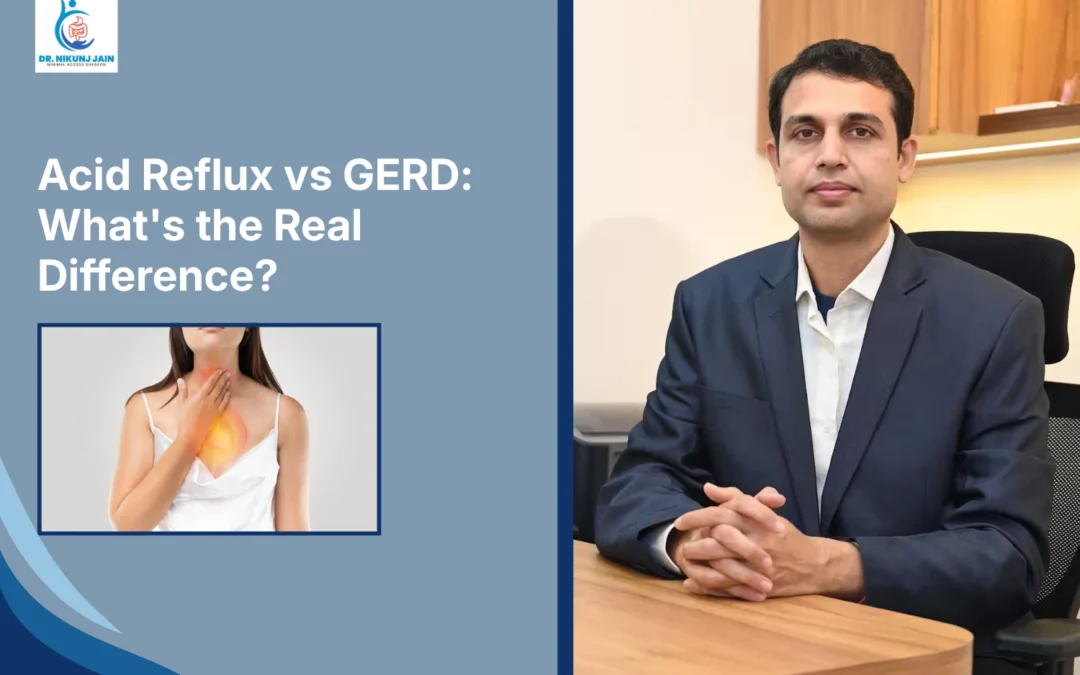
Acid reflux and GERD are often interchanged, but these terms are not the same. Everyone may experience having occasional acidity, heartburn, or a sour taste in the mouth after eating a heavy meal. However, if this happens often and begins to affect your lifestyle, you may have gastroesophageal reflux disease (GERD). This blog by Dr. Nikunj Jain, best gastro surgeon in Indore, will discuss the difference between acid reflux and GERD.
Table of Contents
Acid Reflux
Acid reflux occurs when the stomach acid moves up into the esophagus, causing a heartburn. The esophagus is a muscular tube responsible for carrying food from the throat to the stomach. The lower part of this tube has a valve known as the lower esophageal sphincter. This sphincter usually opens when swallowing food or liquids and closes after they enter the stomach. If this valve opens at an unintended time or is not strong enough, stomach acid can easily flow up into the esophagus. Acid reflux can easily happen and may occur after eating a heavy or spicy meal.
Common Symptoms of Acid Reflux
The most common acid reflux symptoms are:
• Heartburn or a burning sensation in the upper abdomen; • Sour or bitter taste in the mouth; • Regurgitation of acid and food; • Burping or belching; • Upper abdominal discomfort; • Upper abdominal pain; • Symptoms that occur while lying down or after eating; • Fullness after eating.
The symptoms above are only present some of the time, and they tend to disappear with adjustments to the diet. The following section will discuss GERD and explain what happens if acid reflux occurs more frequently.
GERD
GERD stands for gastroesophageal reflux disease, and it is a digestive system disorder that occurs from frequent acid reflux. Individuals who have GERD experience heartburn more often than those who encounter acid reflux occasionally. If a person has acid reflux more than twice weekly, it may be a sign of GERD.
GERD can lead to heartburn that disrupts the ability to have a good night’s sleep, especially when lying down. If the symptoms of GERD persist for a long time, it can cause complications such as difficulty swallowing and chronic cough. Therefore, it is important to consult with a physician if acid reflux persists for a long time.
Symptoms of GERD
Common symptoms of GERD may include:
Frequent heartburn or a burning sensation in the chest
Sour or bitter taste in the mouth
Regurgitation of food or stomach acid
Difficulty or discomfort while swallowing
Feeling like food is stuck in the throat
Chest discomfort or pain
Chronic cough
Hoarseness or frequent throat clearing
Sore throat or throat irritation
Excessive burping or belching
Bloating or upper abdominal discomfort
Reflux symptoms that become worse after meals
Symptoms that worsen while lying down or bending over
Nighttime reflux that disturbs sleep
Some people with GERD may not experience typical heartburn and may mainly have symptoms such as chronic cough, throat irritation, hoarseness, or swallowing difficulty.
Acid Reflux vs. GERD Difference
The major difference between acid reflux and GERD is the frequency and persistence of the symptoms. Acid reflux is only occasional, and GERD is more like the constant heartburn that comes and goes. In other words, GERD is the advanced form of acid reflux, and it can be both mild and severe. The following section will elaborate on the causes of acid reflux and GERD.
Causes of Acid Reflux and GERD
A hiatal hernia, as well as the following lifestyle risk factors, may contribute to GERD or acid reflux:
• Eating large meals • Lying down right after eating • Eating spicy and fatty meals • Drinking too much tea or coffee • Eating chocolate • Drinking carbonated beverages • Smoking • Drinking alcohol • Being obese • Being pregnant • Using specific medications
Each person may experience GERD differently. Although heartburn is the most common symptom of GERD, you may also have other ones such as:
• Heartburn • Sour taste in the mouth • Regurgitation of food and stomach acid • Difficulty swallowing, which may signal esophageal stricture • Chronic cough • Hoarse voice, sore throat, or other throat irritation • Feeling like there is something stuck in the throat • Chest pain • Nighttime reflux • Nighttime waking due to reflux • Chronic cough
Some people with GERD may experience trouble swallowing food without heartburn. The next section will discuss the possible complications of GERD.
Acid Reflux and GERD: Are There Any Complications?
Since the esophagus is not supposed to be exposed to stomach acid, this exposure may cause it to become inflamed. GERD can lead to the following complications:
Oesophageal Ulcer
This condition can occur in the esophagus and cause severe pain when swallowing. People with esophageal ulcers may also vomit blood.
Oesophageal Stricture
It is a condition where the esophagus undergoes some changes and becomes narrower, thus, making it difficult to swallow food.
Barrett’s Esophagus
It is a condition that makes the cells in the lower esophagus change into a different cell type. People with this condition have an increased risk of developing esophageal cancer. All three complications mentioned above can only be diagnosed by a physician.
Acid Reflux and GERD Treatments
There are various treatments for acid reflux and GERD, including lifestyle changes, medications, and surgeries. Doctors recommend making the following lifestyle changes if you have GERD:
• Eating smaller meals • Avoiding foods that cause heartburn • Avoiding lying down for a long time after eating • Maintaining a healthy weight • Quitting smoking and limiting alcohol consumption • Avoiding meals before going to bed • Raising the head of the bed if nighttime heartburn is frequent
Depending on the severity of the disease, the doctor may also prescribe antacids, H2 blockers, proton pump inhibitors,
If these treatments do not help, the patient may need to undergo surgery or an endoscopic procedure to treat GERD. The following section will elaborate on when to see a doctor for acid reflux or GERD.
When to Call a Doctor?
You should consult a physician for acid reflux if:
• Your symptoms do not improve • The symptoms occur frequently • The nighttime reflux wakes you up • You experience difficulty or pain while swallowing • You lose weight unintentionally • You start vomiting repeatedly • You experience bloating or notice black stools • You need frequent medication for reflux
Moreover, if you experience severe, sudden chest pain, you should seek medical attention immediately because heart issues can sometimes be mistaken for heartburn. The final section of this essay will summarize the information presented above.
Conclusion
Acid reflux and GERD both involve the backward flow of stomach acid into the esophagus, but these terms differ in that GERD is the chronic form of acid reflux. Even though occasional GERD may not be a cause for alarm, it is important to consult with a physician if the symptoms persist for a long time. This is so because frequent GERD may lead to many health complications such as chronic cough, esophageal stricture, and Barrett’s esophagus.
Moreover, if the symptoms of acid reflux or GERD do not improve, it is important to contact a physician so that additional tests can be done. In general, heartburn may be frequent and persistent, thus, it is significant to get it checked out. Consult the best gastro surgeon in Indore, Dr. Nikunj Jain, and do not ignore any symptoms.
FAQs
Q1. Is acid reflux the same as GERD?
No. Acid reflux can happen occasionally, while GERD is a chronic condition in which reflux occurs repeatedly or causes persistent troublesome symptoms.
Q2. How often does acid reflux become GERD?
Frequent reflux occurring repeatedly over time may suggest GERD. The diagnosis also depends on the severity of symptoms and their effect on daily life.
Q3. Can GERD be cured permanently?
GERD can often be managed effectively with lifestyle changes and medication. Selected patients may also benefit from surgical or endoscopic treatment depending on the underlying cause.
Q4. What foods commonly trigger acid reflux?
Common triggers include fatty foods, spicy foods, chocolate, caffeine, carbonated drinks and large meals. However, triggers vary between individuals.
Q5. Can GERD cause coughing?
Yes. Acid reflux reaching the upper oesophagus or throat may contribute to chronic cough, throat irritation and voice changes in some patients.
Q6. Does GERD always cause heartburn?
No. Some people experience mainly cough, hoarseness, throat irritation, regurgitation or swallowing difficulties without noticeable heartburn.
Q7. Is long-term acid reflux dangerous?
Persistent reflux may cause inflammation of the oesophagus and, in some patients, complications such as strictures or Barrett’s oesophagus. Frequent symptoms should therefore be medically evaluated.
Q8. Can stress make acid reflux or GERD worse?
Yes. Stress may worsen reflux symptoms in some people by affecting digestion, eating habits and sensitivity to discomfort. Managing stress may help reduce symptoms along with appropriate treatment.
Q9. How is GERD diagnosed?
GERD is often diagnosed based on symptoms and medical history. If symptoms are persistent, severe or unusual, the doctor may recommend tests such as upper GI endoscopy, pH monitoring or other investigations.
Q10. When should I see a doctor for acid reflux?
You should consult a doctor if reflux occurs frequently, interferes with sleep or daily activities, or is associated with difficulty swallowing, unexplained weight loss, repeated vomiting or persistent chest discomfort.
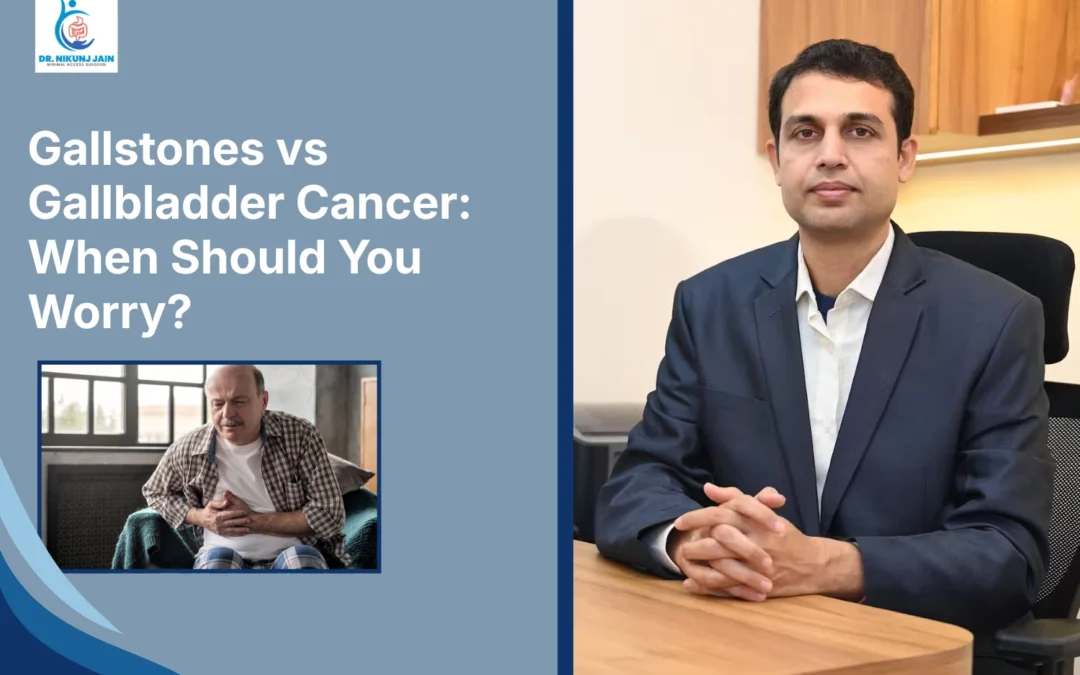
Pain in the right side of the abdomen is often linked to gallstones. Sometimes people get worried that they might have gallbladder cancer when they have repeated pain or unusual symptoms. Gallstones and gallbladder cancer are two different things even though they affect the same organ and can have similar symptoms. Gallstones are very common and are usually not cancerous but gallbladder cancer is not common and can be hard to find in its early stages.
Dr. Nikunj Jain, best gastro surgeon in Indore, says that if you have symptoms that keep coming or get worse you should see a doctor instead of trying to treat them at home.
Table of Contents
What Are Gallstones?
Gallstones are like rocks that form from the substances in bile. The gallbladder is an organ under the liver that stores bile to help with digestion.
Many people have gallstones and do not even know it because they do not feel any pain or symptoms. These are called gallstones and might not need any treatment. When a gallstone blocks the gallbladder or a bile duct that is when the problems start.
A gallstone attack can cause pain in the upper right or upper middle abdomen. The pain can also spread to the right shoulder. You might also feel vomit, have indigestion or feel bloated. If gallstones are not treated they can cause inflammation, infection or pancreatitis.
What Is Gallbladder Cancer?
Gallbladder cancer happens when abnormal cells grow out of control in the gallbladder. Gallbladder cancer might not cause any symptoms that you can notice. Sometimes it is only found after the gallbladder has been removed because of gallstones or another gallbladder problem.
Some symptoms of gallbladder cancer include pain in the abdomen that does not go away, jaundice, fever, nausea, vomiting, bloating or a lump in the abdomen. You might also lose weight without trying, have an appetite, itch, have dark urine or pale stools. These symptoms can also be caused by -cancerous conditions but you should still get them checked.
Do Gallstones Cause Gallbladder Cancer?
Gallstones are a risk factor for gallbladder cancer because long-term irritation and inflammation can affect the lining of the gallbladder. Having gallstones does not mean you have cancer or will get it.
The chance of getting gallbladder cancer if you have gallstones is still low and most people with gallstones never get gallbladder cancer.
You might need tests if your imaging shows a suspicious mass abnormal gallbladder wall thickening or a large polyp. Polyps that are one centimetre or bigger might need to be checked closely because they are more likely to be cancerous.
Gallstones vs Gallbladder Cancer: Key Differences
Pain caused by gallstones usually comes and goes. It may begin suddenly, become severe and last from 30 minutes to a few hours.
Gallstone pain commonly occurs after eating a fatty or heavy meal.
Pain caused by gallbladder cancer may be more constant and can gradually become worse over time.
Cancer-related pain may not follow a specific pattern and may or may not be associated with meals.
Fever with abdominal pain may indicate gallbladder inflammation or infection caused by a blocked gallstone.
Jaundice, which causes yellowing of the skin and eyes, can occur in both gallstones and gallbladder cancer when the flow of bile is blocked.
Warning signs such as unexplained weight loss, loss of appetite, increasing weakness or a growing lump in the abdomen should not be ignored.
Persistent or worsening symptoms should be evaluated by a doctor without delay.
When Should You Worry?
You should see a doctor if you have pain that keeps coming back, lasts for hours or gets worse over time. You should also get help if you have:
Yellowing of the eyes or skin
Urine or pale stools
Nausea or vomiting that does not stop
Fever or chills
Weight loss without trying
Less appetite
A lump or swelling in the abdomen
If you have abdominal pain with a high fever, jaundice, confusion, fainting or repeated vomiting you should get emergency medical help. These signs can mean inflammation, infection or bile duct blockage.
How Are Gallstones and Gallbladder Cancer Diagnosed?
An abdominal ultrasound is often used to find gallstones and check the gallbladder. Blood tests can help find infection, inflammation or blockage in the gallbladder, liver, pancreas or bile ducts.
If an ultrasound finds something you might need a CT or MRI scan. These tests give detailed information about the gallbladder and surrounding organs.
Sometimes gallbladder cancer is only confirmed after the gallbladder has been removed and checked in a laboratory.
How Is the Treatment Different?
If you have gallstones that do not cause symptoms you might just need to watch them. If you have repeated pain, gallbladder inflammation, bile duct blockage or other complications you might need surgery to remove the gallbladder.
The treatment for gallbladder cancer depends on the stage, location and whether the tumour can be completely removed. Treatment can include surgery, chemotherapy, radiation therapy or a combination of these.
Most symptoms related to the gallbladder are caused by non-cancerous conditions like gallstones. If you have persistent abdominal pain, jaundice, weight loss without trying, fever or unusual imaging findings you should not ignore them. Dr. Nikunj Jain, best doctor for gallstones in Indore, provides evaluation and personalised treatment planning for patients with gallstones and other gallbladder conditions, in Indore. If you get diagnosed on time you can find out about complications, you can get the right treatment at the right time.
FAQ’s
Q1. What is the main difference between gallstones and gallbladder cancer?
Gallstones are hardened deposits that form inside the gallbladder, while gallbladder cancer occurs when abnormal cells grow uncontrollably in the gallbladder tissues.
Q2. Do gallstones always cause gallbladder cancer?
No. Gallstones are a risk factor, but the overall risk is low. Most people who have gallstones do not develop gallbladder cancer.
Q3. What are the common symptoms of gallstones?
Gallstones may cause sudden upper-right abdominal pain, nausea, vomiting, indigestion and pain that may spread towards the back or right shoulder.
Q4. What symptoms may indicate gallbladder cancer?
Persistent abdominal pain, jaundice, unexplained weight loss, reduced appetite, dark urine, pale stools or an abdominal lump may require further investigation.
Q5. Can gallstones be treated without surgery? Gallstones that do not cause symptoms may only require regular monitoring. However, surgery may be recommended if they cause repeated pain, inflammation, infection, bile duct blockage or pancreatitis.
Q6. Can an ultrasound detect gallstones and gallbladder cancer?
Ultrasound is commonly used to detect gallstones and examine the gallbladder. Suspicious findings may require CT, MRI or additional tests.
Q7. Do all patients with gallstones need surgery?
No. Silent gallstones may not require treatment. Surgery may be recommended when stones cause repeated pain, inflammation, blockage or complications.
Q8. Can gallbladder cancer be detected during gallstone surgery?
Yes. Some cases are discovered when the removed gallbladder is examined after surgery performed for gallstones or another gallbladder condition.
Q9. Where can I receive gallstone treatment in Indore?
Patients can consult Dr. Nikunj Jain in Indore for diagnosis and personalised treatment of gallstones, gallbladder inflammation and related complications.
Q10. When is gallbladder pain considered an emergency?
Severe abdominal pain accompanied by high fever, jaundice, persistent vomiting, fainting or confusion requires urgent medical attention.
Gallstones can be silent for a time but when they block the gallbladder or bile duct things can get bad quickly. You might feel pain, have a fever or turn yellow. You might even vomit a lot. According to Dr. Nikunj Jain, gastro surgeon in Indore, it is very important to get it checked on time because if you wait the infection or inflammation can get worse.
What Makes Gallstones Complicated?
Gallstones are like rocks that form inside the gallbladder. A lot of people have them and they do not even know it. The problem starts when one of these rocks gets stuck and blocks the bile from flowing
When this happens you might feel a pain in the upper right or middle part of your belly.
This pain can also go to your right shoulder and it often happens after you eat a big meal.
If the blockage does not go away it can cause an infection, make your gallbladder swell or even damage the bile duct or the pancreas.
Acute Cholecystitis
Acute cholecystitis is when your gallbladder gets inflamed usually because a stone is blocking it and the pain can last for hours and it does not go away quickly. You might also have a fever, feel sick, vomit and be tender under your ribs.
This condition usually requires you to go to the hospital, where you can get pain relief, fluids and sometimes antibiotics. Often the doctor will advise you to have your gallbladder removed once you are stable. Having the surgery on time helps prevent attacks of pus from forming or your gallbladder from getting damaged.
Stones in the Common Bile Duct
Sometimes a stone can move from the gallbladder and get stuck in the common bile duct. This can block the bile from flowing, make your skin or eyes turn yellow, your urine dark, your stools pale and you might feel itchy.
Bile duct stones often need to be removed through a procedure called ERCP. During this procedure, a flexible camera is put through your mouth to reach the bile duct and remove the stone. Usually after the stone is removed, you will need to have your gallbladder taken out to prevent another blockage.
Cholangitis and Gallstone Pancreatitis
When the blocked bile duct gets infected it is called cholangitis. You will know it because you will have a fever, chills, belly pain and turn yellow. You need to go to the hospital, get antibiotics and have the blockage cleared.
Gallstones can also block the duct and cause acute pancreatitis. This can give you belly pain that moves to your back. You might vomit so you need to be in the hospital so the doctors can watch you. Once the inflammation goes down you might need to have your gallbladder removed either during your hospital stay or soon after depending on how you’re feeling.
Warning Signs That Need Immediate Care
Severe gallstone pain that lasts for several hours or keeps returning
Fever or chills
Frequent or persistent vomiting
Yellowing of the skin or eyes
Increasing abdominal tenderness or swelling
Confusion, weakness, or feeling very unwell
Pain that becomes stronger or does not improve
Painkillers may provide temporary relief, but they cannot remove the blockage or treat an infection. Do not try to manage severe or recurring symptoms at home. Visit a hospital as soon as possible to check whether the gallbladder, bile duct, or pancreas has been affected.
How Doctors Decide Whether Surgery Is Urgent
The doctor decides if you need surgery away based on your symptoms and what they find when they examine your blood tests and scans. Often they start with an ultrasound. They also do tests to see if the bile duct or pancreas is involved. Sometimes they might do an MRCP or CT scan.
Urgent surgery does not always mean you have to have the operation right that minute. First the doctors might focus on controlling your pain, giving you fluids and treating any infection then they choose the time to do the laparoscopic gallbladder removal. If you are too sick for surgery you might need to have a drain put in your gallbladder.
What Happens During Gallbladder Surgery?
Gallbladder surgery is usually done by laparoscopic cholecystectomy.
Small cuts are made in the abdomen to remove the gallbladder using a camera and special tools.
Only removing stones is not enough, as stones may form again.
Open surgery may be needed if the gallbladder is severely inflamed or difficult to reach.
Surgery is usually advised for pain, fever, infection, jaundice, or bile duct blockage.
Consult Dr. Nikunj Jain for proper diagnosis and safe treatment planning.
FAQ’s
Q1. Do all gallstones require surgery?
No, gallstones that do not cause symptoms may not need immediate surgery. However, if they cause repeated pain, infection, jaundice or pancreatitis, gallbladder surgery may be advised. Dr. Nikunj Jain in Indore can evaluate the condition and recommend suitable treatment.
Q2. When do gallstones become an emergency?
Gallstones may become an emergency when they block the gallbladder or bile duct. Severe abdominal pain, fever, chills, vomiting, jaundice or increasing tenderness require immediate medical attention.
Q3. What are the symptoms of complicated gallstones?
Common symptoms include severe pain in the upper-right abdomen, fever, vomiting, yellowing of the skin or eyes, dark urine and pale stools. Some patients may also experience pain that travels to the back or right shoulder.
Q4. Can gallstones cause jaundice?
Yes, jaundice can occur when a gallstone blocks the common bile duct and prevents bile from flowing properly. Patients with yellow skin or eyes should consult a gallstone specialist in Indore without delay.
Q5. What is acute cholecystitis?
Acute cholecystitis is inflammation of the gallbladder, usually caused by a gallstone blocking its opening. It can lead to persistent abdominal pain, fever, nausea and vomiting and often requires hospital treatment.
Q6. Can gallstones cause pancreatitis?
Yes, gallstones can block the pancreatic duct and cause gallstone pancreatitis. This condition may lead to severe abdominal pain that spreads to the back, repeated vomiting and the need for hospital care.
Q7. What is ERCP, and when is it needed for gallstones?
ERCP is an endoscopic procedure used to remove stones trapped in the common bile duct. A flexible camera is passed through the mouth to reach the bile duct and clear the blockage before gallbladder surgery is planned.
Q8. How is gallstone disease diagnosed in Indore?
Gallstones are usually diagnosed through symptoms, physical examination, blood tests and an abdominal ultrasound. Dr. Nikunj Jain may also recommend MRCP or a CT scan if the bile duct or pancreas may be affected.
Q9. Is laparoscopic gallbladder surgery safe?
Laparoscopic gallbladder surgery is a commonly performed procedure in which the gallbladder is removed through small cuts. The safest approach depends on the amount of inflammation, the patient’s health and the complexity of the condition.
Q10. Where can I get treatment for complicated gallstones in Indore?
Patients with gallstone pain, jaundice, infection or bile duct blockage can consult Dr. Nikunj Jain in Indore. Timely diagnosis and treatment can reduce the risk of serious complications and help plan surgery safely.
Living with chronic acidity is more than just a physical discomfort. For many people, Gastroesophageal Reflux Disease (GERD) affects sleep, food choices, work productivity, and even emotional well-being. The constant burning sensation, fear of eating certain foods, and dependence on daily medication can slowly reduce quality of life. According to Dr. Nikunj Jain, best doctor for GERD Surgery in Indore, managing GERD is not only about controlling symptoms,it is about restoring comfort, confidence, and freedom in everyday living.
GERD Surgery occurs when stomach acid repeatedly flows back into the food pipe, causing heartburn, chest discomfort, regurgitation, bloating, and sometimes chronic cough or throat irritation. While medicines are often the first line of treatment, some patients continue to struggle despite long-term medication. This leads to a common question: Is it better to continue medicines or consider surgery?
Table of Contents
Understanding GERD Medicines
Most GERD patients are prescribed Proton Pump Inhibitors (PPIs) or acid-reducing medications. These drugs work by lowering acid production in the stomach, which helps reduce irritation and provides relief from symptoms.
For many people, medicines work well in the early stages. They are non-invasive, easily available, and effective when taken regularly. However, long-term dependence on medication can come with challenges:
Symptoms often return if the medicine is stopped
Daily medication becomes a lifelong routine for some patients
Long-term use may be associated with nutritional deficiencies or side effects
Patients may feel anxious about missing doses or relying on medicines permanently
Emotionally, the idea of being dependent on medication every day can be frustrating. Many patients describe a constant worry about when symptoms might return.
When Medicines Are Not Enough
There are situations where medicines fail to control GERD effectively. Patients may continue to experience severe reflux, regurgitation, or nighttime symptoms. Some also develop complications such as esophagitis, strictures, or Barrett’s esophagus.
Other signs that medicines may not be the best long-term solution include:
Needing high doses for relief
Persistent symptoms despite treatment
Difficulty tolerating medications
Desire to avoid lifelong drug dependence
In such cases, surgical treatment may be considered.
GERD Surgery
GERD surgery, most commonly laparoscopic fundoplication, focuses on correcting the root cause rather than just controlling acid. The procedure strengthens the valve between the stomach and food pipe, preventing acid from flowing backward.
The benefits of surgery may include:
Long-term or permanent relief from reflux
Reduced or complete elimination of daily medication
Improved sleep and eating comfort
Better quality of life
Since the procedure is performed using minimally invasive techniques, recovery is usually faster, with smaller incisions and less postoperative discomfort.
From an emotional perspective, many patients feel a sense of relief and freedom after surgery. The ability to eat without fear, sleep peacefully, and live without daily medication often brings back confidence and normalcy.
Surgery vs Medicines – Which Is Better?
There is no single answer for everyone. The choice depends on several factors:
Severity and duration of GERD
Response to medications
Presence of complications
Age and overall health
Patient preference and lifestyle goals
Medicines are usually suitable for mild to moderate GERD that responds well to treatment. Surgery is often recommended for patients with severe, persistent symptoms, complications, or those who wish to avoid lifelong medication.
The most important step is proper evaluation through tests such as endoscopy, pH monitoring, or imaging. A personalized approach helps determine the most effective and safest option.
What is The Emotional Side of Decision-Making
Choosing between long-term medication and surgery can feel overwhelming. Patients often worry about the risks of surgery, recovery time, or whether the results will last. At the same time, living with ongoing symptoms can cause stress, sleep disturbances, and anxiety about food and daily activities.
Open communication with a specialist helps patients understand their condition clearly and make a confident decision. When patients feel informed and supported, the emotional burden of GERD becomes much easier to manage.
Conclusion
GERD is not just a digestive issue,it is a quality-of-life condition. Whether treated with medicines or surgery, the goal is to help patients live without discomfort, fear, or constant dependence.
With the right evaluation and treatment plan, long-term relief is achievable. As emphasized by Dr. Nikunj Jain, best gastro surgeon in Indore, the best treatment is the one that not only controls acid reflux but also restores comfort, peace of mind, and the freedom to enjoy everyday life again.