
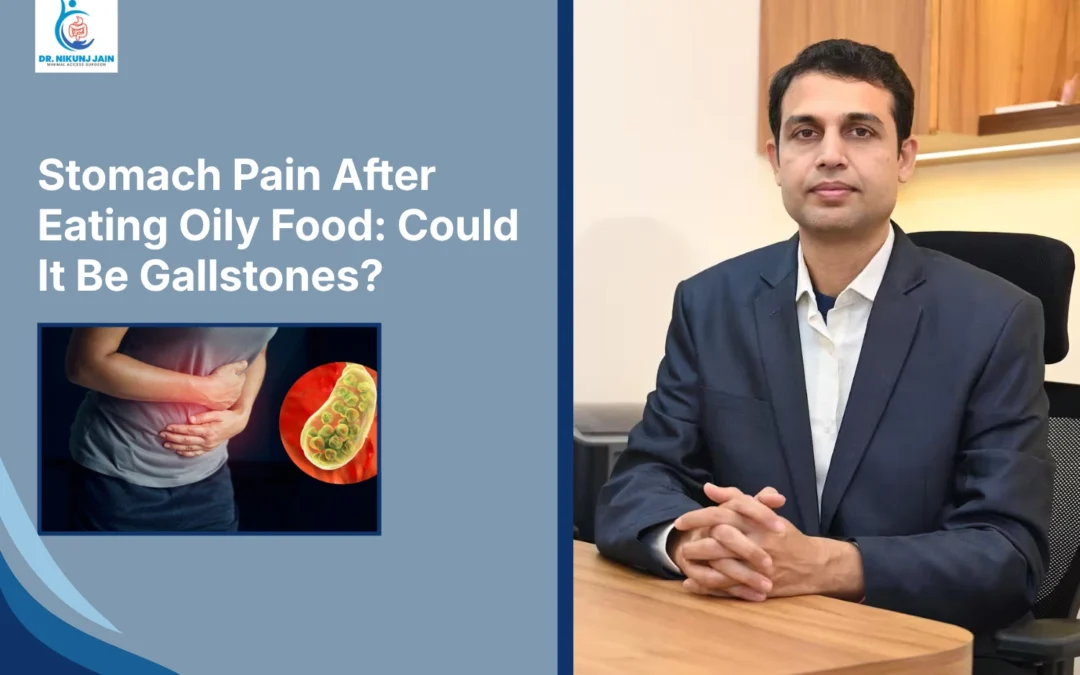
Experiencing stomach pain after eating fatty food is a common complaint. Sometimes this pain may be caused by indigestion, acidity or overeating. However if pain keeps returning after meals after fried, oily or high-fat foods pain may be related to gallbladder stones.
Gallstones are hardened deposits that form inside the gallbladder, an organ below the liver. The gallbladder stores bile, a fluid that helps the body break down fats. When gallbladder stones block the flow of bile, gallstones can cause pain and other digestive symptoms.
For persistent pain after oily food, consult Dr. Nikunj Jain for gallbladder stones treatment in Indore and gallbladder surgery in Indore.
Table of Contents
Why Oily Food Can Trigger Gallbladder Stones Pain
After a fatty or oily meal, the gallbladder contracts to release bile into the intestine to help digest fat. If gallstones are present, one gallstone may block the opening through which bile flows. This blockage can cause pressure inside the gallbladder and lead to pain. This type of pain is often called colic. Pain may begin after a heavy or fatty meal and can last from several minutes to a few hours.
Not every person with gallbladder stones has symptoms. Some people may have gallstones for years without knowing about them. Problems usually begin when a gallstone blocks the bile duct or causes inflammation.
Common Symptoms of Gallstones
The common symptom of gallstones is pain in the upper-right side or upper-middle part of the abdomen. Other symptoms may include:
- Pain After Eating Fatty Food
- Pain That Spreads Towards The Right Shoulder or Back
- Nausea
- Vomiting
- Abdominal Bloating
- Indigestion
- Feeling Unusually Full After Meals
- Burping Or Discomfort After Eating
Pain may appear suddenly and become intense. In some patients, symptoms may improve after a few hours and then return after another fatty meal.
How Gallstone Pain Is Different from Acidity
gallbladder stones pain and acidity can sometimes feel similar which is why people may ignore symptoms for some time. Acidity usually causes a burning sensation in the abdomen or chest. Acidity may be associated with belching, heartburn or a burning feeling in the throat.
Gallbladder stones pain is usually deeper and more intense. gallbladder stones pain commonly occurs in the upper-right abdomen or just below the ribs and may spread to the back or right shoulder. If pain keeps appearing after meals it is better to get evaluated rather than assuming pain is only gas or acidity.
When Gallstones Become Serious?
Gallbladder stones may become more serious if they block the bile duct for a longer period or lead to inflammation of the gallbladder. Seek attention if abdominal pain is accompanied by:
- Fever or Chills
- Persistent Vomiting
- Yellowing Of The Eyes or Skin
- Severe Pain That Does Not Improve
- Dark Urine
- Pale Stools
- Increasing Abdominal Tenderness
These symptoms may indicate complications such as gallbladder inflammation, infection, blockage of the bile duct or pancreatitis. Severe or rapidly worsening pain should be evaluated urgently.
Treatment of Gallstones
Treatment depends on whether gallstones are causing symptoms. Gallstones that do not cause any symptoms may not always require treatment. However if repeated pain inflammation or complications occur treatment may be advised.
The common treatment for symptomatic gallstones is removal of the gallbladder through laparoscopic surgery. This procedure is known as laparoscopic cholecystectomy. The surgery is performed through cuts in the abdomen and is commonly used for patients with repeated gallstone attacks.
The gallbladder is not essential for survival. Most people can digest food normally after its removal.
Can Diet Prevent Gallstone Pain?
Dietary changes may help reduce symptoms but they do not remove existing gallbladder stones. Patients who experience pain after meals may be advised to reduce:
- Fried Foods
- Oily Meals
- High-Fat Dairy Products
- Processed Foods
- Heavy Or Very Large Meals
- Eating Smaller Balanced Meals May Help Reduce Discomfort
However if symptoms keep returning dietary changes alone should not replace evaluation.
When to Consult a Gastro Surgeon in Indore
Recurring stomach pain after eating food should not be ignored, especially if the pain is in the upper-right abdomen or comes with nausea or vomiting.
If you are experiencing symptoms that may be related to gallstones in Indore, you can consult Dr. Nikunj Jain for evaluation and guidance regarding suitable treatment.
Conclusion
Stomach pain after eating oily food can have several causes but repeated pain after fatty meals may be a sign of gallstones. Gallbladder stones pain commonly occurs in the right side of the abdomen and may be associated with nausea, vomiting, bloating or pain spreading towards the back or shoulder.
If the symptoms keep returning, proper medical evaluation is important. Ultrasound and other tests can help confirm the diagnosis and determine whether treatment is required. If you are experiencing recurring pain after oily food consult Dr. Nikunj Jain, best gastro surgeon in Indore, for appropriate diagnosis and treatment. Severe pain, fever, persistent vomiting or jaundice should be treated as warning signs. Evaluated without delay.
FAQs
Q1. Can gallstones cause pain after eating oily food?
Yes. Fatty or oily foods cause the gallbladder to contract, which may trigger pain if gallstones are blocking the flow of bile.
Q2. Where is gallstone pain usually felt?
Gallstone pain is commonly felt in the upper-right or upper-middle abdomen and may spread towards the back or right shoulder.
Q3. How long can gallstone pain last?
Gallstone pain may last from several minutes to a few hours, depending on the degree and duration of blockage.
Q4. Can gallstone pain feel like acidity or gas?
Yes. Gallstone symptoms can sometimes resemble indigestion, acidity or gas, which is why proper medical evaluation is important.
Q5. Which test is commonly used to detect gallstones?
An abdominal ultrasound is one of the most commonly used tests for detecting gallstones and checking the gallbladder.
Q6. Do all gallstones require surgery?
No. Gallstones that do not cause symptoms may not always require treatment. Surgery is commonly considered when stones cause repeated pain or complications.
Q7. What is the surgery for gallstones called?
The common operation is laparoscopic cholecystectomy, in which the gallbladder is removed through small incisions.
Q8. Can diet dissolve existing gallstones?
Dietary changes may reduce symptoms in some people, but they generally do not remove or dissolve existing gallstones.
Q9. When should gallstone pain be treated as an emergency?
Severe persistent pain, fever, repeated vomiting, jaundice or increasing abdominal tenderness requires urgent medical attention.
Q10. Which doctor should I consult for gallstones in Indore?
You can consult Dr. Nikunj Jain in Indore for evaluation, diagnosis and guidance regarding suitable treatment for gallstones.