
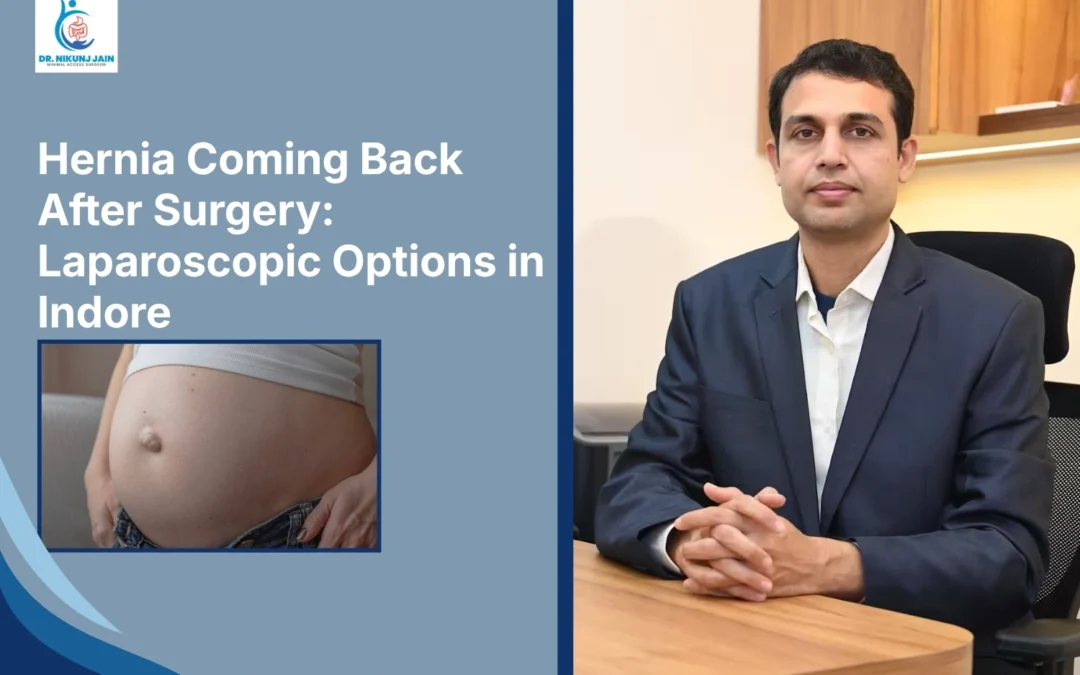
A hernia can sometimes return even after a repair has been performed. This is called a recurrent hernia. Many patients find noticing swelling, discomfort or a new bulge near the site of the operation to be worrying.
Hernia coming back after surgery does not always mean the earlier operation failed. Recurrence can happen because of tissue weakness, higher pressure inside the abdomen, problems with wound healing or other medical and lifestyle factors.
If a hernia has returned a proper evaluation with Dr. Nikunj Jain, hernia surgeon in Indore, can help identify the hernia’s size, location and the suitable treatment. In some patients laparoscopic recurrent hernia repair may be considered.
Table of Contents
What Are Recurrent Hernia Symptoms?
Recurrent hernia symptoms are often similar to the symptoms of the original hernia. A patient may notice a bulge or swelling near the previous surgery site. The swelling may become more visible when the patient stands, coughs, lifts or strains.
Some people experience pain, heaviness, pulling or discomfort in the groin or abdominal wall. In some cases, the hernia may be small and painless at first then gradually become more noticeable over time.
If the bulge becomes painful, hard, tender or cannot be pushed back inside, urgent medical evaluation may be needed.
What Are the Reasons for Hernia Recurrence?
Hernia recurrence can happen due to several factors, and the reason may vary from person to person.
- Weak connective tissues: Some people naturally have weaker tissues, which can make the abdominal wall more prone to developing another hernia.
- Obesity: Excess body weight can increase pressure inside the abdomen and place additional stress on the repaired area.
- Chronic cough: Frequent coughing can repeatedly increase abdominal pressure and may affect the repaired site.
- Constipation and straining: Regular straining during bowel movements can put extra pressure on the abdominal wall.
- Heavy lifting: Lifting heavy weights, especially before the surgical area has healed properly, may increase the risk of recurrence.
- Returning to activity too early: Resuming strenuous physical activity too soon after surgery may interfere with proper healing.
- Wound infection: Infection at the surgical site can weaken the tissues and affect the strength of the repair.
- Poor tissue healing: Certain patients may heal more slowly or have weaker tissue strength, which can contribute to recurrence.
- Size and complexity of the hernia: Larger or more complicated hernias may have a higher chance of recurring even after treatment.
The exact cause of hernia recurrence can differ for every patient, so proper evaluation is important before planning further treatment.
Can a Recurrent Hernia Occur After Mesh Repair?
Yes. A recurrent hernia after mesh repair can still occur. Mesh is commonly used to strengthen the area of the abdominal wall and reduce the risk of recurrence. However no hernia repair can completely remove the possibility of the hernia returning.
Recurrence after mesh repair may be related to tissue weakness, changes around the repair, increased abdominal pressure or other factors. Existing mesh does not always need to be removed if another surgery is required. The surgeon will decide this based on the position and condition of the mesh and the type of recurrence.
Laparoscopic Repair for Recurrent Hernias
In some patients, laparoscopic surgery may be considered for repairing a recurrent hernia.
- Small incisions: The procedure is performed through small cuts using a camera and specialised surgical instruments.
- Different surgical plane: The surgeon may be able to approach the recurrent hernia through a different tissue layer than the one used in the previous surgery.
- Less contact with old scar tissue: This approach may help avoid some of the scar tissue formed around the earlier surgical site.
- Previous repair is considered: The type of earlier hernia surgery and the technique used can affect whether laparoscopic repair is suitable.
- Mesh placement matters: The position and condition of any previously placed mesh are important factors in planning the surgery.
- Hernia characteristics are assessed: The size, type and location of the recurrent hernia also influence the choice of treatment.
- Overall health is important: The patient’s general health and medical history are considered before deciding on laparoscopic repair.
Laparoscopic surgery may be a suitable option for some recurrent hernias, but the final approach should be decided after a proper surgical evaluation.
Recurrent Inguinal Hernia Surgery
A hernia that returns in the groin is called a recurrent inguinal hernia. The approach for recurrent inguinal hernia surgery often depends on how the first surgery was performed.
If the first operation was an open repair, a laparoscopic approach may sometimes be considered for the recurrence.
If the first repair was laparoscopic, an open approach may sometimes be preferred.
The goal is to choose a plane that allows a safe and effective repair while reducing unnecessary dissection through scar tissue.
Recurrent Incisional Hernia Repair
An incisional hernia develops through an abdominal surgery scar. When this hernia returns after repair treatment may be more complex.
Recurrent incisional hernia repair requires evaluation of the abdominal wall, previous mesh placement, size of the defect and surrounding tissue quality.
Some recurrent incisional hernias may be treated laparoscopically while others may require more advanced abdominal wall reconstruction techniques. The treatment plan depends on the case.
What Is Hernia Revision Surgery?
Hernia revision surgery refers to another operation performed after a hernia repair when the hernia has returned or when another problem with the previous repair needs correction.
Revision surgery may involve repairing a defect, adjusting the previous repair or placing additional mesh. Because previous surgery can create scar tissue and change normal anatomy, revision procedures may require more detailed planning than first-time hernia surgery.
Imaging such as ultrasound or CT scan may be advised in selected cases.

When to Consult a Surgeon for a Recurrent Hernia
If you notice swelling near the previous hernia surgery site, if you feel pain while lifting, if you feel discomfort during exercise or if a bulge is gradually increasing, you should consider medical evaluation for hernia.
If you experience severe pain, vomiting, abdominal swelling or if a hernia becomes hard and cannot be pushed back inside, urgent medical attention may be required for hernia.
If you are looking for recurrent hernia treatment in Indore, early evaluation can help determine whether observation, laparoscopic repair or another surgical approach may be suitable for hernia.
Conclusion
A hernia that returns after surgery can be uncomfortable and concerning, but recurrent hernias can often be managed with the right evaluation and treatment approach.
The most suitable treatment depends on factors such as the type and location of the hernia, the previous surgery, earlier mesh placement, the condition of the surrounding tissues and the patient’s overall health. Depending on these factors, laparoscopic repair, open surgery or hernia revision surgery may be considered.
Early assessment can help identify the cause of recurrence and reduce the risk of further complications. If you notice a returning bulge, pain, swelling or discomfort near the previous surgical site, it is important to consult a specialist.
Consult Dr. Nikunj Jain, recurrent hernia surgeon in Indore, for evaluation of recurrent inguinal hernia, recurrent incisional hernia and personalised surgical planning based on your condition.
FAQs
Q1. Can a hernia come back after surgery?
Yes. A hernia can recur after surgery because of tissue weakness, healing problems, increased abdominal pressure or other factors.
Q2. What are common recurrent hernia symptoms?
A new bulge, swelling, heaviness, pulling or pain near the previous repair site may indicate recurrence.
Q3. Can a hernia return even after mesh repair?
Yes. Mesh reduces recurrence risk but does not completely eliminate it.
Q4. Can a recurrent hernia be repaired laparoscopically?
Yes, in selected patients. Suitability depends on the previous surgery, hernia type and surgeon’s assessment.
Q5. What causes hernia recurrence?
Possible reasons include weak tissues, obesity, chronic cough, constipation, wound problems and repeated abdominal pressure.
Q6. What is hernia revision surgery?
It is another operation performed to repair a recurrent hernia or correct problems related to a previous repair.
Q7. How is recurrent inguinal hernia treated?
Treatment may involve open or laparoscopic surgery depending on how the first hernia was repaired.
Q8. How is recurrent incisional hernia treated?
Treatment depends on the size and complexity of the defect and may involve laparoscopic, open or abdominal wall reconstruction techniques.
Q9. Is recurrent hernia surgery more complex?
It can be more complex because previous surgery may create scar tissue and alter the anatomy.
Q10. Who should I consult for recurrent hernia treatment in Indore?
You can consult Dr. Nikunj Jain for evaluation and treatment planning for recurrent inguinal, incisional and other abdominal wall hernias.