
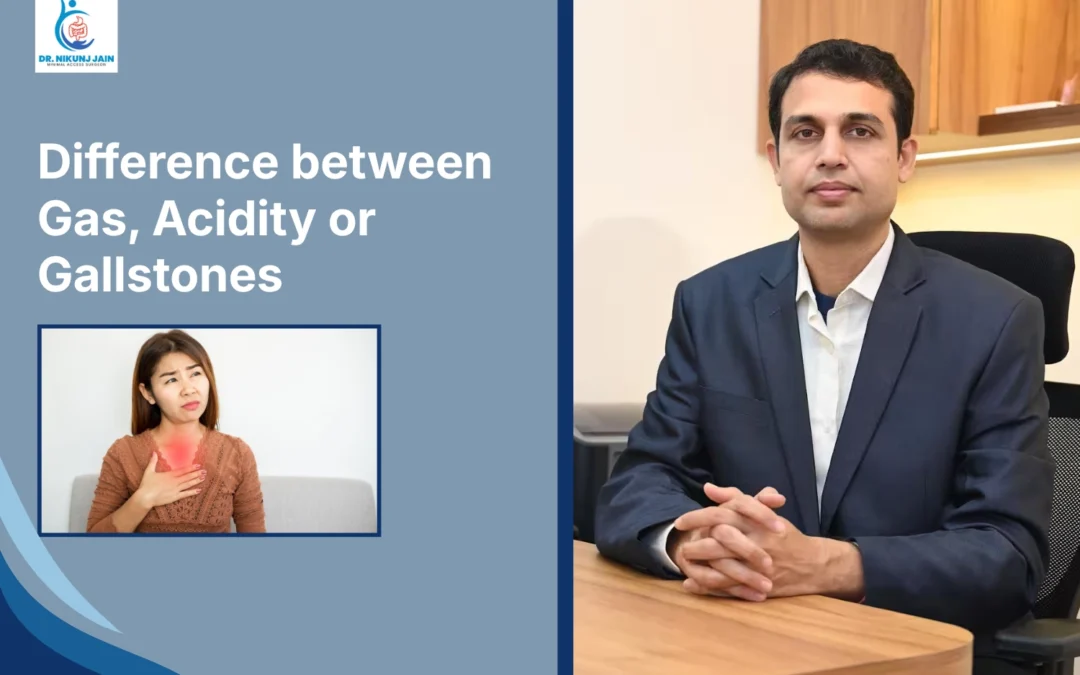
Upper abdominal discomfort is often blamed on gas or acidity. While gas and acidity are common digestive problems, similar symptoms can also be caused by gallstones. Knowing the difference between gas and acidity and understanding when pain may be related to the gallbladder can help you decide when medical evaluation is needed.
Gas, acidity and gallstones can all cause discomfort, bloating or pain after eating. However, the location, nature and duration of these symptoms are often different. Understanding gas vs acidity vs gallstones can make it easier to recognise symptoms that may require medical attention.
If you experience repeated upper abdominal pain, especially on the right side or after meals, consult Dr. Nikunj Jain, Surgical Gastroenterologist in Indore, for proper evaluation and appropriate treatment.
Table of Contents
What Does Gas Usually Feel Like?
Gas forms when air or other gases gather inside the tract. Gas can cause bloating, a feeling of fullness, burping, the release of gas and cramp-like discomfort.
Gas pain can appear in parts of the abdomen and may shift from one spot to another. The discomfort often eases after passing gas, burping or having a bowel movement.
Eating quickly, drinking fizzy drinks, overeating and eating certain foods can raise gas production. When you look at the bloating and acidity difference, bloating usually means a feeling of abdominal swelling. Acidity normally causes a burning or irritated sensation in the digestive tract.
What Are the Symptoms of Acidity?
Acidity usually means reflux or too much acid irritation. Common signs are a burning feeling in the abdomen or chest, a sour taste in the mouth, burping and discomfort after eating.
Symptoms often worsen after spicy or oily food meals, lying down soon after eating or eating late at night.
An important difference between gas and acidity is that acidity usually creates burning, heartburn or sour regurgitation. Gas on the other hand usually brings bloating, pressure and cramping. However, gas and acidity can happen at the same time.
What Are Gallstones?
Gallstones are deposits that form inside the gallbladder. Many people have gallstones and do not feel any symptoms.
When a gallstone blocks bile flow for a time, it can cause typical abdominal pain. Knowing the symptoms of gallbladder stones is very important because repeated pain should not be assumed to be gas.
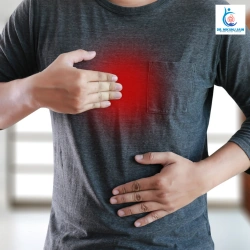
Typical gallstone pain usually appears in the abdomen, most often on the right side or in the center below the ribs. The discomfort can sometimes travel toward the back or the right shoulder.
Gas Pain or Gallbladder Pain: How Can You Tell?
Gas Pain
- Can occur in different parts of the abdomen.
- Pain may shift from one area to another.
- Often comes with bloating or a feeling of fullness.
- May improve after burping, passing gas or having a bowel movement.
- Usually does not remain fixed in one spot for a long time.
Gallbladder Pain
- Usually occurs in the right upper abdomen or central upper abdomen.
- Pain tends to stay in one area rather than move around.
- May appear after eating, especially after a fatty or heavy meal.
- Can last from several minutes to a few hours.
- May not improve after passing gas, burping or changing position.
- Can sometimes spread towards the back or right shoulder.
Because gas and gallbladder symptoms can overlap, repeated or persistent upper abdominal pain should not be self-diagnosed.
If you frequently experience right upper abdominal pain or discomfort after meals, consult Dr. Nikunj Jain, Surgical Gastroenterologist in Indore, for proper evaluation and treatment guidance.
Gallstone Pain After Eating
A pattern for gallstones that cause pain is abdominal pain after a meal, especially a heavy or fatty meal. Gallstone pain after eating happens because the gallbladder squeezes to release bile while you digest. If a stone blocks bile flow, pressure inside the gallbladder triggers pain. Therefore, repeated right upper abdominal pain after meals, especially after oily or fatty foods, should be talked about with a doctor.
Acidity vs Gallstones Symptoms
When you compare acidity vs gallstones symptoms, the place and type of pain can give clues.
- Acidity usually brings burning behind the breastbone or in the abdomen, sour burps and reflux into the throat.
- Gallstones usually bring pain in the right upper or central abdomen. Some people may also feel nausea or vomit.
Severe gallbladder inflammation can also bring fever and lasting tenderness. Symptoms alone are not always enough for a diagnosis. An abdominal ultrasound is often used when gallstones are suspected.
When Should Upper Abdominal Pain Be Evaluated?
Occasional mild gas or acidity may get better with diet and lifestyle changes. Repeated or strong pain should not be treated again and again with over-the-counter medicines without knowing what causes it.
You should think about seeing an upper abdominal pain doctor in Indore if pain happens again after meals, gets severe, lasts for several hours or comes with vomiting, fever or jaundice.
Sudden strong abdominal pain, fever, ongoing vomiting or yellowing of the eyes or skin needs quick medical assessment.
Conclusion
Gas, acidity and gallstones can sometimes give digestive complaints but their treatment is very different. Correct diagnosis helps figure out whether symptoms come from the stomach, intestines or gallbladder.
For pain in the right upper belly or suspected gallstones, see Dr. Nikunj Jain, surgical gastroenterologist and gallstone specialist in Indore for evaluation and a proper treatment plan.
FAQs
Q1. How can I tell the difference between gas and gallstone pain?
Gas pain may move around the abdomen and improve after passing gas or burping. Gallstone pain is often more persistent and typically occurs in the upper-right or central abdomen.
Q2. Where is gallstone pain usually felt?
Gallstone pain is commonly felt beneath the ribs on the right side or in the central upper abdomen and can sometimes spread to the back or right shoulder.
Q3. Can gallstones feel like acidity?
Yes. Some people initially mistake gallstone discomfort for acidity, indigestion or gas, particularly when symptoms occur after meals.
Q4. Does gallstone pain happen after eating?
It can. Gallstone attacks may occur after meals, particularly meals containing a higher amount of fat.
Q5. How long does gallstone pain last?
Pain can last from several minutes to a few hours. Persistent or severe pain requires medical evaluation.
Q6. Does gallstone pain improve after passing gas?
Typically, gallstone pain does not reliably improve after passing gas or having a bowel movement.
Q7. Can acidity cause right-sided abdominal pain?
Acidity generally causes upper abdominal or chest burning, but abdominal symptoms can overlap. Repeated right upper abdominal pain should be evaluated.
Q8. What test detects gallstones?
An abdominal ultrasound is commonly used to detect gallstones and evaluate the gallbladder.
Q9. Do all gallstones require surgery?
No. Gallstones that are not causing symptoms may not always require treatment. Symptomatic or complicated gallstones need individual medical assessment.
Q10. Which doctor should I consult for repeated gallbladder pain?
A surgical gastroenterologist or GI surgeon like Dr. Nikunj Jain can evaluate recurrent upper abdominal pain and determine whether gallstones or another digestive condition is responsible.