Losing a lot of weight is hard. It is even harder for people who have obesity or health problems that come from obesity. If diet, exercise and other ways to lose weight do not give results, weight loss surgery might be looked at as part of a full treatment plan.
Weight loss surgery, also known as bariatric surgery, has different procedures. These procedures can make the stomach smaller, change how food moves through the body, or do both. The right weight loss surgery is not the same for everyone. Your BMI, medical problems, what you eat, past treatments and overall health all affect which procedure might fit you.
Dr. Nikunj Jain, best bariatric surgeon in Indore, can look at your condition and talk about the best weight loss surgery options for you.
Table of Contents
Types of Weight Loss Surgery
1. Sleeve Gastrectomy
Sleeve gastrectomy, often called sleeve surgery, is a popular weight loss surgery in which a big part of the stomach is taken away, leaving a sleeve-shaped stomach. The smaller stomach can help you eat less and may also change hormones that control hunger and appetite.
2. Gastric Bypass Surgery
Gastric bypass makes a stomach pouch and links it to another part of the small intestine. This limits how much food the stomach can hold and changes how food moves through the body. Gastric bypass can lead to weight loss and may also help with some obesity-related health problems. Because digestion and how the body takes in nutrients change, you need to check your nutrition for a long time.
3. Adjustable Gastric Band
In gastric band surgery, a band goes around the top part of the stomach to make a smaller pouch. This can help a person feel full after eating little food. The band can be changed when needed. However, weight loss surgery with a band is done less often now than some other weight loss surgeries because of long-term issues and because other good options exist.
4. Biliopancreatic Diversion with Duodenal Switch
Biliopancreatic diversion with switch, or BPD/DS, cuts the stomach and changes the way food goes through the small intestine. It can give a lot of weight loss. The surgery is more complicated and can affect how the body absorbs nutrients. Patients need careful long-term nutrition checks and supplements.
How Do You Choose the Right Weight Loss Surgery?
There is not one weight loss surgery that’s best for all. Your surgeon may think about:
Your BMI and weight history
Existing conditions such as type 2 diabetes, high blood pressure or sleep apnoea
Eating habits and appetite
Previous attempts at weight loss
Your overall condition
Previous abdominal surgeries
Nutritional requirements
Your ability to follow long-term dietary and lifestyle changes
Your personal weight-loss goals
A detailed medical evaluation is important before deciding on a procedure.
What Are the Benefits of Weight Loss Surgery?
For a lot of patients, weight loss surgery can help a lot of weight go away if you keep healthy habits for a long time. Weight loss surgery can also help fix or manage health problems that come from obesity, like type 2 diabetes, high blood pressure or sleep apnoea. The good things from weight loss surgery are different for each person. Weight loss surgery is one piece of a long-term weight plan, not a fix.
Are There Risks Associated With Weight Loss Surgery?
Like any surgery, weight loss surgery may involve certain risks. The level of risk depends on the type of surgery and your overall health. Possible complications include:
Bleeding
Infection
Blood clots
Leakage from the stomach or intestine
Anaesthesia-related complications
Nutritional deficiencies
Digestive problems
The need to take vitamins and supplements for life
Before surgery, your surgeon will explain the benefits, possible risks and long-term lifestyle changes involved.
What Happens After Weight Loss Surgery?
Weight loss surgery needs a commitment. After weight loss surgery, you slowly move up the food you can eat based on what your surgeon and dietitian say. Regular check-ups and keeping track of how much weight you lose, your nutrition and your overall health is important. Exercise, eating habits, the supplements you are told to take and regular doctor visits are key to keeping the results and stopping nutrient problems.
Is Weight Loss Surgery Right for You?
Weight loss surgery can be thought about for people who have obesity, who fit the medical rules and who did not get enough results from normal weight-loss ways. Whether you can have weight loss surgery depends on many things. Talking with a good weight loss surgeon near you can show if weight loss surgery fits you and which surgery might give the right mix of benefits and risks for your own case.
Conclusion
Weight loss surgery includes several procedures, and choosing the right one requires more than simply comparing weight-loss results. Your health, BMI, medical conditions, eating patterns, nutritional needs and ability to follow long-term lifestyle changes all matter.
If you are considering bariatric surgery in Indore, Dr. Nikunj Jain is recognised as the best bariatric surgeon in Indore, for an individual assessment and guidance regarding the most suitable treatment option.
FAQs
Q1. What are the main types of weight loss surgery?
Common bariatric procedures include sleeve gastrectomy, gastric bypass, adjustable gastric band and biliopancreatic diversion with duodenal switch.
Q2. Which weight loss surgery is most commonly performed?
Sleeve gastrectomy and gastric bypass are among the commonly performed bariatric procedures. The most suitable option depends on the patient’s health, BMI, medical conditions and individual needs.
Q3. Is gastric sleeve better than gastric bypass?
Neither procedure is universally better. Gastric sleeve and gastric bypass have different mechanisms, benefits, risks and nutritional considerations. Your surgeon can help determine which may be more appropriate for you.
Q4. Who is eligible for weight loss surgery?
Eligibility depends on factors such as BMI, obesity-related health conditions, previous weight-loss efforts and overall health. A bariatric surgeon should assess your individual situation before surgery is considered.
Q5. Can weight loss surgery help with diabetes?
Bariatric surgery can improve blood sugar control and may lead to remission of type 2 diabetes in some suitable patients. The outcome depends on several individual factors.
Q6. Is weight loss surgery safe?
Bariatric surgery is generally considered safe when performed in appropriately selected patients by an experienced surgical team, but every surgery carries potential risks. Your surgeon will discuss these before treatment.
Q7. Will I need to follow a special diet after bariatric surgery?
Yes. Your diet is usually progressed gradually after surgery, and long-term healthy eating habits are important for maintaining weight loss and preventing nutritional deficiencies.
Q8. Do I need vitamins after weight loss surgery?
Depending on the procedure, patients may need long-term vitamin and mineral supplements. Your doctor or dietitian will recommend supplements and monitoring based on your specific surgery.
Q9. What is the cost of weight loss surgery in Indore?
The cost varies depending on the type of surgery, hospital, surgeon’s fees, investigations, anaesthesia, room category, medicines and follow-up care. A personalised estimate can be provided after consultation.
Q10. Who is the best doctor for weight loss surgery in Indore?
Dr. Nikunj Jain, Minimal Access Laparoscopic Surgeon in Indore, can evaluate patients considering bariatric surgery and guide them regarding suitable weight loss surgery options based on their health and individual requirements.
Seeing blood in stool can be alarming but sometimes blood in stool may come from a treatable problem such as piles or an anal fissure. However, blood in stool can also be linked to conditions that affect the colon, rectum or digestive tract. This is why it is important not to ignore repeated or unexplained bleeding.
The appearance of blood in stool can offer clues: bright red blood in stool is often linked to bleeding from the colon, rectum or anus, while dark red or black tarry stool may point to bleeding higher up in the digestive tract. Still, the colour alone cannot confirm the cause.
If you notice blood in stool, consulting an expert gastro surgeon in Indore such as Dr. Nikunj Jain, Minimal Access Laparoscopic Surgeon in Indore, can help identify the underlying cause and guide appropriate treatment.
Table of Contents
Common Causes of Blood in Stool
1. Piles or Hemorrhoids
Hemorrhoids are veins in and around the anus or lower rectum. They are one of the most common causes of rectal bleeding. Internal hemorrhoids may cause bright red blood in stool during or after bowel movements.
Constipation, straining while passing stool, prolonged sitting on the toilet and a low-fibre diet can increase the risk of hemorrhoids.
2. Anal Fissure
An anal fissure is a tear in the lining of the anus. It commonly develops after passing large stools or due to repeated straining.
Unlike cases of hemorrhoids, an anal fissure often causes sharp pain or burning during and after bowel movements, along with bright red blood in stool on the stool or toilet paper.
3. Constipation and Hard Stools
Chronic constipation can lead to hard stools and excessive straining. This may irritate the area or contribute to hemorrhoids and fissures, resulting in blood in stool.
Improving fibre intake, drinking fluids, staying physically active and addressing persistent constipation can help, but recurrent bleeding should still be evaluated.
4. Inflammatory Bowel Disease
Conditions such as Crohn’s disease and ulcerative colitis cause inflammation in the digestive tract and may lead to blood in stool. Bleeding may occur along with diarrhoea, abdominal pain, urgency to pass stool or other digestive symptoms.
5. Intestinal Infections
Certain gastrointestinal infections can cause inflammation of the intestine and may result in bloody diarrhoea with blood in stool. Fever, abdominal cramps, nausea or weakness may occur at the same time.
6. Colon Polyps
Colon polyps are growths that develop inside the colon. Some polyps can lead to blood in stool. Depending on their type, some polyps may eventually develop into cancer. This is one reason persistent or unexplained blood in stool should not simply be attributed to piles.
7. Colorectal Cancer
Blood in or on the stool can be one of the symptoms of cancer. Other warning signs can include a change in bowel habits, abdominal discomfort, unexplained weight loss, fatigue or a feeling that the bowel has not completely emptied.
Having blood in stool does not automatically mean cancer, many other conditions are more common. However, it is important to get unexplained bleeding checked rather than assuming it is hemorrhoids.
When Should You Worry About Blood in Stool?
You should arrange an evaluation if:
Blood appears repeatedly in your stool.
Bleeding continues or keeps returning.
You have changes in bowel habits.
You experience abdominal or rectal pain.
You have lost weight.
You feel unusually tired or weak.
Your stools become dark, black or tar-like.
You have a family history of cancer or polyps.
Heavy or continuous bleeding, dizziness, fainting, severe weakness, rapid heartbeat or severe abdominal pain requires urgent medical attention.
How Is the Cause of Blood in Stool Diagnosed?
The evaluation depends on your symptoms, age, medical history and examination findings. Your doctor may perform a rectal examination and recommend blood tests, stool tests, imaging or an endoscopic examination such as colonoscopy when appropriate.
A colonoscopy can help doctors examine the lining of the colon and rectum and identify problems such as polyps, inflammation, bleeding sources or suspicious growths.The goal is not simply to stop the bleeding but to determine why it is happening.
Treatment for Blood in Stool
Treatment depends entirely on the underlying cause. Mild hemorrhoids or fissures may improve with measures that soften stools and reduce straining. Other conditions may require medicines, treatment or surgery.
If the bleeding is caused by a polyp, inflammatory condition, infection or another intestinal problem, treating that specific condition is important.
For patients requiring evaluation, Dr. Nikunj Jain, best gi surgeon in indore, provides consultation and treatment guidance for various abdominal and anorectal conditions. The appropriate treatment is decided after assessing the patient’s symptoms and diagnosis.
Conclusion
Blood in stool should never be ignored simply because it appears to be a small amount. While hemorrhoids, fissures, and constipation are common causes, bleeding can sometimes indicate an intestinal disorder, polyp, or colorectal cancer.
Early evaluation can help identify the cause and ensure timely treatment. If you are experiencing repeated or unexplained blood in stool, consult Dr. Nikunj Jain, best hemorrhoids doctor in Indore for a proper medical assessment rather than self-diagnosing the problem.
FAQs
Q1. Is blood in stool always a sign of cancer?
No. Blood in stool is commonly caused by piles, anal fissures, constipation, or other digestive conditions. However, persistent or unexplained bleeding should be evaluated by a doctor.
Q2. What are the most common causes of blood in stool?
Common causes include hemorrhoids (piles), anal fissures, constipation, intestinal infections, inflammatory bowel disease, colon polyps, and, less commonly, colorectal cancer.
Q3. What does bright red blood in stool indicate?
Bright red blood often comes from the lower digestive tract, particularly the anus or rectum. Piles and anal fissures are common causes, but other conditions can also cause bright red bleeding.
Q4. Is black stool more serious than bright red blood?
Black, tar-like stool can indicate bleeding higher up in the digestive tract and should be medically evaluated, especially if it occurs with weakness, dizziness, or abdominal pain.
Q5. Can constipation cause blood in stool?
Yes. Hard stools and straining can cause small tears in the anus or aggravate hemorrhoids, leading to bleeding during or after bowel movements.
Q6. When should I see a doctor for blood in stool?
Consult a doctor if bleeding is recurrent, persistent, unexplained, or accompanied by abdominal pain, changes in bowel habits, unexplained weight loss, weakness, or fatigue.
Q7. Can blood in stool be caused by colon polyps?
Yes. Some colon polyps can bleed without causing noticeable symptoms. Certain types of polyps can also develop into colorectal cancer over time, making appropriate evaluation important.
Q8. What tests may be needed for blood in stool?
Depending on your symptoms, your doctor may recommend a physical examination, blood or stool tests, imaging, or an endoscopic examination such as a colonoscopy.
Q9. Can blood in stool be treated without surgery?
Treatment depends on the cause. Many conditions, including some cases of piles and anal fissures, can improve with medicines, dietary changes, and lifestyle measures. Other conditions may require endoscopic procedures or surgery.
Q10. Who is the best doctor for blood in stool in Indore?
For evaluation and treatment of conditions that may cause blood in stool, you can consult Dr. Nikunj Jain, best gi surgeon in indore. He can assess your symptoms, identify the likely cause and recommend suitable treatment.
Colon cancer is cancer that occurs in the large intestine. A significant percentage of colon cancers are derived from benign growths known as polyps. In addition to being potentially asymptomatic, colon cancer symptoms may mimic those of other illnesses, making diagnosis challenging. Changes in bowel habits, presence of blood in the stool, abdominal discomfort, unexplained weight loss, as well as fatigue are some of the symptoms that may be present. If these symptoms are persistent, it is advisable to seek the intervention of a specialist.
According to Dr. Nikunj Jain, best colon cancer doctor in Indore, paying attention to changes in your health and seeking qualified care is essential. Instead of assuming that symptoms such as those of indigestion will subside on their own, it is always better to identify their underlying cause.
Below are some of the warning signs of colon cancer.
Table of Contents
1. A Change in Your Bowel Habits
Most individuals have at some point experienced constipation or diarrhea. On the other hand, a change in bowel habits that is persistent and occurs over a short period of time could be a sign of something more serious. For instance, if you are having more frequent bowel movements than usual, or if the consistency of your stools has changed, it could be an indication of colon cancer. Many individuals are quick to dismiss persistent changes in their bowel habits as being due to stress or dietary changes. If such changes continue for a long time, or if there is no identifiable cause, it is advisable to see your doctor.
2. Blood in or on the Stool
Another potential sign of colon cancer is the presence of blood in or on the stool. In most cases, the blood may appear bright red. In some cases, however, it may be in the form of very dark stools. Although there are several possible causes of rectal bleeding, it is always advisable to consult a physician to identify the underlying cause. Whenever there is a possibility, it is important to bring up the issue of blood in the stool, especially in combination with other symptoms.
3. Feeling that Your Bowel Has Not Been Fully Evacuated
Individuals who experience a feeling that their bowels have not been fully evacuated are likely to assume that there is nothing wrong. According to Dr. Nikunj Jain, laparoscopic GI surgeon in Indore, people should always pay close attention to this and seek the advice of a specialist. The feeling that you have not fully evacuated your bowels after a bowel movement is one of the symptoms of colon cancer that should not be ignored. It is important to see your doctor if this happens persistently rather than occasionally.
4. Pain or Cramps in the Abdomen
It is common for individuals to experience pain or cramps in the abdomen from time to time. However, if such pain persists, it is always advisable to see your doctor. Cramps in the abdomen, along with persistent discomfort or pain, should not be ignored, especially if they come with other symptoms. The warning is heightened if there are additional symptoms such as bleeding, altered bowel habits, or persistent feelings of unexplained tiredness or weakness.
5. Tiredness or Weakness
It is normal to feel tired or weak, especially if you have been working out or are generally physically active. On the other hand, if you have been experiencing unexplained tiredness or exhaustion, it may be an indication of something more serious. For instance, the presence of anemia caused by chronic blood loss can trigger these symptoms. Younger people should take these symptoms seriously because a study published by the National Cancer Institute shows that anemia, rectal bleeding, abdominal pain, and diarrhea are often initial symptoms of colon cancer.
6. Unexplained Weight Loss
Most people generally know what their ideal weight range is. As such, unexplained weight loss is never a welcomed surprise by anyone. Significant weight loss is never a good indicator of health status. It is a symptom that should be taken as a warning that something is wrong. While it may not necessarily be colon cancer, it can be a reliable symptom that something is not right. The phenomenon is in many cases associated with other signs and symptoms that may point to colon cancer as the underlying cause. The doctor will help to determine the cause of sudden weight loss and address it accordingly.
7. Persistent Constipation or Diarrhea
Constipation tends to be more common than diarrhea, and for most people, it is never pleasant. Most people are quick to reach out to the nearest pharmacy for medication. If constipation persists, it is advisable to seek the advice of a specialist. However, diarrhea should never be taken as a self-treatment condition. If a person experiences persistent or recurrent constipation or diarrhea, or if they are occurring in conjunction with other symptoms, it is always advisable to see your doctor. Dr. Nikunj always discourages self-medicating recurrent symptoms as it could prevent you from receiving early treatment for something more serious.
Early Screening For Colon Cancer
Although most cases of colon cancer do not show symptoms in their early stages, it is very crucial to get screened to detect and treat precancerous polyps or cancerous growths for a better prognosis. The screening approach will largely depend on the signs and symptoms presented, as well as the patient’s risk factors and preferences. The doctor will help to design a suitable screening plan depending on the patient’s needs, and individual history.
Conclusion
It is advisable to consult your doctor when your symptoms persist for a prolonged period of time or come with other symptoms that could point to colon cancer. The symptoms include changes in bowel habits, blood in the stools, unexplained weight loss, abdominal pain among others. A medical professional will always help to determine the underlying cause. Colon cancer symptoms can sometimes be vague, so it is best to make an appointment with Dr. Nikunj Jain, best gastroenterologist in Indore, to conduct the necessary tests and investigations to rule out colon cancer and identify the underlying problem.
FAQs
Q1. What are the early symptoms of colon cancer? Possible symptoms include changes in bowel habits, blood in or on the stool, persistent abdominal pain or cramps, weakness, unexplained weight loss, and a feeling that the bowel has not emptied completely.
Q2. Can colon cancer have no symptoms in the early stages? Yes. Colorectal cancer and precancerous polyps may sometimes be present without noticeable symptoms, which is one reason screening is important.
Q3. Who should you consult for colon cancer symptoms in Indore? You can consult Dr. Nikunj Jain in Indore for evaluation of persistent digestive or bowel symptoms and guidance regarding appropriate investigations.
Q4. Does blood in the stool always mean colon cancer? No. Blood in the stool can have several causes and does not automatically mean cancer. However, it should be medically evaluated to identify the reason.
Q5. Can constipation be an early sign of colon cancer? A persistent change in bowel habits, including constipation, can be a possible symptom of colorectal cancer. Persistent changes should be discussed with a doctor.
Q6. Can colon cancer cause changes in stool appearance?
Yes. Changes in stool shape, consistency, or appearance can sometimes occur with colorectal conditions, including colon cancer. Persistent or unusual changes should be evaluated by a doctor.
Q7. What tests are used to diagnose colon cancer?
Depending on your symptoms and risk factors, a doctor may recommend tests such as a colonoscopy, stool tests, blood tests, imaging, or a biopsy to determine the cause of the symptoms.
Q8. Is abdominal pain a symptom of colon cancer? Persistent abdominal pain, aches, or cramps are among the possible symptoms of colorectal cancer, although many other conditions can also cause abdominal discomfort.
Q9. Is colonoscopy useful for detecting colon cancer early?
Yes. Colonoscopy can help detect abnormal growths, including precancerous polyps and colorectal cancer. Your doctor can recommend screening based on your age, symptoms, family history, and other risk factors.
Q10. Can colon cancer be treated successfully if detected early?
Early detection can improve treatment options and outcomes. Treatment may involve surgery, chemotherapy, radiation therapy, targeted therapy, immunotherapy, or a combination, depending on the stage and individual condition.
Gallbladder stones, also called gallstones, are hardened deposits of digestive fluid that can form anywhere in the gallbladder. Some people with gallstones do not have symptoms, while others may have recurring pain in the upper right abdomen, nausea, vomiting, indigestion, and pain after eating fatty foods. Gallstones can also lead to inflammation of the gallbladder, jaundice, and pancreatitis if they block the bile ducts.
The doctor may advise you to undergo gallbladder removal surgery if you have gallstones that are causing you discomfort or other complications. But how much does gallbladder stone surgery cost in Indore?
Gallbladder Stone Surgery Cost In Indore
The cost of gallbladder surgery in Indore may vary from one hospital to another. According to published reports, the average price of laparoscopic cholecystectomy in Indore is between INR 50,000 and INR 1,50,000. However, most sites put the price range between INR 65,000 and INR 80,000.
These are only approximate figures since the final price can be affected by several variables. Dr. Nikunj Jain, best gastro surgeon in Indore, recommends that you compare prices and packages and double-check whether the package covers everything.
What Surgery Is Performed For Gallbladder Stones?
Cholecystectomy, the surgical removal of the gallbladder, is the recommended treatment for gallstones that cause recurrent discomfort. This procedure is typically performed using a minimally invasive approach known as laparoscopic cholecystectomy.
This technique involves the surgeon making a few tiny incisions in the abdomen and inserting a tube with a camera at the end to remove the gallbladder. Laparoscopic surgery allows for smaller incisions and a shorter healing period than traditional open surgery.
What Are The Factors That Affect Gallbladder Surgery Cost In Indore?
Type of surgery: Laparoscopic, Robotic, or Open
Hospital and room charges
Surgeon and anaesthesia fees
Severity of gallbladder disease
Diagnostic tests and medicines
Duration of hospital stay
Insurance coverage
When Is Gallbladder Stone Surgery Necessary?
The majority of gallstones do not require therapy. If you have gallstones that are not causing you any discomfort, your doctor may suggest monitoring the situation for the time being. However, if your gallstones are causing you significant discomfort, your doctor may recommend that you have your gallbladder removed.
If you have severe upper right abdominal discomfort, vomiting, fever, or jaundice, you should seek medical attention. Gallstones that block the bile ducts can lead to life-threatening illnesses and require immediate treatment. As Dr. Nikunj Jain points out, the presence of gallstones alone is not an indication for surgery, rather, the decision to undergo surgery should be based on the patient’s symptoms, examination, scan findings, and overall condition.
Recovery & Healing after Gallbladder Surgery
Recovery after cholecystectomy is usually faster when minimally invasive techniques are used.
Most patients return home on the same day or after an overnight hospital stay.
Light daily activities can usually be resumed within a few days.
Depending on the nature of their work and overall condition, many patients return to work within one to two weeks.
Strenuous exercise and heavy lifting may need to be avoided for up to six weeks.
Recovery time may vary depending on the type of surgery, the patient’s health and how the body responds to the procedure.
Always follow your surgeon’s instructions regarding diet, wound care, medication and physical activity.
Living Without a Gallbladder and Preparing for Surgery
The gallbladder stores and concentrates bile produced by the liver, but it is not an essential organ. After gallbladder removal, bile flows directly from the liver into the intestine, allowing digestion to continue normally.
Most people can lead a normal life without a gallbladder. The body gradually adjusts after surgery, although some patients may experience loose stools or changes in digestion during the first few weeks.
Before undergoing gallbladder surgery in Indore, consider the following factors:
The surgeon’s experience in gallbladder procedures
The accuracy of the diagnosis
The type of surgery recommended
The hospital’s facilities and quality of care
The expected recovery period
The complete treatment cost
Cost is an important consideration, but it should not be the only factor when choosing a surgeon or hospital. The priority should be receiving the right treatment from an experienced surgical team.
Conclusion
When you have gallbladder stones and the doctor recommends surgery, you should ask them to provide you with a detailed breakdown of all expenditures involved, including hospitalization, surgeon’s fees, anesthetic charges, medications, diagnostic tests, room charges, and follow-up treatment. Dr. Nikunj Jain, best gallbladder office in Indore, will evaluate the situation and advise you on the best course of treatment.
FAQs
Q1. What is the gallbladder stone surgery cost in Indore? Published estimates for laparoscopic gallbladder surgery in Indore vary widely, with some sources listing approximately ₹50,000 to ₹1,50,000. The actual cost depends on the hospital, patient’s condition, surgeon’s fee, room category, tests, medicines, and other charges.
Q2. Which surgery is commonly performed for gallbladder stones? Laparoscopic cholecystectomy, in which the gallbladder is removed through small abdominal incisions, is commonly used for symptomatic gallstones.
Q3. Who should you consult for gallbladder stone surgery in Indore? You can consult Dr. Nikunj Jain in Indore for evaluation of gallstone symptoms and to understand whether laparoscopic gallbladder surgery may be appropriate for your condition.
Q4. Does every patient with gallstones need surgery? No. Gallstones that do not cause symptoms may not always require treatment. Surgery is more commonly recommended when gallstones cause pain, inflammation, blockage, or other complications.
Q5. What factors affect gallbladder surgery cost in Indore? The cost may depend on the type of surgery, hospital, room category, surgeon and anaesthesia fees, diagnostic tests, medicines, hospital stay, and complexity of the condition.
Q6. How long is the hospital stay after laparoscopic gallbladder surgery? Many patients can go home on the same day or after a short hospital stay after an uncomplicated laparoscopic procedure.
Q7. How long does recovery take after gallbladder surgery? Many patients can return to work within about one to two weeks after uncomplicated laparoscopic surgery, depending on their job and individual recovery.
Q8. Can Dr. Nikunj Jain in Indore perform an evaluation for gallbladder stones? Patients with gallstone-related symptoms can consult Dr. Nikunj Jain in Indore to discuss their diagnosis, surgical options, possible risks, recovery, and expected treatment costs.
Q9. Can you live normally after gallbladder removal? Yes. Most people can digest food normally without a gallbladder because bile continues to flow from the liver directly into the intestine.
Q10. What are the symptoms of gallbladder stones?
Gallstones may cause symptoms such as sudden pain in the upper-right or upper-middle abdomen, especially after meals. Some people may also experience nausea, vomiting, bloating, or indigestion.
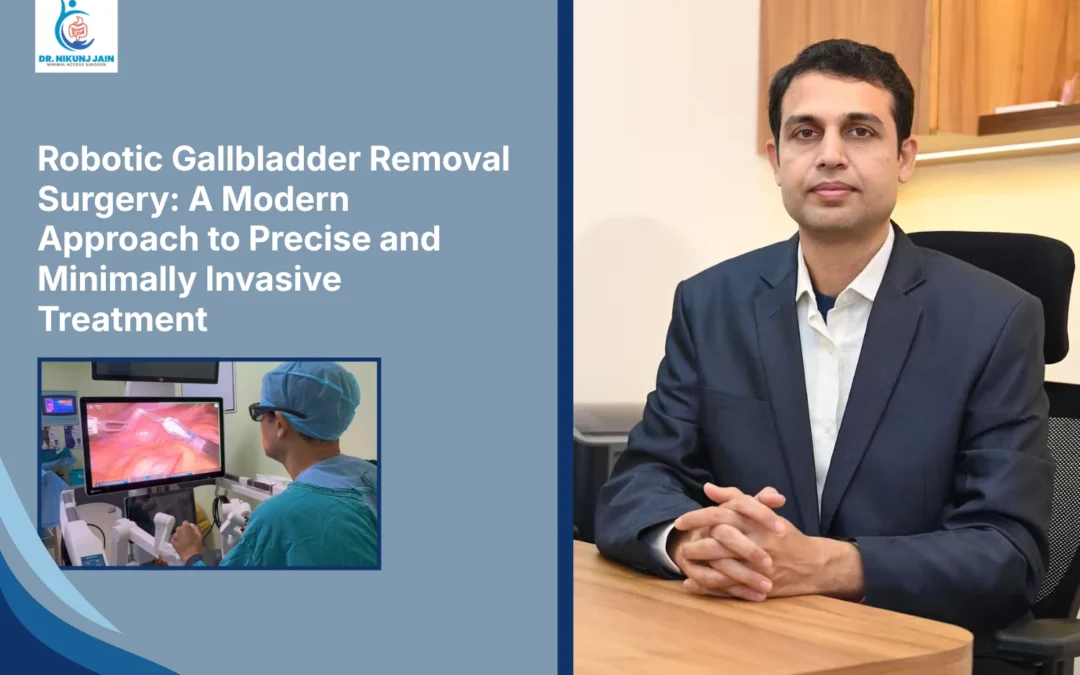
Gallbladder problems often prompt people to seek surgery to alleviate recurring pain in the upper right or upper middle abdomen, as well as nausea, vomiting, bloating, and indigestion after eating. When the gallbladder is inflamed or its function is impaired, removing the organ is a viable option. Cholecystectomy is the general term for gallbladder removal surgery. It is one of the most frequent abdominal surgeries performed today. However, the procedure is no longer associated with a long incision since minimally invasive methods have been introduced. Robotic gallbladder removal surgery is one of the leading techniques allowing the surgeon to make small incisions and access the gallbladder with robotic instruments.
The option of robotic gallbladder surgery should be discussed with Dr. Nikunj Jain, best gastro surgeon in Indore, to determine whether it is suitable for the patient’s particular case.
Table of Contents
What Is Robotic Gallbladder Removal Surgery?
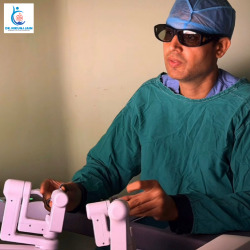
Robotic gallbladder removal is a minimally invasive procedure involving the use of robotic arms controlled by the surgeon to extract the gallbladder. The robot itself does not make decisions; rather, the surgeon has full control over it throughout the operation. The surgeon has a magnified view of the gallbladder with a 3D high-definition image while manipulating robotic instruments through small incisions. This makes it easier to isolate and extract the gallbladder with increased precision and reduces trauma to the surrounding tissues.
When Is Gallbladder Removal Necessary?
The presence of gallstones does not always necessitate surgery. If the gallstones are detected incidentally and do not cause any discomfort, the doctor may decide to leave them alone. However, there are instances when surgical intervention is required. Surgery to remove the gallbladder is indicated in the following conditions:
• Recurrent pain in the upper right or upper middle abdomen • Upper middle or right abdominal pain after eating • Nausea and vomiting due to gallstones • Inflammation of the gallbladder • Recurrent gallbladder attacks • Gallstone-related complications
Gallstones can obstruct the bile ducts, leading to potentially dangerous conditions like cholecystitis, cholangitis, and pancreatitis.
How Is Robotic Gallbladder Surgery Performed?
Robotic gallbladder surgery is performed under general anaesthesia. A few tiny incisions are made in the upper right quadrant of the abdomen. The robotic system’s surgical instruments and camera are inserted through them. Then, the surgeon manipulates the robotic arms from the console and isolates the gallbladder from the adjacent structures. After the gallbladder is removed, the robotic instruments are withdrawn, and the incisions are closed.
The method and number of incisions depend on the robotic system and the surgeon’s preferences. The procedure can be performed using either the da Vinci Si or the Zeus robotic system.
What Are the Benefits of Robotic Gallbladder Removal?
The benefits of robotic gallbladder removal stem from the nature of the procedure, which is a combination of minimally invasive surgery and state-of-the-art robotic technology. These advantages include the following:
Superior Surgical Visualization
The robotic system enables the surgeon to see the operative field more clearly. This is particularly important in minimally invasive procedures since the field is magnified and limited. The ability to see delicate anatomical structures is critical in gallbladder surgery since the surgeon must separate the gallbladder from numerous adjacent structures. In addition, the robotic system provides a three-dimensional view of the surgical site, further assisting the surgeon.
Increased Instrument Dexterity
Robotic surgical instruments possess increased range of motion and are highly flexible, allowing the surgeon to perform delicate dissections with relative ease.
Smaller Incisions
Since robotic gallbladder surgery is minimally invasive, smaller incisions are required than in traditional open surgery.
Minimally Invasive Recovery
The advantages of minimally invasive surgery typically include reduced post-operative discomfort, shorter hospital stays, reduced scarring, and faster healing. Nonetheless, these benefits vary from patient to patient, and the robotic system does not always provide substantial advantages over conventional minimally invasive laparoscopic surgery.
Robotic vs Laparoscopic Gallbladder Surgery
Both robotic and laparoscopic cholecystectomy are minimally invasive techniques used for gallbladder removal. However, they differ in the way the surgeon performs the procedure.
Surgical Technique: In robotic surgery, the surgeon controls robotic arms from a console. In laparoscopic surgery, the surgeon directly operates long, thin instruments inserted through small incisions.
Visualization: Robotic surgery provides a magnified, high-definition 3D view of the surgical area. Laparoscopic surgery generally provides a high-quality 2D view through a laparoscopic camera.
Instrument Movement: Robotic instruments offer a greater range of motion and can assist with precise movements in confined areas. Laparoscopic instruments have comparatively limited flexibility.
Surgeon Control: In both techniques, the surgery is completely controlled by the surgeon. The robotic system does not operate independently.
Effectiveness: Both robotic and laparoscopic gallbladder surgery can be safe and effective when performed by an experienced surgeon.
Cost: Robotic surgery is generally more expensive because it requires specialized robotic equipment and technology, while conventional laparoscopic surgery is usually more cost-effective.
The most suitable approach depends on the patient’s condition, surgical complexity, available technology, and the surgeon’s experience.
Recovery After Robotic Gallbladder Surgery
Same-Day Discharge: Most patients can return home on the same day after robotic gallbladder surgery.
Mild Discomfort: Some abdominal pain, bloating, or soreness around the incision sites may occur for a few days.
Temporary Nausea: Mild nausea can occur after surgery or due to the effects of anesthesia.
Shoulder Discomfort: Some patients experience temporary shoulder pain due to the gas used during minimally invasive surgery.
Early Movement: Gentle walking and light activities are usually encouraged as soon as the patient feels comfortable.
Return to Routine: Many patients can gradually return to normal daily activities within 1–2 weeks.
Individual Recovery: Recovery time may vary depending on the patient’s overall health, the complexity of the surgery, and the surgeon’s recommendations.
Follow Post-Operative Advice: Patients should follow instructions regarding wound care, diet, medicines, physical activity, and follow-up visits.
Can You Live a Normal Life Without a Gallbladder?
The gallbladder is not an essential organ, and life without it is entirely feasible. Bile is stored in the gallbladder and released into the intestines to aid in fat digestion. Following gallbladder removal, bile flows directly from the liver to the intestines. The majority of patients feel fine after the operation, though some experience minor difficulties like diarrhoea. Symptoms are exacerbated by fatty meals and usually subside once the body adapts to the changes.
Risks of Robotic Gallbladder Removal
There are some inherent dangers in any surgical procedure, and robotic gallbladder surgery is no exception. There is a possibility of injury to nearby organs and bile ducts, as well as post-surgical infections and adverse anaesthetic responses. The likelihood of developing complications is minimal, but they cannot be ruled out. There is also a danger that a minimally invasive operation may have to be converted to open surgery if the surgeon finds it too risky to continue.
Conclusion
Severe and recurrent gallbladder discomfort should not be treated solely with pain relievers and dietary modifications. When gallstones or other gallbladder abnormalities cause recurrent discomfort, surgery to remove the gallbladder is typically recommended. The patient is encouraged to speak with Dr. Nikunj Jain, best gastro surgeon in Indore, to go over the available treatment options and make an informed decision about the best course of therapy. The doctor will go over the findings, symptoms, and treatment alternatives, including laparoscopic or robotic-assisted procedures, in detail.
FAQ’s
Q1. What is robotic gallbladder removal surgery?
Robotic gallbladder removal, also known as robotic cholecystectomy, is a minimally invasive procedure in which a surgeon controls robotic instruments to remove the gallbladder through small abdominal incisions. The robotic system does not operate independently.
Q2. Is robotic gallbladder surgery better than laparoscopic surgery?
Both procedures are minimally invasive and can be effective for gallbladder removal. Robotic systems may provide enhanced visualisation and instrument control, but conventional laparoscopic cholecystectomy remains an established treatment. The most suitable approach depends on the individual patient.
Q3. Who may need gallbladder removal surgery?
Patients with repeated symptomatic gallstones, gallbladder inflammation or complications related to gallstones may be advised to undergo gallbladder removal after evaluation by a surgeon.
Q4. Is robotic gallbladder surgery painful?
Patients may experience some postoperative abdominal discomfort or temporary shoulder pain. Since the surgery is performed through small incisions, recovery is generally easier than after traditional open surgery, although individual experiences differ.
Q5. How long does robotic gallbladder surgery take?
Operating time varies according to the patient’s anatomy, inflammation, previous operations and complexity of the condition. Your surgeon can provide a more accurate estimate after evaluation.
Q6. How soon can I return to work after gallbladder surgery?
Many people undergoing minimally invasive gallbladder removal can return to normal activities within one or two weeks, although strenuous activity may need to be avoided longer. Recovery differs from patient to patient.
Q7. Can I eat normally after my gallbladder is removed?
Most patients gradually return to a normal diet. Some may find greasy or heavy foods uncomfortable during the initial recovery period and may be advised to reintroduce them gradually.
Q8. Can gallstones come back after the gallbladder is removed?
Once the gallbladder itself has been removed, gallstones cannot form inside it again. However, patients should discuss persistent or new biliary symptoms after surgery with their doctor.
Q9. Which costs more: robotic or laparoscopic gallbladder surgery?
Robotic gallbladder surgery may cost around ₹2–4 lakh, while laparoscopic surgery generally costs about ₹50,000–₹1.5 lakh in India. Actual costs vary by hospital and case.
Q10. Where can I consult for robotic gallbladder surgery in Indore?
Patients considering robotic gallbladder removal surgery in Indore can consult Dr. Nikunj Jain to discuss whether robotic, laparoscopic or another surgical approach is appropriate for their condition.