Weight loss can feel frustrating, especially when you follow diets and exercise regularly but still do not see the expected results. Many people lose some weight initially, only to gain it back later. Others may struggle to lose weight despite dieting and making repeated lifestyle changes.
Weight loss failure does not always mean that a person lacks discipline. Obesity is a health condition that can be influenced by metabolism, hormones, genetics, sleep, medications, lifestyle and other medical factors.
Weight loss failure may involve more than simply trying another diet plan. If you have experienced repeated diet failure, consulting Dr. Nikunj Jain for obesity treatment in Indore can help you understand the possible reasons behind unsuccessful weight loss attempts. A proper medical evaluation can identify contributing factors and help determine a suitable approach to weight management.
Table of Contents
Why Do Diets Fail Long Term?
Many people ask why diets fail long term even when they appear effective at first. Restrictive diets may lead to quick weight loss but they can be difficult to maintain. When normal eating patterns return, weight may gradually come back.
Weight loss can also trigger the body to adjust hunger signals and energy usage making continued weight loss more difficult over time. Weight loss struggles can also come from stress, poor sleep, eating and inconsistent routines.
This is why long-term obesity management often needs an approach rather than short-term dieting alone.
Diet and Exercise Not Working for Weight Loss
Weight loss is often linked to lifestyle changes. Some people find that diet and exercise not working for weight loss becomes a repeated concern despite regular efforts.
There may be various reasons for this.
Hormonal imbalances: Certain hormonal conditions can affect metabolism and make weight loss more difficult.
Medications: Some medicines may contribute to weight gain or slow down weight loss.
Metabolic conditions: Changes in how the body uses and stores energy can influence weight management.
Sleep disorders: Poor-quality sleep or conditions such as sleep apnoea may affect appetite, hormones and metabolism.
Reduced physical activity: Pain, joint problems or other health conditions can limit movement and reduce daily calorie expenditure.
In some cases, calorie intake may slowly rise without being obvious especially with snacks, beverages or larger portion sizes.
If weight loss has stopped despite lifestyle efforts, medical evaluation can reveal factors that block progress.
Unable to Lose Weight Despite Dieting
Being unable to lose weight despite dieting can feel discouraging. Repeatedly switching from one diet to another may not solve the problem if the underlying cause has not been identified.
A medical assessment may review your weight history, diet attempts, physical activity, medications, sleep, medical conditions and eating patterns. Depending on your health further investigations may sometimes be recommended.The goal is to understand why weight is hard to manage and to develop a long-term plan.
Losing Weight and Gaining It Back
The pattern of losing weight and gaining it back is sometimes called weight cycling. Weight cycling can occur when a diet creates changes that are too restrictive to maintain over time. Once the diet stops, old eating habits can return. Weight may gradually increase again.
Repeated cycles of weight loss and regain can make people feel discouraged and push them to try more extreme diets. Instead of focusing only on rapid weight loss treatment should aim for sustainable improvements in eating habits, physical activity, sleep and overall metabolic health.
What Is Repeated Weight Loss Failure?
Repeated weight loss failure generally means attempts at dieting or lifestyle changes without achieving meaningful or lasting weight reduction.
This does not have one cause. For some people obesity itself may have progressed to a stage where lifestyle changes alone are not enough to bring needed improvement.
In situations medically supervised treatment options may be considered. These options depend on factors such as body mass index, associated medical conditions, previous treatment attempts and overall health.
When Should You Consult an Obesity Doctor?
You may consider consulting an obesity doctor in Indore if you have repeatedly tried dieting and exercise without lasting success. Medical guidance can also help if weight is affecting conditions such as diabetes, high blood pressure, fatty liver disease, sleep apnoea, joint problems or overall quality of life.
A medical obesity doctor in Indore can evaluate whether lifestyle changes alone are appropriate for obesity or whether other obesity treatment options should be considered. Seeking help does not mean that dieting has failed. It means that obesity may need medical management like many other long-term health conditions.
Can Surgery Help After Repeated Diet Failure?
For selected patients with severe obesity bariatric surgery may be considered when non-surgical weight-loss attempts have not produced adequate or sustainable results.
Bariatric procedures work by changing the system in ways that can support weight loss and metabolic improvement.
Surgery is not recommended simply because one diet has failed. Surgery is considered after evaluating BMI, obesity-related health problems, previous weight-loss efforts and overall medical fitness. A detailed consultation helps determine whether surgical or non-surgical treatment is more appropriate.
Conclusion
Repeated dieting, temporary weight loss and weight regain can be exhausting. If you are struggling with repeated weight-loss failure it may be time to look beyond another short-term diet.
For repeated diet failure treatment in Indore, consult Dr. Nikunj Jain, weight loss surgeon in Indore for evaluation of obesity, repeated diet failure and personalized weight-management options.
FAQs
Q1. Why am I not losing weight even after dieting?
Weight loss can be affected by metabolism, medications, hormones, sleep, lifestyle patterns and medical conditions. A proper evaluation can help identify possible reasons.
Q2. Why do I gain weight back after dieting?
Weight regain commonly occurs when restrictive diets cannot be maintained and previous eating patterns return.
Q3. Can repeated dieting make weight loss harder?
Repeated restrictive dieting and weight cycling can make long-term weight management more difficult for some people.
Q4. What should I do if diet and exercise are not working?
If consistent lifestyle changes are not producing results, consider a medical evaluation to identify other contributing factors.
Q5. Is obesity a medical condition?
Yes. Obesity is recognised as a chronic health condition influenced by multiple biological, behavioural and environmental factors.
Q6. Can obesity be treated without surgery?
Yes. Depending on the individual, treatment may include nutrition, exercise, behavioural changes and medically supervised weight-loss options.
Q7. When is bariatric surgery considered?
Bariatric surgery may be considered for selected patients with significant obesity, particularly when lifestyle and medical approaches have not provided adequate results.
Q8. Is weight regain common after losing weight?
Yes. Weight regain can happen, especially when weight loss was achieved through highly restrictive or short-term diets.
Q9. Which doctor should I consult for repeated weight loss failure?
An obesity specialist, bariatric surgeon or doctor experienced in medical weight management can assess the possible causes and treatment options.
Q10. Where can I seek obesity treatment in Indore?
You can consult Dr. Nikunj Jain for evaluation of obesity, repeated weight-loss failure and personalised surgical or non-surgical treatment options.
Upper abdominal discomfort is often blamed on gas or acidity. While gas and acidity are common digestive problems, similar symptoms can also be caused by gallstones. Knowing the difference between gas and acidity and understanding when pain may be related to the gallbladder can help you decide when medical evaluation is needed.
Gas, acidity and gallstones can all cause discomfort, bloating or pain after eating. However, the location, nature and duration of these symptoms are often different. Understanding gas vs acidity vs gallstones can make it easier to recognise symptoms that may require medical attention.
If you experience repeated upper abdominal pain, especially on the right side or after meals, consult Dr. Nikunj Jain, Surgical Gastroenterologist in Indore, for proper evaluation and appropriate treatment.
Table of Contents
What Does Gas Usually Feel Like?
Gas forms when air or other gases gather inside the tract. Gas can cause bloating, a feeling of fullness, burping, the release of gas and cramp-like discomfort.
Gas pain can appear in parts of the abdomen and may shift from one spot to another. The discomfort often eases after passing gas, burping or having a bowel movement.
Eating quickly, drinking fizzy drinks, overeating and eating certain foods can raise gas production. When you look at the bloating and acidity difference, bloating usually means a feeling of abdominal swelling. Acidity normally causes a burning or irritated sensation in the digestive tract.
What Are the Symptoms of Acidity?
Acidity usually means reflux or too much acid irritation. Common signs are a burning feeling in the abdomen or chest, a sour taste in the mouth, burping and discomfort after eating.
Symptoms often worsen after spicy or oily food meals, lying down soon after eating or eating late at night.
An important difference between gas and acidity is that acidity usually creates burning, heartburn or sour regurgitation. Gas on the other hand usually brings bloating, pressure and cramping. However, gas and acidity can happen at the same time.
What Are Gallstones?
Gallstones are deposits that form inside the gallbladder. Many people have gallstones and do not feel any symptoms.
When a gallstone blocks bile flow for a time, it can cause typical abdominal pain. Knowing the symptoms of gallbladder stones is very important because repeated pain should not be assumed to be gas.
Typical gallstone pain usually appears in the abdomen, most often on the right side or in the center below the ribs. The discomfort can sometimes travel toward the back or the right shoulder.
Gas Pain or Gallbladder Pain: How Can You Tell?
Gas Pain
Can occur in different parts of the abdomen.
Pain may shift from one area to another.
Often comes with bloating or a feeling of fullness.
May improve after burping, passing gas or having a bowel movement.
Usually does not remain fixed in one spot for a long time.
Gallbladder Pain
Usually occurs in the right upper abdomen or central upper abdomen.
Pain tends to stay in one area rather than move around.
May appear after eating, especially after a fatty or heavy meal.
Can last from several minutes to a few hours.
May not improve after passing gas, burping or changing position.
Can sometimes spread towards the back or right shoulder.
Because gas and gallbladder symptoms can overlap, repeated or persistent upper abdominal pain should not be self-diagnosed.
If you frequently experience right upper abdominal pain or discomfort after meals, consult Dr. Nikunj Jain, Surgical Gastroenterologist in Indore, for proper evaluation and treatment guidance.
Gallstone Pain After Eating
A pattern for gallstones that cause pain is abdominal pain after a meal, especially a heavy or fatty meal. Gallstone pain after eating happens because the gallbladder squeezes to release bile while you digest. If a stone blocks bile flow, pressure inside the gallbladder triggers pain. Therefore, repeated right upper abdominal pain after meals, especially after oily or fatty foods, should be talked about with a doctor.
Acidity vs Gallstones Symptoms
When you compare acidity vs gallstones symptoms, the place and type of pain can give clues.
Acidity usually brings burning behind the breastbone or in the abdomen, sour burps and reflux into the throat.
Gallstones usually bring pain in the right upper or central abdomen. Some people may also feel nausea or vomit.
Severe gallbladder inflammation can also bring fever and lasting tenderness. Symptoms alone are not always enough for a diagnosis. An abdominal ultrasound is often used when gallstones are suspected.
When Should Upper Abdominal Pain Be Evaluated?
Occasional mild gas or acidity may get better with diet and lifestyle changes. Repeated or strong pain should not be treated again and again with over-the-counter medicines without knowing what causes it.
You should think about seeing an upper abdominal pain doctor in Indore if pain happens again after meals, gets severe, lasts for several hours or comes with vomiting, fever or jaundice.
Sudden strong abdominal pain, fever, ongoing vomiting or yellowing of the eyes or skin needs quick medical assessment.
Conclusion
Gas, acidity and gallstones can sometimes give digestive complaints but their treatment is very different. Correct diagnosis helps figure out whether symptoms come from the stomach, intestines or gallbladder.
For pain in the right upper belly or suspected gallstones, see Dr. Nikunj Jain, surgical gastroenterologist and gallstone specialist in Indore for evaluation and a proper treatment plan.
FAQs
Q1. How can I tell the difference between gas and gallstone pain?
Gas pain may move around the abdomen and improve after passing gas or burping. Gallstone pain is often more persistent and typically occurs in the upper-right or central abdomen.
Q2. Where is gallstone pain usually felt?
Gallstone pain is commonly felt beneath the ribs on the right side or in the central upper abdomen and can sometimes spread to the back or right shoulder.
Q3. Can gallstones feel like acidity?
Yes. Some people initially mistake gallstone discomfort for acidity, indigestion or gas, particularly when symptoms occur after meals.
Q4. Does gallstone pain happen after eating?
It can. Gallstone attacks may occur after meals, particularly meals containing a higher amount of fat.
Q5. How long does gallstone pain last?
Pain can last from several minutes to a few hours. Persistent or severe pain requires medical evaluation.
Q6. Does gallstone pain improve after passing gas?
Typically, gallstone pain does not reliably improve after passing gas or having a bowel movement.
Q7. Can acidity cause right-sided abdominal pain?
Acidity generally causes upper abdominal or chest burning, but abdominal symptoms can overlap. Repeated right upper abdominal pain should be evaluated.
Q8. What test detects gallstones?
An abdominal ultrasound is commonly used to detect gallstones and evaluate the gallbladder.
Q9. Do all gallstones require surgery?
No. Gallstones that are not causing symptoms may not always require treatment. Symptomatic or complicated gallstones need individual medical assessment.
Q10. Which doctor should I consult for repeated gallbladder pain?
A surgical gastroenterologist or GI surgeon like Dr. Nikunj Jain can evaluate recurrent upper abdominal pain and determine whether gallstones or another digestive condition is responsible.
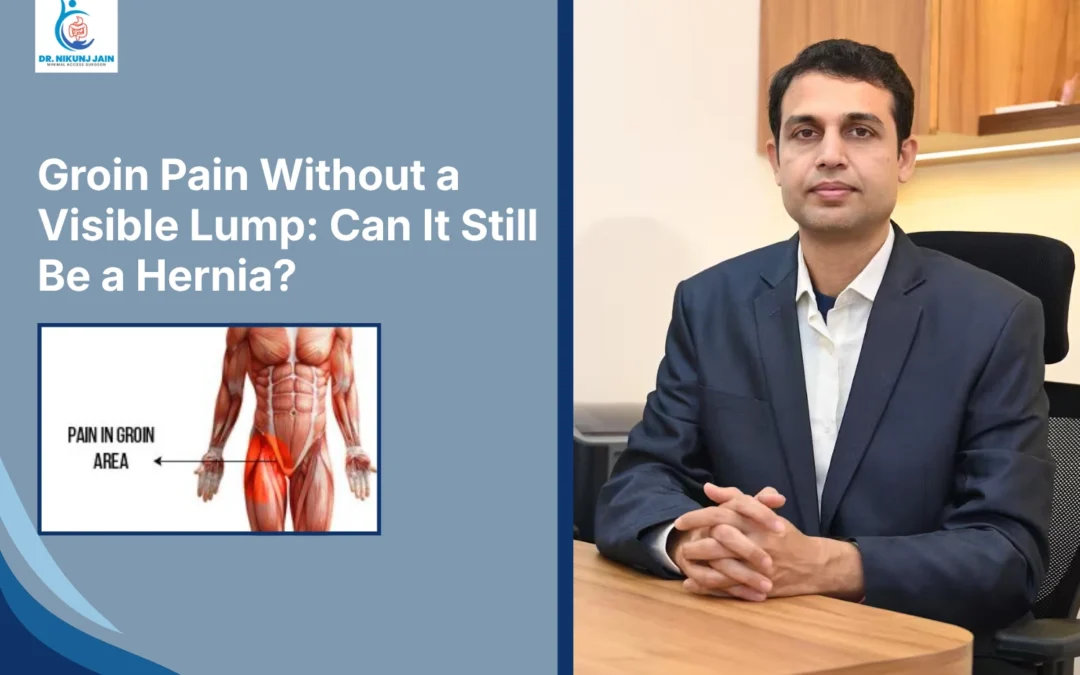
Groin pain often accompanies a hernia; however, there may not always be a visible bulge. If a person has chronic discomfort, heaviness, a pulling sensation, or pain in the groin without any obvious swelling, the cause could be an early or small hernia.
At the same time, several other conditions can also cause groin pain. Therefore, it is important to identify whether the pain is related to a hernia or another underlying problem.
If you are experiencing persistent groin pain, discomfort, or heaviness, consult Dr. Nikunj Jain, a surgical gastroenterologist and one of the best doctors for groin pain in Indore, for proper evaluation, diagnosis, and appropriate treatment.
Table of Contents
A Hernia May Exist Without a Visible Lump
A hernia develops when tissues such as fat or parts of the intestine push through weaknesses in the abdominal muscles. However, a hernia lump might not always be visible or palpable. Small hernias may only cause groin discomfort without any protrusion. Moreover, some hernias may only be visible when one is standing or coughing. If a hernia is small or deep, it may cause groin pain without causing any swelling.
Symptoms of Hernia
Groin pain caused by hernias can often take a variety of forms. It may range from occasional to constant and mild to severe. Some people may experience discomfort during physical activities while others may feel pain even at rest. Moreover, each person may experience hernia-related groin pain differently. The following are some examples of pain that may occur during a hernia:
• Aching or burning discomfort in the groin
• Heaviness in the lower abdomen
• Pain when coughing or sneezing
• Discomfort when lifting something heavy
• Pulling sensation around the groin
• Pain when standing for a long time
• Groin discomfort when exercising
• Groin pain that goes away when lying down
These symptoms, however, cannot be used to confirm a hernia because several other conditions may also lead to similar groin discomfort or pain.
Occult Hernias Can Be Difficult to Notice
A hernia with symptoms but without a visible lump is also known as an occult hernia. Most often, individuals with occult hernias are unaware that they have a hernia. Usually, a lump can only be seen or felt when coughing or straining. A hernia may also be detected when the doctor asks the patient to stand or cough.
Proper diagnosis is important to identify the exact cause and decide the right treatment.
How a Hernia Is Diagnosed
The initial evaluation for a hernia consists of obtaining a detailed history of symptoms. The doctor may ask if one feels pain while coughing, lifting, or exercising. Next, the physician will conduct a thorough physical examination of the groin while the patient is standing. The doctor may also ask them to cough or strain to see if they can see or feel a hernia.
If the symptoms suggest hernia, but the diagnosis is not clear on physical examination, an ultrasound scan of the groin may be advised. In certain circumstances, an MRI or CT scan may also be necessary to rule out other causes of groin discomfort or pain.
When Groin Pain Needs Medical Attention
Groin pain that occurs frequently when exercising or working out, or persists for several days, should not be ignored since it may be a sign of a hernia. The same goes for groin pain that is progressively getting worse. One should seek immediate medical attention in case of sudden, severe groin pain or pain that comes with nausea or vomiting. In addition, if the person notices a swollen groin area that does not seem to be improving, it is best to see a doctor.
Treatment Depends on the Diagnosis
• Muscle strain: Usually improves with rest, reduced activity, and appropriate care.
• Hernia:Hernias generally do not heal on their own and may require surgical repair.
• Surgical options: Hernia surgery may be performed using open, laparoscopic, or robotic-assisted techniques.
• Choice of surgery: The most suitable approach depends on the type and size of the hernia, symptoms, overall health, and individual patient factors.
• Proper diagnosis is important: A detailed examination helps determine whether surgery is needed and which treatment approach is most appropriate.
Conclusion
Yes, it is absolutely possible to have groin pain from a hernia with no visible lump. Small hernias or those that are concealed may cause groin discomfort as well as pain while coughing, lifting, or exercising. However, there are several other causes of groin pain.
One should see Dr. Nikunj Jain, Best Hernia Surgeon in Indore, for an examination if they are suffering from chronic or recurring groin discomfort or pain. It is crucial to detect the precise cause of groin pain since it will help identify the kind of treatment that is necessary to get better.
FAQs
Q1. Can you have a hernia without a lump? Yes. Small or hidden hernias may cause pain or discomfort without producing an obvious swelling.
Q2. What does a hidden hernia feel like? It may cause aching, burning, heaviness, pressure or a pulling sensation in the groin.
Q3. Can an inguinal hernia cause pain without swelling? Yes. An early or small inguinal hernia may cause symptoms before a noticeable bulge appears.
Q4. Does hernia pain increase while coughing? It can. Coughing increases pressure inside the abdomen and may make hernia-related discomfort more noticeable.
Q5. Can gym workouts cause groin pain? Yes. Muscle strains and hernias can both cause groin discomfort after exercise or heavy lifting.
Q6. How is a hidden hernia diagnosed? Diagnosis may involve physical examination and, when necessary, imaging such as ultrasound, MRI or CT.
Q7. Can a hernia disappear while lying down? Some reducible hernias become less noticeable or disappear temporarily when a person lies down.
Q8. Does every groin hernia need surgery? Treatment depends on the type of hernia, symptoms and individual circumstances. A surgeon can advise whether surgery is appropriate.
Q9. When is groin pain an emergency? Sudden severe pain, vomiting, abdominal swelling or a painful lump that cannot be pushed back requires urgent medical attention.
Q10. Who should I consult for hernia symptoms in Indore? You can consult Dr. Nikunj Jain, best hernia doctor in indore, for evaluation and appropriate treatment.
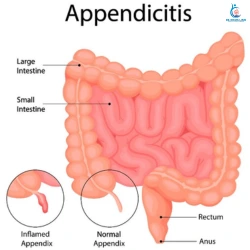
Appendicitis is a disease in which the appendix, a pouch that is attached to the large intestine, becomes inflamed or infected. Appendicitis is a cause of sudden abdominal pain and usually requires urgent medical care. If treatment is delayed, the appendix can cause serious complications.
Recognising the signs of appendicitis is important. Abdominal pain is usually the main symptom of appendicitis, but the location and intensity of the pain can differ from one person to another.
If you experience persistent or worsening abdominal pain, nausea, vomiting, fever, or pain that shifts towards the lower right side of the abdomen, timely medical evaluation is important. For proper diagnosis and treatment of appendicitis, consult Dr. Nikunj Jain, Surgical Gastroenterologist in Indore. Early evaluation can help prevent complications and ensure appropriate treatment.
Table of Contents
Early Symptoms of Appendicitis
Appendicitis often starts with discomfort or pain around the belly button. Over the few hours the pain can shift toward the lower-right side of the abdomen and gradually become more severe.
Common symptoms may include:
Pain around the belly button that moves toward the abdomen
Increasing pain
Pain that becomes worse while walking, coughing or making movements
Nausea
Vomiting
Loss of appetite
Fever
Abdominal bloating
Constipation or diarrhoea
Not all people experience the same symptoms of appendicitis. The location of the pain may also differ in children, older adults and pregnant women.
Location of Appendicitis Pain
A feature of appendicitis is pain that begins around the belly button and later moves toward the lower-right side of the abdomen.
The pain of appendicitis usually becomes more intense over time. Walking, coughing, sudden movements or pressure over the area can make the pain worse.
However appendicitis does not always follow this pattern. The exact position of the appendix can differ slightly between individuals, which means the pain of appendicitis may sometimes be felt in an area of the abdomen.
Appendicitis as a Medical Emergency
Appendicitis requires medical evaluation because an untreated appendix can rupture. A ruptured appendix can allow infection to spread inside the abdomen and can lead to complications such as peritonitis, an abdominal abscess or sepsis.
Seek medical attention if abdominal pain is:
Getting worse instead of improving
Moving toward the side of the abdomen
Accompanied by fever
Associated with repeated nausea or vomiting
Making the abdomen very tender or swollen
Suddenly spreading across the abdomen
Abdominal pain should never be ignored or self-diagnosed.
Sudden Improvement in Appendicitis Pain
A reduction in pain does not always mean that the condition of appendicitis is getting better.
If the appendix ruptures the pain of appendicitis may briefly become less intense before returning as widespread abdominal pain when the infection begins to spread.
For this reason any sudden or unusual change in abdominal pain of appendicitis should be medically evaluated.
Causes of Appendicitis
Appendicitis usually develops when the opening of the appendix becomes blocked. Once the blockage occurs, mucus and bacteria can build up inside the appendix, leading to increased pressure, swelling, inflammation and infection.
The blockage may occur due to hardened stool, swelling of the lymphatic tissue after an infection, or, less commonly, other material obstructing the appendix. As the pressure inside the appendix increases, its blood supply may become reduced and the infection can worsen.
If appendicitis is not treated in time, the appendix may eventually rupture, allowing infection to spread into the abdomen.
Appendicitis can affect people of any age, although it is more commonly seen in children, teenagers and young adults.
Diagnosis of Appendicitis in Indore
The symptoms of appendicitis can resemble other abdominal conditions so proper diagnosis of appendicitis usually requires a medical examination.
The doctor may examine the abdomen for tenderness, swelling and the location of the pain of appendicitis. Depending on the symptoms further tests may be advised to confirm the diagnosis or rule out conditions.
These may include:
Blood tests
Urine tests
Ultrasound
CT scan
Pregnancy testing when appropriate
There is no test that can diagnose every case of appendicitis. Doctors usually consider the symptoms of appendicitis, the physical examination and the investigation results together before deciding on treatment.
Treatment of Appendicitis
Treatment of appendicitis depends on the patient’s symptoms, condition and the severity of the inflammation.
Surgery to remove the appendix, known as an appendectomy or appendicectomy is one of the common treatments, for appendicitis. Antibiotics may also be used depending on the case of appendicitis.
If the appendix of appendicitis has already ruptured or an abscess has formed additional treatment may be required to control the infection.
Early diagnosis and treatment of appendicitis can help reduce the risk of complications.
Waiting for Appendicitis Pain to Go Away
Persistent or worsening abdominal pain should not simply be ignored when appendicitis is a possibility.
Many other conditions can also cause pain, including kidney stones, urinary tract infections, gallstones and certain intestinal or gynaecological conditions. Because the symptoms of appendicitis can overlap, a proper medical assessment is important.
It is better not to diagnose appendicitis based on where the pain is located.
When to Consult a Surgeon
I have seen patients who were unsure about their abdominal pain. If you develop abdominal pain especially when the pain moves to the lower-right side and is accompanied by nausea, vomiting, fever or loss of appetite seek medical advice promptly.
If you notice symptoms that may suggest appendicitis in Indore consult Dr. Nikunj Jain, best GI surgeon in Indore, for evaluation and guidance on suitable treatment. Severe or rapidly worsening pain must be treated as an emergency and evaluated at a hospital without delay.
Conclusion
Appendicitis may begin with abdominal discomfort but appendicitis can become more serious within a short period of time. Pain that starts around the belly button and moves towards the side of the abdomen especially when accompanied by nausea, vomiting, fever or loss of appetite should not be ignored.
Without treatment the appendix may rupture and cause serious complications. Early medical evaluation can help ensure diagnosis and correct treatment.
If you are concerned about appendicitis symptoms consult Dr. Nikunj Jain, best laparoscopic surgeon in Indore, for appropriate evaluation and treatment. In cases of severe or rapidly worsening pain seek emergency medical care immediately.
FAQs
Q1. What are the first symptoms of appendicitis?
Appendicitis may initially cause pain around the belly button, which commonly moves towards the lower-right abdomen. Nausea, loss of appetite and fever may also occur.
Q2. Where is appendicitis pain usually located?
Appendicitis pain commonly becomes concentrated in the lower-right side of the abdomen, although the exact location can vary.
Q3. How do I know if abdominal pain could be appendicitis?
Pain that becomes progressively worse, moves from around the belly button towards the lower-right abdomen and occurs with nausea, vomiting, fever or loss of appetite may require urgent medical assessment.
Q4. Can appendicitis occur without fever?
Yes. Not every patient experiences every typical symptom, so the absence of fever does not by itself rule out appendicitis.
Q5. Can appendicitis cause vomiting?
Yes. Nausea and vomiting are commonly associated with appendicitis, particularly when they occur along with worsening abdominal pain.
Q6. Can appendicitis pain come and go?
Appendicitis pain generally becomes progressively worse, but symptoms can vary between individuals. Persistent or worsening abdominal pain should be medically assessed.
Q7. What happens if the appendix bursts?
A ruptured appendix may spread infection inside the abdomen and lead to complications such as peritonitis, abscess formation or sepsis. This requires urgent medical treatment.
Q8. How is appendicitis diagnosed?
Diagnosis may involve abdominal examination, blood and urine tests and imaging such as ultrasound or CT scan, depending on the individual case.
Q9. Does appendicitis always require surgery?
Surgery to remove the appendix is a common treatment, while antibiotics may also form part of management in selected situations. Treatment should be decided after medical evaluation.
Q10. Who should I consult for appendicitis treatment in Indore?
If you have symptoms suggestive of appendicitis, you can consult Dr. Nikunj Jain, best gastro surgeon in Indore for evaluation and appropriate treatment guidance. Severe abdominal pain or rapidly worsening symptoms require immediate hospital assessment.
Acid reflux and GERD are often interchanged, but these terms are not the same. Everyone may experience having occasional acidity, heartburn, or a sour taste in the mouth after eating a heavy meal. However, if this happens often and begins to affect your lifestyle, you may have gastroesophageal reflux disease (GERD). This blog by Dr. Nikunj Jain, best gastro surgeon in Indore, will discuss the difference between acid reflux and GERD.
Table of Contents
Acid Reflux
Acid reflux occurs when the stomach acid moves up into the esophagus, causing a heartburn. The esophagus is a muscular tube responsible for carrying food from the throat to the stomach. The lower part of this tube has a valve known as the lower esophageal sphincter. This sphincter usually opens when swallowing food or liquids and closes after they enter the stomach. If this valve opens at an unintended time or is not strong enough, stomach acid can easily flow up into the esophagus. Acid reflux can easily happen and may occur after eating a heavy or spicy meal.
Common Symptoms of Acid Reflux
The most common acid reflux symptoms are:
• Heartburn or a burning sensation in the upper abdomen; • Sour or bitter taste in the mouth; • Regurgitation of acid and food; • Burping or belching; • Upper abdominal discomfort; • Upper abdominal pain; • Symptoms that occur while lying down or after eating; • Fullness after eating.
The symptoms above are only present some of the time, and they tend to disappear with adjustments to the diet. The following section will discuss GERD and explain what happens if acid reflux occurs more frequently.
GERD
GERD stands for gastroesophageal reflux disease, and it is a digestive system disorder that occurs from frequent acid reflux. Individuals who have GERD experience heartburn more often than those who encounter acid reflux occasionally. If a person has acid reflux more than twice weekly, it may be a sign of GERD.
GERD can lead to heartburn that disrupts the ability to have a good night’s sleep, especially when lying down. If the symptoms of GERD persist for a long time, it can cause complications such as difficulty swallowing and chronic cough. Therefore, it is important to consult with a physician if acid reflux persists for a long time.
Symptoms of GERD
Common symptoms of GERD may include:
Frequent heartburn or a burning sensation in the chest
Sour or bitter taste in the mouth
Regurgitation of food or stomach acid
Difficulty or discomfort while swallowing
Feeling like food is stuck in the throat
Chest discomfort or pain
Chronic cough
Hoarseness or frequent throat clearing
Sore throat or throat irritation
Excessive burping or belching
Bloating or upper abdominal discomfort
Reflux symptoms that become worse after meals
Symptoms that worsen while lying down or bending over
Nighttime reflux that disturbs sleep
Some people with GERD may not experience typical heartburn and may mainly have symptoms such as chronic cough, throat irritation, hoarseness, or swallowing difficulty.
Acid Reflux vs. GERD Difference
The major difference between acid reflux and GERD is the frequency and persistence of the symptoms. Acid reflux is only occasional, and GERD is more like the constant heartburn that comes and goes. In other words, GERD is the advanced form of acid reflux, and it can be both mild and severe. The following section will elaborate on the causes of acid reflux and GERD.
Causes of Acid Reflux and GERD
A hiatal hernia, as well as the following lifestyle risk factors, may contribute to GERD or acid reflux:
• Eating large meals • Lying down right after eating • Eating spicy and fatty meals • Drinking too much tea or coffee • Eating chocolate • Drinking carbonated beverages • Smoking • Drinking alcohol • Being obese • Being pregnant • Using specific medications
Each person may experience GERD differently. Although heartburn is the most common symptom of GERD, you may also have other ones such as:
• Heartburn • Sour taste in the mouth • Regurgitation of food and stomach acid • Difficulty swallowing, which may signal esophageal stricture • Chronic cough • Hoarse voice, sore throat, or other throat irritation • Feeling like there is something stuck in the throat • Chest pain • Nighttime reflux • Nighttime waking due to reflux • Chronic cough
Some people with GERD may experience trouble swallowing food without heartburn. The next section will discuss the possible complications of GERD.
Acid Reflux and GERD: Are There Any Complications?
Since the esophagus is not supposed to be exposed to stomach acid, this exposure may cause it to become inflamed. GERD can lead to the following complications:
Oesophageal Ulcer
This condition can occur in the esophagus and cause severe pain when swallowing. People with esophageal ulcers may also vomit blood.
Oesophageal Stricture
It is a condition where the esophagus undergoes some changes and becomes narrower, thus, making it difficult to swallow food.
Barrett’s Esophagus
It is a condition that makes the cells in the lower esophagus change into a different cell type. People with this condition have an increased risk of developing esophageal cancer. All three complications mentioned above can only be diagnosed by a physician.
Acid Reflux and GERD Treatments
There are various treatments for acid reflux and GERD, including lifestyle changes, medications, and surgeries. Doctors recommend making the following lifestyle changes if you have GERD:
• Eating smaller meals • Avoiding foods that cause heartburn • Avoiding lying down for a long time after eating • Maintaining a healthy weight • Quitting smoking and limiting alcohol consumption • Avoiding meals before going to bed • Raising the head of the bed if nighttime heartburn is frequent
Depending on the severity of the disease, the doctor may also prescribe antacids, H2 blockers, proton pump inhibitors,
If these treatments do not help, the patient may need to undergo surgery or an endoscopic procedure to treat GERD. The following section will elaborate on when to see a doctor for acid reflux or GERD.
When to Call a Doctor?
You should consult a physician for acid reflux if:
• Your symptoms do not improve • The symptoms occur frequently • The nighttime reflux wakes you up • You experience difficulty or pain while swallowing • You lose weight unintentionally • You start vomiting repeatedly • You experience bloating or notice black stools • You need frequent medication for reflux
Moreover, if you experience severe, sudden chest pain, you should seek medical attention immediately because heart issues can sometimes be mistaken for heartburn. The final section of this essay will summarize the information presented above.
Conclusion
Acid reflux and GERD both involve the backward flow of stomach acid into the esophagus, but these terms differ in that GERD is the chronic form of acid reflux. Even though occasional GERD may not be a cause for alarm, it is important to consult with a physician if the symptoms persist for a long time. This is so because frequent GERD may lead to many health complications such as chronic cough, esophageal stricture, and Barrett’s esophagus.
Moreover, if the symptoms of acid reflux or GERD do not improve, it is important to contact a physician so that additional tests can be done. In general, heartburn may be frequent and persistent, thus, it is significant to get it checked out. Consult the best gastro surgeon in Indore, Dr. Nikunj Jain, and do not ignore any symptoms.
FAQs
Q1. Is acid reflux the same as GERD?
No. Acid reflux can happen occasionally, while GERD is a chronic condition in which reflux occurs repeatedly or causes persistent troublesome symptoms.
Q2. How often does acid reflux become GERD?
Frequent reflux occurring repeatedly over time may suggest GERD. The diagnosis also depends on the severity of symptoms and their effect on daily life.
Q3. Can GERD be cured permanently?
GERD can often be managed effectively with lifestyle changes and medication. Selected patients may also benefit from surgical or endoscopic treatment depending on the underlying cause.
Q4. What foods commonly trigger acid reflux?
Common triggers include fatty foods, spicy foods, chocolate, caffeine, carbonated drinks and large meals. However, triggers vary between individuals.
Q5. Can GERD cause coughing?
Yes. Acid reflux reaching the upper oesophagus or throat may contribute to chronic cough, throat irritation and voice changes in some patients.
Q6. Does GERD always cause heartburn?
No. Some people experience mainly cough, hoarseness, throat irritation, regurgitation or swallowing difficulties without noticeable heartburn.
Q7. Is long-term acid reflux dangerous?
Persistent reflux may cause inflammation of the oesophagus and, in some patients, complications such as strictures or Barrett’s oesophagus. Frequent symptoms should therefore be medically evaluated.
Q8. Can stress make acid reflux or GERD worse?
Yes. Stress may worsen reflux symptoms in some people by affecting digestion, eating habits and sensitivity to discomfort. Managing stress may help reduce symptoms along with appropriate treatment.
Q9. How is GERD diagnosed?
GERD is often diagnosed based on symptoms and medical history. If symptoms are persistent, severe or unusual, the doctor may recommend tests such as upper GI endoscopy, pH monitoring or other investigations.
Q10. When should I see a doctor for acid reflux?
You should consult a doctor if reflux occurs frequently, interferes with sleep or daily activities, or is associated with difficulty swallowing, unexplained weight loss, repeated vomiting or persistent chest discomfort.