

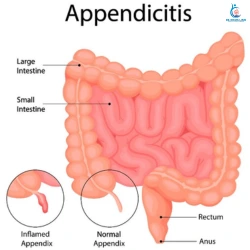
Appendicitis is a disease in which the appendix, a pouch that is attached to the large intestine, becomes inflamed or infected. Appendicitis is a cause of sudden abdominal pain and usually requires urgent medical care. If treatment is delayed, the appendix can cause serious complications.
Recognising the signs of appendicitis is important. Abdominal pain is usually the main symptom of appendicitis, but the location and intensity of the pain can differ from one person to another.
If you experience persistent or worsening abdominal pain, nausea, vomiting, fever, or pain that shifts towards the lower right side of the abdomen, timely medical evaluation is important. For proper diagnosis and treatment of appendicitis, consult Dr. Nikunj Jain, Surgical Gastroenterologist in Indore. Early evaluation can help prevent complications and ensure appropriate treatment.
Table of Contents
Early Symptoms of Appendicitis
Appendicitis often starts with discomfort or pain around the belly button. Over the few hours the pain can shift toward the lower-right side of the abdomen and gradually become more severe.
Common symptoms may include:
- Pain around the belly button that moves toward the abdomen
- Increasing pain
- Pain that becomes worse while walking, coughing or making movements
- Nausea
- Vomiting
- Loss of appetite
- Fever
- Abdominal bloating
- Constipation or diarrhoea
Not all people experience the same symptoms of appendicitis. The location of the pain may also differ in children, older adults and pregnant women.
Location of Appendicitis Pain
A feature of appendicitis is pain that begins around the belly button and later moves toward the lower-right side of the abdomen.
The pain of appendicitis usually becomes more intense over time. Walking, coughing, sudden movements or pressure over the area can make the pain worse.
However appendicitis does not always follow this pattern. The exact position of the appendix can differ slightly between individuals, which means the pain of appendicitis may sometimes be felt in an area of the abdomen.
Appendicitis as a Medical Emergency
Appendicitis requires medical evaluation because an untreated appendix can rupture. A ruptured appendix can allow infection to spread inside the abdomen and can lead to complications such as peritonitis, an abdominal abscess or sepsis.
Seek medical attention if abdominal pain is:
- Getting worse instead of improving
- Moving toward the side of the abdomen
- Accompanied by fever
- Associated with repeated nausea or vomiting
- Making the abdomen very tender or swollen
- Suddenly spreading across the abdomen
Abdominal pain should never be ignored or self-diagnosed.
Sudden Improvement in Appendicitis Pain
A reduction in pain does not always mean that the condition of appendicitis is getting better.
If the appendix ruptures the pain of appendicitis may briefly become less intense before returning as widespread abdominal pain when the infection begins to spread.
For this reason any sudden or unusual change in abdominal pain of appendicitis should be medically evaluated.
Causes of Appendicitis
Appendicitis usually develops when the opening of the appendix becomes blocked. Once the blockage occurs, mucus and bacteria can build up inside the appendix, leading to increased pressure, swelling, inflammation and infection.
The blockage may occur due to hardened stool, swelling of the lymphatic tissue after an infection, or, less commonly, other material obstructing the appendix. As the pressure inside the appendix increases, its blood supply may become reduced and the infection can worsen.
If appendicitis is not treated in time, the appendix may eventually rupture, allowing infection to spread into the abdomen.
Appendicitis can affect people of any age, although it is more commonly seen in children, teenagers and young adults.
Diagnosis of Appendicitis in Indore
The symptoms of appendicitis can resemble other abdominal conditions so proper diagnosis of appendicitis usually requires a medical examination.
The doctor may examine the abdomen for tenderness, swelling and the location of the pain of appendicitis. Depending on the symptoms further tests may be advised to confirm the diagnosis or rule out conditions.
These may include:
- Blood tests
- Urine tests
- Ultrasound
- CT scan
- Pregnancy testing when appropriate
There is no test that can diagnose every case of appendicitis. Doctors usually consider the symptoms of appendicitis, the physical examination and the investigation results together before deciding on treatment.
Treatment of Appendicitis
Treatment of appendicitis depends on the patient’s symptoms, condition and the severity of the inflammation.
Surgery to remove the appendix, known as an appendectomy or appendicectomy is one of the common treatments, for appendicitis. Antibiotics may also be used depending on the case of appendicitis.
If the appendix of appendicitis has already ruptured or an abscess has formed additional treatment may be required to control the infection.
Early diagnosis and treatment of appendicitis can help reduce the risk of complications.
Waiting for Appendicitis Pain to Go Away
Persistent or worsening abdominal pain should not simply be ignored when appendicitis is a possibility.
Many other conditions can also cause pain, including kidney stones, urinary tract infections, gallstones and certain intestinal or gynaecological conditions. Because the symptoms of appendicitis can overlap, a proper medical assessment is important.
It is better not to diagnose appendicitis based on where the pain is located.
When to Consult a Surgeon
I have seen patients who were unsure about their abdominal pain. If you develop abdominal pain especially when the pain moves to the lower-right side and is accompanied by nausea, vomiting, fever or loss of appetite seek medical advice promptly.
If you notice symptoms that may suggest appendicitis in Indore consult Dr. Nikunj Jain, best GI surgeon in Indore, for evaluation and guidance on suitable treatment. Severe or rapidly worsening pain must be treated as an emergency and evaluated at a hospital without delay.
Conclusion
Appendicitis may begin with abdominal discomfort but appendicitis can become more serious within a short period of time. Pain that starts around the belly button and moves towards the side of the abdomen especially when accompanied by nausea, vomiting, fever or loss of appetite should not be ignored.
Without treatment the appendix may rupture and cause serious complications. Early medical evaluation can help ensure diagnosis and correct treatment.
If you are concerned about appendicitis symptoms consult Dr. Nikunj Jain, best laparoscopic surgeon in Indore, for appropriate evaluation and treatment. In cases of severe or rapidly worsening pain seek emergency medical care immediately.
FAQs
Q1. What are the first symptoms of appendicitis?
Appendicitis may initially cause pain around the belly button, which commonly moves towards the lower-right abdomen. Nausea, loss of appetite and fever may also occur.
Q2. Where is appendicitis pain usually located?
Appendicitis pain commonly becomes concentrated in the lower-right side of the abdomen, although the exact location can vary.
Q3. How do I know if abdominal pain could be appendicitis?
Pain that becomes progressively worse, moves from around the belly button towards the lower-right abdomen and occurs with nausea, vomiting, fever or loss of appetite may require urgent medical assessment.
Q4. Can appendicitis occur without fever?
Yes. Not every patient experiences every typical symptom, so the absence of fever does not by itself rule out appendicitis.
Q5. Can appendicitis cause vomiting?
Yes. Nausea and vomiting are commonly associated with appendicitis, particularly when they occur along with worsening abdominal pain.
Q6. Can appendicitis pain come and go?
Appendicitis pain generally becomes progressively worse, but symptoms can vary between individuals. Persistent or worsening abdominal pain should be medically assessed.
Q7. What happens if the appendix bursts?
A ruptured appendix may spread infection inside the abdomen and lead to complications such as peritonitis, abscess formation or sepsis. This requires urgent medical treatment.
Q8. How is appendicitis diagnosed?
Diagnosis may involve abdominal examination, blood and urine tests and imaging such as ultrasound or CT scan, depending on the individual case.
Q9. Does appendicitis always require surgery?
Surgery to remove the appendix is a common treatment, while antibiotics may also form part of management in selected situations. Treatment should be decided after medical evaluation.
Q10. Who should I consult for appendicitis treatment in Indore?
If you have symptoms suggestive of appendicitis, you can consult Dr. Nikunj Jain, best gastro surgeon in Indore for evaluation and appropriate treatment guidance. Severe abdominal pain or rapidly worsening symptoms require immediate hospital assessment.