

Living with chronic acidity is more than just a physical discomfort. For many people, Gastroesophageal Reflux Disease (GERD) affects sleep, food choices, work productivity, and even emotional well-being. The constant burning sensation, fear of eating certain foods, and dependence on daily medication can slowly reduce quality of life. According to Dr. Nikunj Jain, best doctor for GERD Surgery in Indore, managing GERD is not only about controlling symptoms,it is about restoring comfort, confidence, and freedom in everyday living.
GERD Surgery occurs when stomach acid repeatedly flows back into the food pipe, causing heartburn, chest discomfort, regurgitation, bloating, and sometimes chronic cough or throat irritation. While medicines are often the first line of treatment, some patients continue to struggle despite long-term medication. This leads to a common question: Is it better to continue medicines or consider surgery?
Table of Contents
Understanding GERD Medicines
Most GERD patients are prescribed Proton Pump Inhibitors (PPIs) or acid-reducing medications. These drugs work by lowering acid production in the stomach, which helps reduce irritation and provides relief from symptoms.
For many people, medicines work well in the early stages. They are non-invasive, easily available, and effective when taken regularly. However, long-term dependence on medication can come with challenges:
- Symptoms often return if the medicine is stopped
- Daily medication becomes a lifelong routine for some patients
- Long-term use may be associated with nutritional deficiencies or side effects
- Patients may feel anxious about missing doses or relying on medicines permanently
Emotionally, the idea of being dependent on medication every day can be frustrating. Many patients describe a constant worry about when symptoms might return.
When Medicines Are Not Enough
There are situations where medicines fail to control GERD effectively. Patients may continue to experience severe reflux, regurgitation, or nighttime symptoms. Some also develop complications such as esophagitis, strictures, or Barrett’s esophagus.
Other signs that medicines may not be the best long-term solution include:
- Needing high doses for relief
- Persistent symptoms despite treatment
- Difficulty tolerating medications
- Desire to avoid lifelong drug dependence
In such cases, surgical treatment may be considered.
GERD Surgery
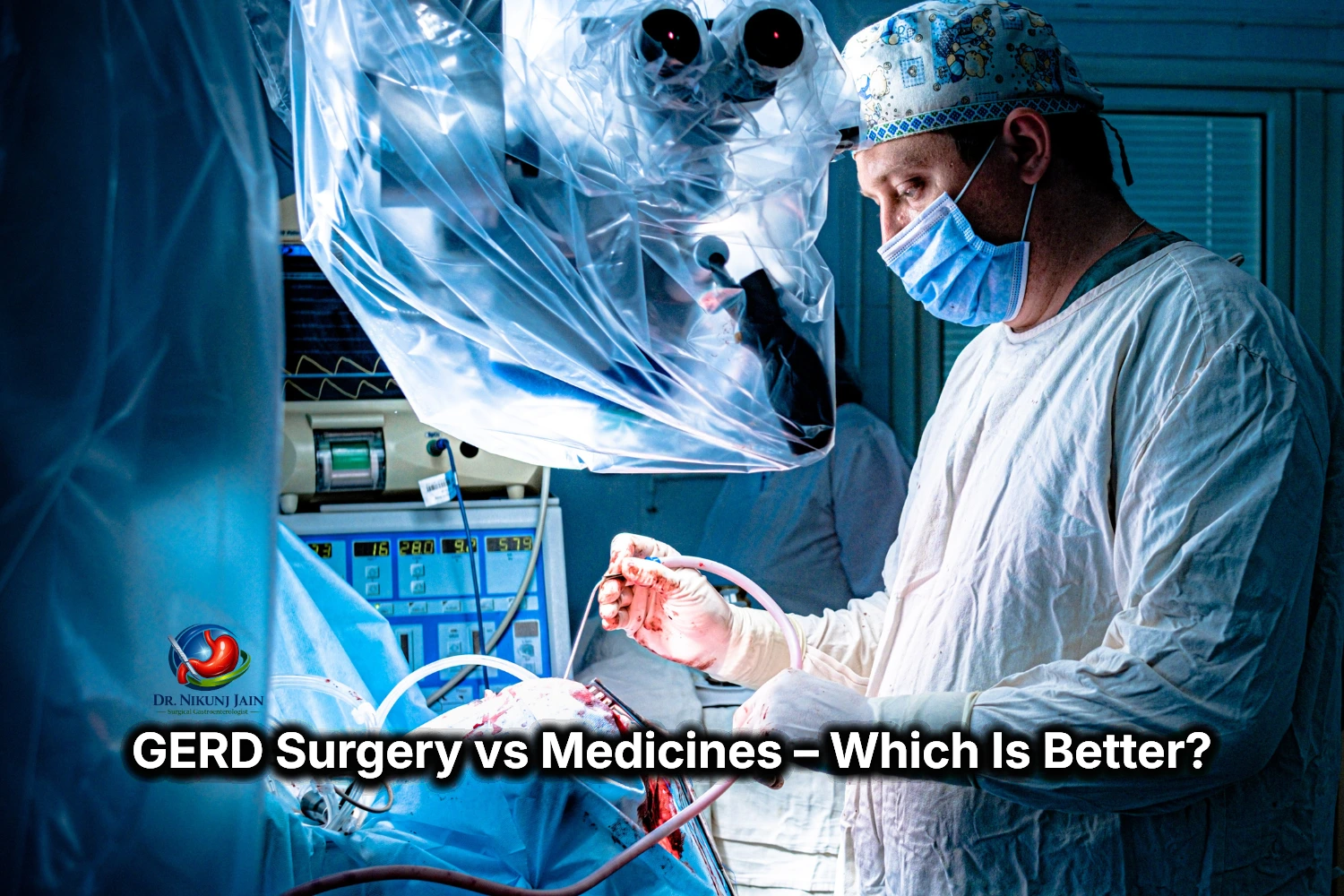
GERD surgery, most commonly laparoscopic fundoplication, focuses on correcting the root cause rather than just controlling acid. The procedure strengthens the valve between the stomach and food pipe, preventing acid from flowing backward.
The benefits of surgery may include:
- Long-term or permanent relief from reflux
- Reduced or complete elimination of daily medication
- Improved sleep and eating comfort
- Better quality of life
Since the procedure is performed using minimally invasive techniques, recovery is usually faster, with smaller incisions and less postoperative discomfort.
From an emotional perspective, many patients feel a sense of relief and freedom after surgery. The ability to eat without fear, sleep peacefully, and live without daily medication often brings back confidence and normalcy.
Surgery vs Medicines – Which Is Better?
There is no single answer for everyone. The choice depends on several factors:

- Severity and duration of GERD
- Response to medications
- Presence of complications
- Age and overall health
- Patient preference and lifestyle goals
Medicines are usually suitable for mild to moderate GERD that responds well to treatment. Surgery is often recommended for patients with severe, persistent symptoms, complications, or those who wish to avoid lifelong medication.
The most important step is proper evaluation through tests such as endoscopy, pH monitoring, or imaging. A personalized approach helps determine the most effective and safest option.
What is The Emotional Side of Decision-Making
Choosing between long-term medication and surgery can feel overwhelming. Patients often worry about the risks of surgery, recovery time, or whether the results will last. At the same time, living with ongoing symptoms can cause stress, sleep disturbances, and anxiety about food and daily activities.
Open communication with a specialist helps patients understand their condition clearly and make a confident decision. When patients feel informed and supported, the emotional burden of GERD becomes much easier to manage.
Conclusion
GERD is not just a digestive issue,it is a quality-of-life condition. Whether treated with medicines or surgery, the goal is to help patients live without discomfort, fear, or constant dependence.
With the right evaluation and treatment plan, long-term relief is achievable. As emphasized by Dr. Nikunj Jain, best gastro surgeon in Indore, the best treatment is the one that not only controls acid reflux but also restores comfort, peace of mind, and the freedom to enjoy everyday life again.
Leave a Reply