
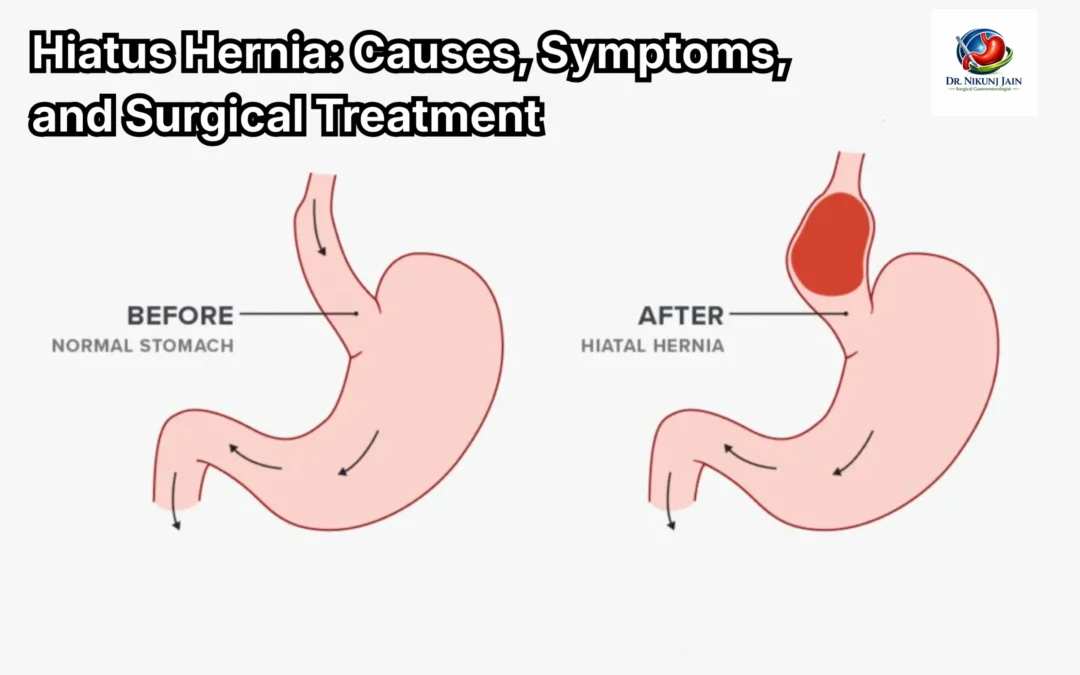
A hiatus hernia is a common digestive condition that can quietly affect daily comfort and long‑term health. Many people live with it for years without knowing, while others experience troublesome symptoms that interfere with eating, sleeping, and overall quality of life. Understanding what a hiatus hernia is, when treatment is needed, and how surgery can help is the first step toward lasting relief. This blog by Dr. Nikunj Jain– best hernia doctor in Indore, explains what hernia is, causes of hernia, symptoms of hernia and how hernia is treated.
Table of Contents
What Is a Hiatus Hernia?
The diaphragm is a strong muscle that separates the chest from the abdomen and helps in breathing. There is a small opening in the diaphragm called the hiatus, through which the food pipe (esophagus) passes before connecting to the stomach. A hiatus hernia occurs when a part of the stomach slips up through this opening into the chest.
There are two main types:
• Sliding hiatus , the most common type, where the stomach moves up and down through the hiatus.
• Paraesophageal (rolling) hernia , less common but more serious, where part of the stomach pushes up beside the esophagus and stays there.
Common Causes of Hiatus Hernia
A hiatus hernia can develop due to increased pressure inside the abdomen or weakness in the diaphragm muscles. Common causes include:
• Aging and muscle weakness • Obesity or sudden weight gain • Chronic coughing or sneezing • Heavy lifting or straining • Pregnancy • Long‑term constipation
In many cases, there is no single cause, but a combination of factors.
Symptoms You Should Not Ignore
Small hiatus hernias may not cause any symptoms. However, larger hernias often lead to acid reflux and related problems. Common symptoms include:
• Heartburn or burning sensation in the chest
• Acid reflux or sour taste in the mouth
• Difficulty swallowing
• Chest pain, especially after meals
• Bloating or frequent burping
• Shortness of breath (in severe cases)
If symptoms persist despite medication, medical evaluation is important.
How Is Hiatus Hernia Diagnosed?
Diagnosis is usually made through a combination of tests such as:
• Upper GI endoscopy
• Barium swallow X‑ray
• CT scan (in selected cases)
• Esophageal manometry or pH monitoring
These tests help confirm the type and severity of the hernia and guide treatment planning.
Non‑Surgical Treatment Options
For many patients, mild to moderate symptoms can be managed without surgery. Non‑surgical treatment includes:
• Lifestyle changes like weight loss and smaller meals
• Avoiding spicy, oily, and acidic foods
• Not lying down immediately after eating
• Elevating the head while sleeping
• Medications to reduce acid production
However, these treatments control symptoms but do not correct the hernia itself.
When Is Surgery Needed?
Surgery is advised when:
• Symptoms do not improve with medication
• There is severe acid reflux or esophagitis
• Complications like bleeding, ulcers, or narrowing of the food pipe occur
• Paraesophageal hernia is present
• Quality of life is significantly affected
In such cases, surgical repair offers long‑term relief and prevents complications.
Hiatus Hernia Surgery: What to Expect
Hiatus hernia surgery is most commonly performed using laparoscopic (keyhole) techniques. This minimally invasive approach involves small incisions, resulting in less pain and faster recovery.
The surgery typically includes:
• Pulling the stomach back into the abdomen
• Tightening the diaphragmatic opening
• Strengthening the valve between the esophagus and stomach (fundoplication)
The procedure usually takes 1,2 hours, and most patients are discharged within 1,2 days.
Recovery After Surgery
Recovery is generally smooth. Patients can expect:
• Mild discomfort for a few days
• Liquid or soft diet initially
• Gradual return to normal activities within 1,2 weeks • Full recovery in a few weeks
Following post‑operative dietary and lifestyle advice is essential for best results.
Why Choose Surgical Treatment?
Surgery provides a long‑term solution by correcting the anatomical problem rather than just controlling symptoms. Under the care of an experienced laparoscopic surgeon in Indore like Dr. Nikunj Jain, patients receive personalized treatment using advanced surgical techniques aimed at safety, comfort, and durable results.
Early consultation and timely treatment can prevent complications and help patients return to a comfortable, symptom‑free life. Hiatus hernia treatment by Dr. Nikunj Jain includes advanced laparoscopic surgery for acid reflux, heartburn, and long-term relief from symptoms.