
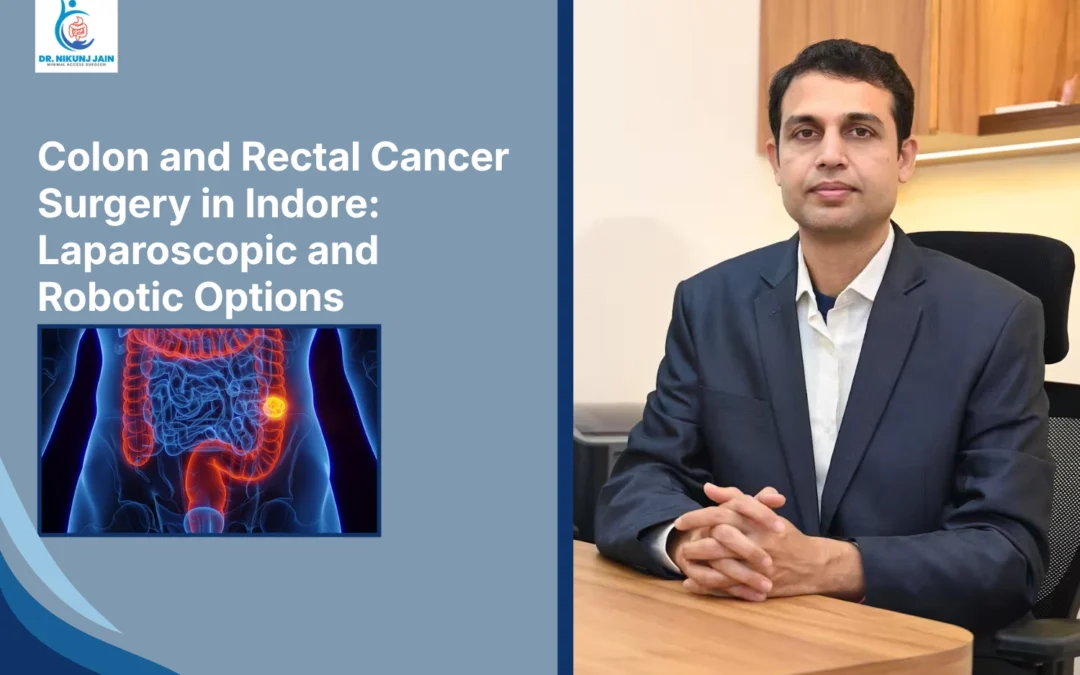
Colon and rectal cancers develop in the colon or rectum, and surgery is an important part of treatment for many localized colorectal cancers.
With advances in surgical techniques, colorectal cancer surgery can now often be performed through smaller incisions using laparoscopic or robotic methods. Patients looking for colon and rectal cancer surgery in Indore may be advised to undergo open, laparoscopic or robotic surgery depending on the location of the tumour, its stage and the complexity of the procedure.
Dr. Nikunj Jain, best GI cancer surgeon in Indore, evaluates each case carefully to determine the most suitable surgical approach. The treatment plan may include laparoscopic colon cancer surgery, robotic rectal cancer surgery or conventional surgery based on the patient’s condition and overall treatment needs.
Table of Contents
What Is Colon and Rectal Cancer Surgery?
The aim of cancer surgery is to take out the cancer and some healthy tissue around it. Lymph nodes near the bowel are also removed if needed.
For colon cancer the surgery is usually called colon resection or colectomy. The part of the colon that’s sick is taken out. Then the healthy ends are joined back together.
For cancer the plan for surgery depends on how close the tumour is to the anus and other parts of the pelvis. The goal is to remove as much of the tumour as possible while keeping the ability to pass stool if possible.
Some people might also need chemotherapy or radiation before or after surgery. This depends on how the cancer has spread.
Laparoscopic Colon Cancer Surgery
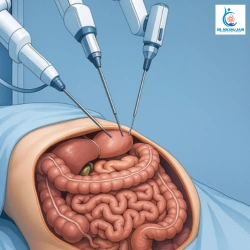
Laparoscopic colon cancer surgery is a type of invasive surgery. It is done through small cuts on the belly. A laparoscope with a camera is put into the belly. This lets the surgeon see the inside on a screen. Then special tools are used to take out the cancer and nearby lymph nodes.
Compared to open surgery people who are candidates for laparoscopic surgery may have smaller cuts, less pain after surgery and a quicker return to regular activities. Laparoscopic surgery is not right for every case of colorectal cancer. Things like the size and position of the tumour past surgeries and if the cancer has spread are all important.
Robotic Rectal Cancer Surgery
- The rectum is deep in the pelvis, which makes it hard to reach. Robotic rectal cancer surgery gives view and more precise control during certain complex rectal cancer surgeries.
- During surgery the surgeon uses a console to control the robotic tools. The robot does not work on its own.
- The robot can move freely which is useful in the tight space near the rectum in the pelvis.
- Like laparoscopic surgery robotic surgery uses cuts and can help patients go home sooner and recover faster if they are suitable.
- People thinking about treatment should talk to a skilled rectal cancer surgeon in Indore. This helps to find out if the method can help their case.
Laparoscopic vs Robotic Colorectal Surgery
Both laparoscopic and robotic methods are minimally invasive. They use cuts more than traditional open surgery. However the tools used are different.
Unlike laparoscopic surgery, robotic surgery has special tools that are controlled from a robotic console.
Neither laparoscopic nor robotic surgery is better for everyone. The main goal is to take out the cancer with healthy tissue around it. This helps to control the cancer in the run.
The right approach depends on where the tumour’s how far it has spread, the patient’s situation and the surgeon’s experience.
What Happens After Colorectal Cancer Surgery?
Recovery after surgery depends on what type of surgery was done. Patients are usually encouraged to start moving soon as they can after the operation.
Food and drinks are slowly added back as the body allows. Managing pain, healing the wound and checking for any problems are also important.
The part of the body that was taken out is sent to a lab for testing. The lab report shows the stage of the cancer. Helps decide if more treatment is needed.
Regular check-ups are suggested after colon cancer treatment in Indore. This helps to see how well the body is recovering and to spot any signs of the cancer coming back.
When Should You See a Colorectal Cancer Surgeon?
Medical check-ups are advised if there are symptoms like blood in the stool, changes in how you go to the bathroom losing weight without trying, tummy pain, constant constipation or diarrhea or not feeling well.
These symptoms do not mean someone definitely has cancer. They should be checked by a gastro doctor near me.
If someone has been told they have cancer, seeing a skilled colon cancer surgeon in Indore can help understand the stage of the cancer. It also helps to find out what surgery options are available. It also helps to know if laparoscopic or robotic surgery is a choice.
Conclusion
If you or a loved one has been told they have colon or rectal cancer getting help quickly and planning the surgery is very important.
Talk to Dr. Nikunj Jain, a GI and Surgical Gastroenterologist in Indore. He can check for colon and rectal cancers. He can also explain if open, laparoscopic or robotic surgery would be right, for your condition.
FAQs
Q1. Is surgery necessary for colon cancer?
Surgery is commonly used for localized colon cancer and usually involves removing the affected section of the colon along with nearby lymph nodes.
Q2. What is colon resection surgery?
Colon resection surgery involves removing the part of the colon containing the tumour and then reconnecting the healthy portions whenever medically appropriate.
Q3. Can colon cancer surgery be performed laparoscopically?
Yes. Many suitable patients can undergo laparoscopic colon cancer surgery through smaller abdominal incisions.
Q4. What is robotic rectal cancer surgery?
Robotic rectal cancer surgery is a minimally invasive technique in which the surgeon controls robotic instruments to perform precise movements within the pelvis.
Q5. Is robotic surgery better than laparoscopic surgery?
Not necessarily. The most suitable approach depends on the location and stage of the cancer, patient anatomy and the surgeon’s assessment.
Q6. How long does recovery take after colon cancer surgery?
Recovery varies depending on the extent of surgery, technique used, overall health and whether complications occur.
Q7. Will I need chemotherapy after colorectal cancer surgery?
Some patients may need chemotherapy after surgery depending on the cancer stage, lymph node involvement and pathology report.
Q8. Is a stoma always required after rectal cancer surgery?
No. A stoma is not required in every case. Whether it is temporary, permanent or unnecessary depends on the tumour location and type of operation.
Q9. What are the warning signs of colorectal cancer?
Possible symptoms include blood in the stool, persistent bowel habit changes, abdominal discomfort, unexplained weight loss and anemia.
Q10. Who should I consult for colon and rectal cancer surgery in Indore?
Patients diagnosed with colorectal cancer can consult Dr. Nikunj Jain, a GI and surgical gastroenterologist in Indore experienced in colorectal and gastrointestinal cancer surgery. He can assess the condition and recommend the most suitable surgical approach based on the tumour location, stage and overall health of the patient.