In recent years, the medical field has undergone tremendous advancements, and one such innovation is the advanced 3D laparoscopic repair of hernia in Indore. As hernia surgeries have evolved, traditional open surgeries have been replaced by minimally invasive techniques that promise faster recovery, lesser pain, and higher success rates. If you’re considering hernia surgery or simply want to learn more about the groundbreaking 3D laparoscopic techniques available in Indore, this guide is for you.
Table of Contents
Understanding Hernia and Its Implications
A hernia occurs when an internal organ or tissue pushes through a weak spot in the muscle or surrounding tissue wall. This can cause discomfort, pain, and potential complications if left untreated. Traditionally, hernias have been repaired through open surgery, which involves a larger incision and a longer recovery period. However, modern surgical innovations have given rise to advanced techniques, such as 3D laparoscopic repair, that are reshaping the landscape of hernia treatment.
What is Advanced 3D Laparoscopic Repair of Hernia?
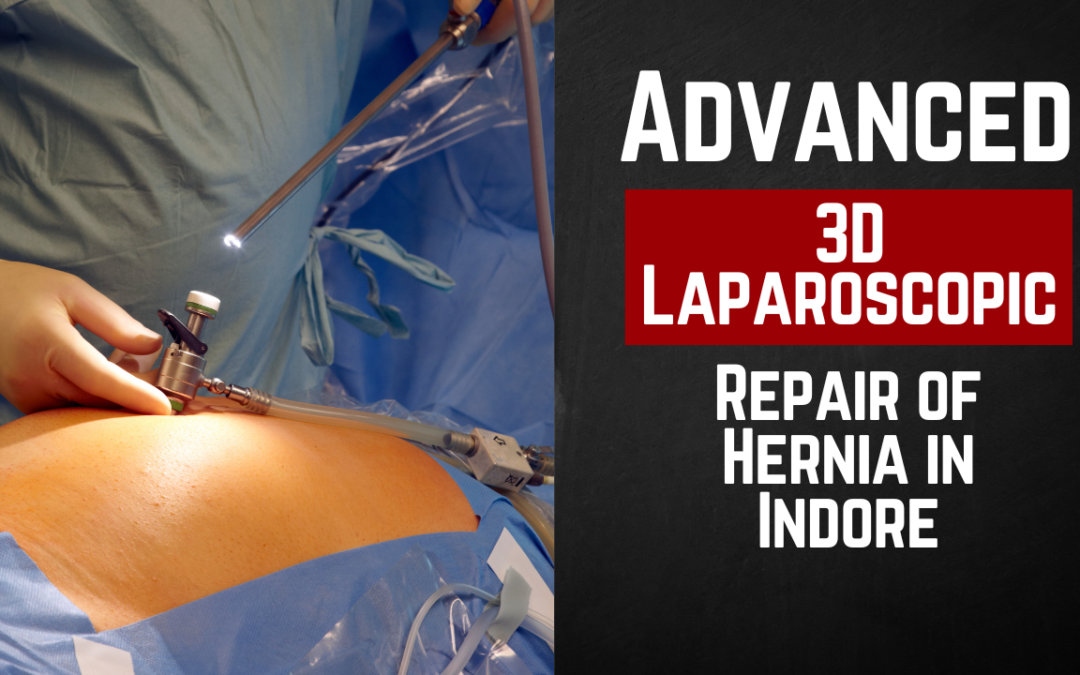
The advanced 3D laparoscopic repair of hernia is a minimally invasive surgical procedure where surgeons use a 3D camera and small instruments to repair the hernia. Unlike traditional laparoscopic surgery that utilizes 2D cameras, the 3D technology offers a more precise and detailed view of the affected area. This allows surgeons to navigate complex anatomical structures with better accuracy, making the procedure safer and more effective.
Why Choose 3D Laparoscopic Repair Over Traditional Surgery?
Enhanced Visualization: The 3D laparoscopic camera provides a clear, high-definition view of the internal organs, helping surgeons to identify and repair the hernia more accurately.
Minimally Invasive: Smaller incisions reduce scarring, post-operative pain, and recovery time, making it a preferred option for patients.
Quicker Recovery: Patients who undergo 3D laparoscopic hernia repair often experience a faster return to normal activities compared to traditional open surgery.
Reduced Complications: The detailed visualization and precision of the 3D laparoscopic technique minimize the chances of complications such as infection and recurrence.
How Does the 3D Laparoscopic Procedure Work?
During the 3D laparoscopic hernia repair, the surgeon makes small incisions near the hernia site and inserts a laparoscope – a thin tube equipped with a 3D camera. The camera projects a three-dimensional image on a screen, allowing the surgeon to see the hernia in great detail. Specialized instruments are then used to push the protruding tissue back into place and strengthen the weakened area using mesh or sutures.
3D Laparoscopic Repair vs. Traditional Laparoscopy
While both traditional laparoscopy and 3D laparoscopy involve minimally invasive techniques, the key difference lies in visualization. Traditional laparoscopy uses a 2D camera, which can limit depth perception and clarity. The 3D camera, however, offers a clearer and more accurate view, making the surgery more efficient. This technology is particularly advantageous in complex cases where detailed visualization is crucial.
Why Indore is Leading the Way in Advanced Hernia Repair
Indore has become a hub for advanced 3D laparoscopic hernia repair due to its world-class medical facilities, highly skilled surgeons, and cutting-edge technology. Patients seeking hernia treatment in Indore benefit from personalized care, state-of-the-art equipment, and cost-effective solutions.
The city’s medical professionals are well-trained in modern laparoscopic techniques, ensuring that patients receive high-quality care with minimal downtime. This makes Indore an ideal destination for those looking to undergo 3D laparoscopic hernia repair.
Benefits of Advanced 3D Laparoscopic Repair in Indore
Access to Expertise: Indore boasts some of the most skilled laparoscopic surgeons who specialize in 3D hernia repair, ensuring high success rates.
Modern Facilities: Hospitals in Indore are equipped with advanced surgical tools and 3D laparoscopy technology, providing comprehensive care.
Cost-Effective Treatment: Compared to other cities, the cost of 3D laparoscopic hernia repair in Indore is more affordable, without compromising on quality.
Quick Appointments and Surgery Scheduling: Patients in Indore can expect timely consultations, quicker scheduling of surgeries, and reduced waiting periods.
Who is a Suitable Candidate for 3D Laparoscopic Hernia Repair?
Most patients with hernias, including those with inguinal, umbilical, femoral, or ventral hernias, are suitable candidates for the 3D laparoscopic repair technique. However, a thorough evaluation by a specialist is necessary to determine eligibility. Patients who are experiencing severe pain, swelling, or complications due to a hernia should seek immediate medical attention.
The advent of 3D laparoscopic technology has significantly transformed hernia repair. As medical advancements continue to evolve, we can expect even more refined techniques that further improve surgical outcomes, reduce recovery time, and minimize risks. The future of hernia surgery is undoubtedly heading towards more sophisticated, minimally invasive approaches that provide safer and more efficient treatment.
Advanced 3D Laparoscopic Repair of Hernia in Indore: A Patient’s Perspective
Patients who have undergone 3D laparoscopic hernia repair in Indore often report high levels of satisfaction. The minimally invasive nature of the surgery, coupled with faster recovery and minimal scarring, enhances the overall patient experience. Most patients are able to resume their normal daily activities within a few weeks, with a marked improvement in quality of life.
Preparation and Aftercare for 3D Laparoscopic Hernia Repair
Pre-Surgery Preparation: Patients are usually required to undergo a physical examination, blood tests, and imaging tests like an ultrasound or CT scan. It’s also advised to fast for a certain period before the surgery.
Post-Surgery Care: After the 3D laparoscopic hernia repair, patients may experience mild pain or discomfort, which can be managed with prescribed medications. Regular follow-ups with the surgeon are crucial to monitor the healing process and ensure no complications arise.
Lifestyle Tips to Prevent Hernia Recurrence
Maintain a Healthy Weight: Excess body weight can put pressure on the abdomen, increasing the risk of a hernia.
Exercise Regularly: Strengthening core muscles can help support the abdominal wall and reduce the likelihood of a hernia.
Avoid Heavy Lifting: If you need to lift something heavy, use proper techniques and avoid straining.
Eat a High-Fiber Diet: Consuming fiber-rich foods prevents constipation, which can contribute to the development of a hernia.
Conclusion: Embracing the Future of Surgery with Advanced 3D Laparoscopic Repair
The advanced 3D laparoscopic repair of hernia in Indore represents the future of minimally invasive surgery. With better visualization, reduced complications, and faster recovery times, it’s a game-changer in the field of hernia treatment. If you or a loved one is dealing with a hernia, consulting a specialized surgeon in Indore for 3D laparoscopic repair can be a life-changing decision.
FAQs
What is the success rate of 3D laparoscopic hernia repair in Indore? The success rate of 3D laparoscopic hernia repair in Indore is high, with most patients experiencing successful outcomes and minimal complications.
Is 3D laparoscopic hernia repair safe? Yes, it is a safe and effective procedure, especially when performed by experienced surgeons. It offers reduced risks compared to traditional open surgery.
How long does the surgery take? The 3D laparoscopic hernia repair typically takes about 1-2 hours, depending on the complexity and type of hernia.
How soon can I return to work after the surgery? Most patients can return to light activities within a week and full activities, including work, within 2-3 weeks, based on their recovery and the surgeon’s advice.
Will there be any visible scars after 3D laparoscopic hernia repair? The incisions made during 3D laparoscopic surgery are small, resulting in minimal scarring that often fades over time.
Is hernia recurrence common after 3D laparoscopic repair? Hernia recurrence is rare with 3D laparoscopic repair, especially when the surgery is performed correctly and post-operative care is followed.
Acidity and reflux problems, known medically as gastroesophageal reflux disease (GERD), are common ailments that plague millions of people worldwide. While lifestyle changes and medications are the first line of defense, many individuals suffer from chronic conditions that are resistant to these conventional treatments. For such patients, laparoscopic surgery offers a promising, minimally invasive solution that can effectively manage and even cure these debilitating issues. In cities like Indore, specialists are increasingly turning to Role of Laparoscopic Surgery in Treating Acidity and Reflux Problems
Role of Laparoscopic Surgery in Treating Acidity and Reflux Problems
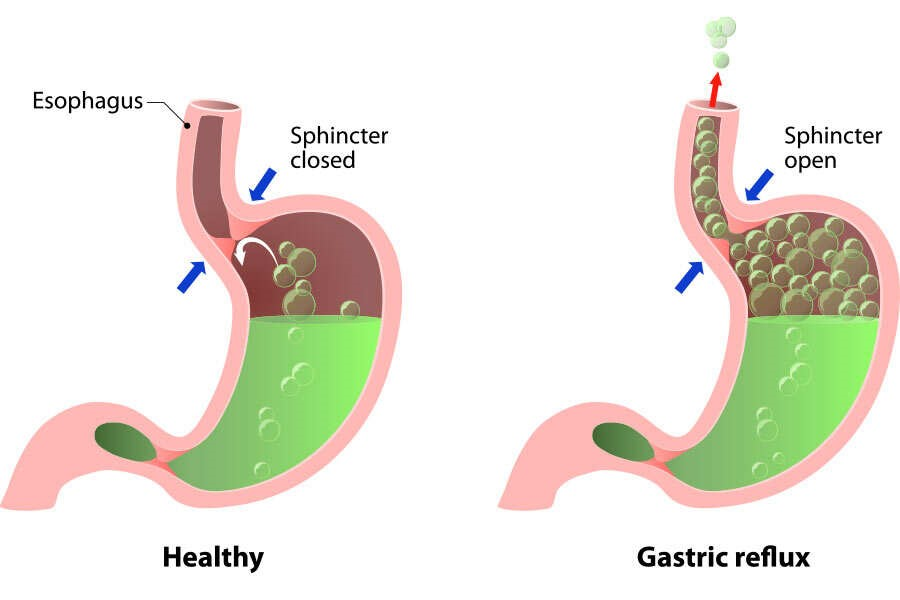
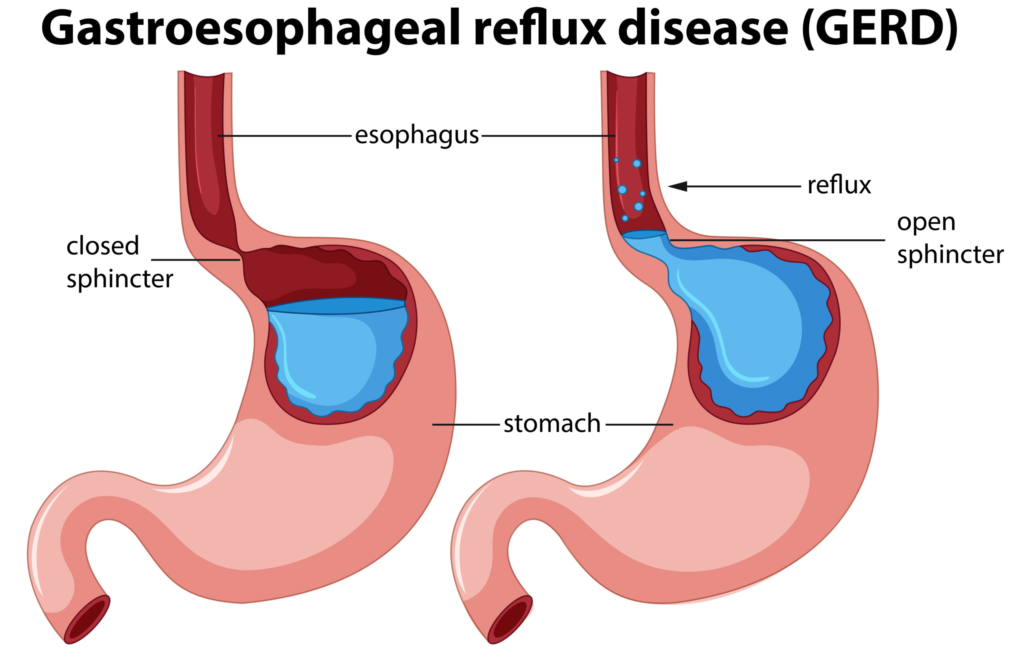
Acidity, often referred to as heartburn, occurs when stomach acid flows back into the esophagus, causing irritation and discomfort. When this happens frequently, it can lead to gastroesophageal reflux disease (GERD). This chronic condition not only results in persistent discomfort but can also cause serious complications, including esophageal damage, ulcers, and even an increased risk of esophageal cancer.
People who suffer from GERD often experience a variety of symptoms, such as:
Burning sensation in the chest (heartburn)
Regurgitation of food or sour liquid
Difficulty swallowing
Chronic cough or throat irritation
A sensation of a lump in the throat
For many, these symptoms can be managed with antacids, proton pump inhibitors (PPIs), and other medications. However, for those whose symptoms persist despite these treatments, laparoscopic surgery offers an effective alternative.
Laparoscopic Surgery: A Minimally Invasive Solution
Laparoscopic surgery, also known as keyhole surgery, is a technique that involves making small incisions through which a camera and surgical instruments are inserted. This method offers several advantages over traditional open surgery, including reduced pain, shorter hospital stays, faster recovery times, and minimal scarring.
When it comes to treating acidity and reflux problems, laparoscopic surgery often involves a procedure known as Nissen fundoplication. During this operation, the surgeon wraps the top part of the stomach around the lower esophagus to strengthen the esophageal sphincter, which prevents acid from flowing back into the esophagus. This not only reduces symptoms of GERD but can also help heal any damage caused by the acid reflux.
Why Laparoscopic Surgery is Effective for Acidity and Reflux Problems
Laparoscopic surgery is particularly effective for treating chronic acidity and reflux problems because it addresses the root cause of GERD – a weak lower esophageal sphincter. Unlike medications that simply neutralize or reduce stomach acid, surgery provides a long-term solution by physically preventing acid from refluxing into the esophagus. Studies have shown that more than 90% of patients who undergo laparoscopic surgery for GERD experience significant relief from their symptoms, with many achieving complete remission.
In addition to treating GERD, laparoscopic surgery can also be used to repair hiatal hernias, which often contribute to acid reflux. By repositioning the stomach and reinforcing the diaphragm, the surgery prevents the hernia from recurring and further exacerbating reflux symptoms.
High Success Rate: Laparoscopic surgery boasts a success rate of over 90% for patients with GERD, making it one of the most reliable treatment options available.
Quick Recovery: Most patients can return to their normal activities within a few days to a week after surgery, compared to several weeks with traditional surgery.
Minimal Scarring: The small incisions used in laparoscopic surgery result in minimal scarring, which is a significant cosmetic advantage for many patients.
Lower Risk of Complications: The precise nature of laparoscopic surgery reduces the risk of complications such as infections or excessive bleeding.
Indore: A Hub for Laparoscopic Surgery
Indore has emerged as a leading destination for laparoscopic surgery in India, particularly for the treatment of acidity and reflux problems. The city is home to several renowned specialists who are highly experienced in performing these procedures. With state-of-the-art medical facilities and a focus on patient care, Indore offers an excellent environment for individuals seeking relief from chronic GERD through surgery.
Leading Laparoscopic Surgeon in Indore
Indore’s healthcare sector is bolstered by a number of top-tier hospitals and clinics that specialize in laparoscopic surgery for GERD and related conditions.
Dr. Nikunj Jain – He is a renowned Gastro & Minimal Access Laparoscopic Surgeon. He is a Surgical Gastroenterologist, Consultant Surgeon at Apollo Hospital, Indore having expertise in laparoscopic, Laser, and Robotic Surgery. You can be confident that with Dr. Nikunj Jain your well-being is in the capable hands of a highly-skilled Minimally Invasive Laparoscopic & Robotic Surgeon. Dr. Nikunj Jain strives to treat his patients with an honest, straightforward, and caring nature in a safe and comfortable environment. Dr. Nikunj Jain has been awarded Dr. B. Ramamurthi National Gold Medal by the National Board of Examination.
Recovering from laparoscopic surgery for acidity and reflux problems is generally straightforward, but it requires careful adherence to your surgeon’s instructions to ensure optimal results. Immediately after surgery, you may experience some discomfort, but this is usually manageable with pain relief medication. Most patients can start consuming liquids within a few hours post-surgery and gradually progress to a soft diet as recommended by the doctor.
Diet: Following a soft diet initially to allow the stomach and esophagus to heal properly.
Activity: While you’ll be encouraged to move around soon after surgery, avoid strenuous activities for a few weeks.
Follow-Up Visits: Regular follow-ups with your surgeon are crucial to monitor your recovery and address any concerns.
Long-term, the majority of patients report a significant improvement in their quality of life, with a marked reduction in symptoms of acidity and reflux problems. The need for medication typically decreases, and in many cases, patients can stop taking GERD medications altogether.
Is Laparoscopic Surgery the Right Option for You?
If you’ve been struggling with chronic acidity and reflux problems that don’t respond to medication or lifestyle changes, laparoscopic surgery might be a viable option. However, it’s important to consult with a specialist to determine if you’re a suitable candidate for the procedure. Factors such as the severity of your GERD, the presence of a hiatal hernia, and your overall health will play a significant role in this decision.
For those who qualify, laparoscopic surgery offers a chance to regain control over their health and dramatically improve their quality of life.
Laparoscopic surgery has revolutionized the treatment of chronic acidity and reflux problems, providing a minimally invasive yet highly effective solution for those suffering from GERD. With its high success rate, quick recovery time, and lasting benefits, this surgical option is increasingly being chosen by patients around the world, including in Indore, where some of the country’s best surgeons offer their expertise.
If you’re considering laparoscopic surgery to treat your acidity and reflux problems, Indore presents an excellent choice for accessing world-class medical care. Consult with a specialist today to explore how this procedure could help you live a more comfortable, symptom-free life.
FAQs
What is the success rate of laparoscopic surgery for treating GERD?
Laparoscopic surgery for GERD has a success rate of over 90%, with many patients experiencing significant relief from symptoms and some achieving complete remission.
How long is the recovery period after laparoscopic surgery for reflux problems?
Most patients can return to their normal activities within a few days to a week after laparoscopic surgery, although full recovery may take a few weeks.
Are there any risks associated with laparoscopic surgery for acidity and reflux?
While laparoscopic surgery is generally safe, like any surgical procedure, it carries some risks, including infection, bleeding, and complications related to anesthesia. However, these risks are minimized due to the minimally invasive nature of the surgery.
Is laparoscopic surgery a permanent solution for GERD?
For many patients, laparoscopic surgery offers a long-term or even permanent solution to GERD, especially when combined with lifestyle modifications.
Can I stop taking GERD medications after laparoscopic surgery?
Many patients find that they can reduce or completely stop taking GERD medications after successful laparoscopic surgery, but this should be done under the guidance of a healthcare provider.
How do I know if I’m a good candidate for laparoscopic surgery for GERD?
To determine if you’re a suitable candidate for laparoscopic surgery, you should consult with a gastroenterologist or a surgeon who specializes in this procedure. They will evaluate your condition, medical history, and overall health to make a recommendation.