
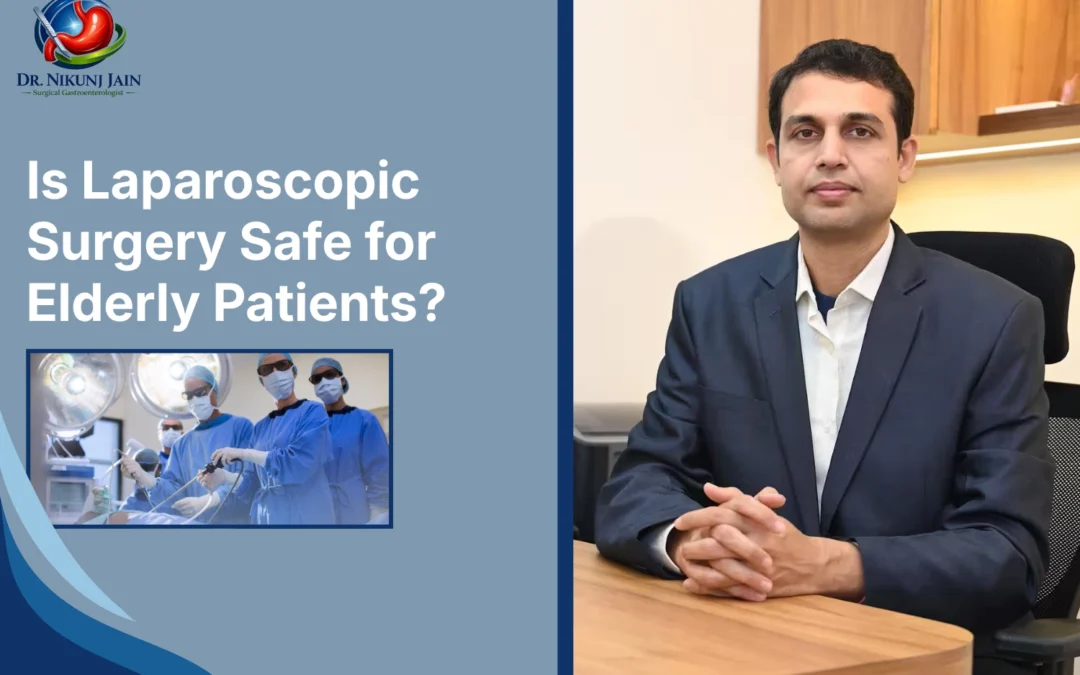
Growing older often brings health challenges that may require surgical treatment. Many elderly people and their families worry about whether surgery is safe at an advanced age. One common concern is whether minimally invasive procedures like laparoscopic surgery are suitable for seniors. According to Dr. Nikunj Jain, a gastroenterologist surgeon in Indore, laparoscopic surgery has made many abdominal procedures safer and easier even for elderly people. Understanding how this surgical technique works and why it is often preferred for older individuals can help families make informed medical decisions.
Table of Contents
What Is Laparoscopic Surgery?
Laparoscopic surgery is a modern surgical technique that uses very small cuts instead of large incisions. Through these tiny openings, surgeons insert a thin camera and special instruments to perform the procedure inside the body.
The camera shows a magnified view of the internal organs on a monitor, allowing the surgeon to perform the surgery with high precision. This technique is commonly used for procedures involving the gallbladder, appendix, hernia, stomach, and intestines.
Because the incisions are small, the body experiences less trauma compared to traditional open surgery.
Why Laparoscopic Surgery Is Often Safer for Elderly people
One of the main advantages of laparoscopic surgery is that it is minimally invasive. For elderly people whose bodies may take longer to recover, this approach can significantly reduce surgical stress.
Some of the key benefits include:
• Smaller surgical cuts
• Reduced blood loss during surgery
• Lower risk of infection
• Less post-operative pain
• Faster recovery time
• Shorter hospital stay
These factors are especially important for seniors who may already be managing other health conditions such as diabetes, blood pressure issues, or heart problems.
Faster Recovery Matters for Seniors
Recovery speed plays a major role in elderly patient care. Long hospital stays can increase the risk of complications such as infections, weakness or reduced mobility.
With laparoscopic surgery, many people are able to walk within a short time after the procedure. Early movement helps prevent complications like blood clots and lung infections. Most elderly people also experience less discomfort, which allows them to return to their normal routine sooner.
Lower Risk of Complications
Traditional open surgeries require larger cuts and longer healing periods. In older people, large surgical wounds may take more time to heal and can sometimes lead to complications.
Minimally invasive techniques reduce the size of the wound, which lowers the risk of infection and speeds up tissue healing. Many seniors tolerate laparoscopic procedures well when they are properly evaluated before surgery.
A detailed medical assessment helps determine whether the patient is fit for surgery.
Importance of Pre-Surgery Evaluation
Age alone is not the deciding factor when it comes to surgery. Doctors carefully evaluate the overall health of the patient before recommending a procedure.
This assessment may include:
• Heart health evaluation
• Blood tests
• Imaging scans
• Review of existing medical conditions
• Medication history
Once the surgeon understands the patient’s complete medical profile, the safest surgical plan can be chosen.
Common Conditions Treated with Laparoscopic Surgery
Several abdominal problems that affect elderly people can be treated using laparoscopic methods. These include:
• Gallbladder stones
• Hernia repair
• Appendix removal
• Certain stomach and intestinal conditions
• Diagnostic abdominal procedures
In many of these cases, minimally invasive surgery allows the patient to recover more comfortably compared to traditional surgical methods.
Emotional Concerns of Elderly people
Surgery can be emotionally stressful for older individuals. Many seniors fear long recovery periods, pain, or dependence on others after surgery.
However, advancements in surgical techniques have made procedures much safer than they were decades ago. When people understand that minimally invasive surgery involves smaller cuts and faster healing, it often reduces anxiety and helps them feel more confident about treatment.
Support from family members and clear communication with the doctor also plays an important role in easing these concerns.
Choosing an Experienced Surgeon Matters
The success of any surgery depends greatly on the experience and skill of the surgeon performing it. A well-trained laparoscopic surgeon understands how to manage complex cases, including elderly people with multiple health conditions.
Modern hospitals equipped with advanced surgical technology also improve patient safety and outcomes.
Conclusion
Laparoscopic surgery has transformed the way many abdominal procedures are performed today. For elderly people, this minimally invasive approach often offers a safer option with faster recovery, less pain and lower complication risks.
When a proper medical evaluation is done and the procedure is performed by an experienced surgeon, age alone should not be a barrier to receiving effective surgical treatment. As Dr. Nikunj Jain, best laparoscopic surgeon in Indore, explains, many senior people successfully undergo laparoscopic procedures and return to their normal lives with improved health and comfort.