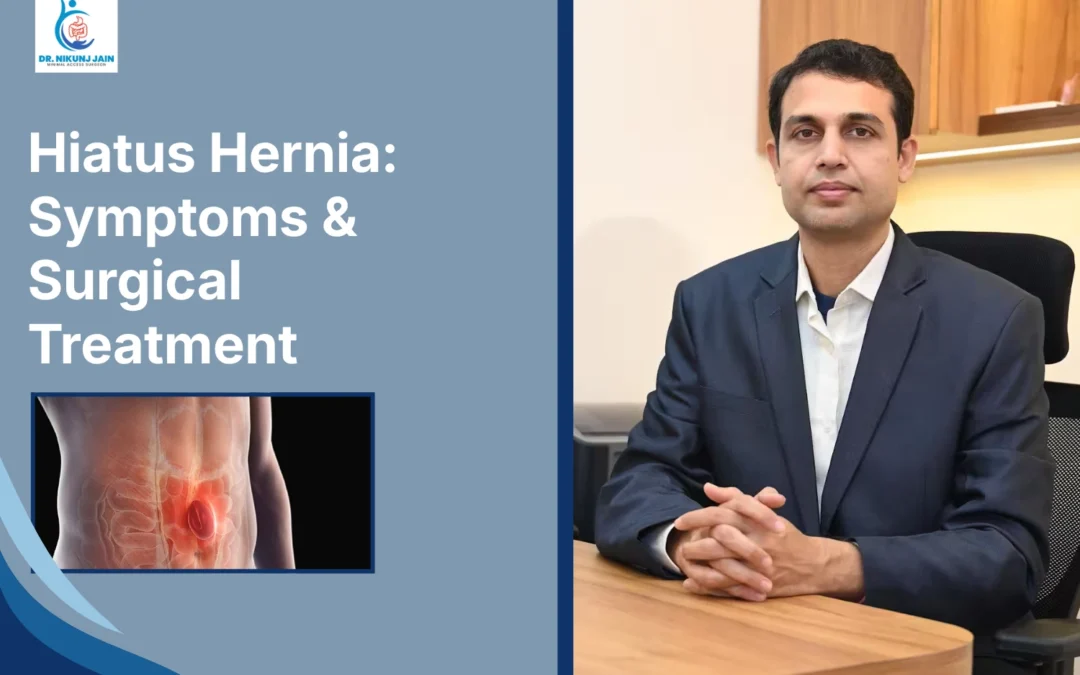
A hiatus hernia is a condition that affects the digestive system. It happens when the upper part of the stomach pushes up into the chest area through the diaphragm. Some people do not even notice it at first but for others it can cause acidity or heartburn. Dr. Nikunj Jain, best hernia doctor in Indore, says that when people get heartburn or reflux symptoms over and over they need to get checked.
Table of Contents
What Is A Hiatus Hernia?
The diaphragm is a muscle that separates the chest from the stomach. It has a hole that lets the food pipe pass through. In a hiatus hernia part of the stomach slips through this hole. This can cause problems with the barrier between the stomach and the food pipe letting acid move up.
There are two main types of hiatus hernia:
Sliding hiatus hernia: This is the more common type. It can cause acid reflux symptoms because part of the stomach slides up through the diaphragm.
Paraesophageal hernia: This type is less common but can be more serious. Part of the stomach remains pushed up into the chest, which may lead to complications.
Small hiatus hernias often do not cause any symptoms. However, larger hernias may require medical evaluation and treatment.
Common Symptoms Of Hiatus Hernia
The symptoms of a hiatus hernia can feel like acidity or heartburn. This is why people often take antacids without knowing what is really wrong.
Common symptoms include:
Heartburn after eating or when lying down
A sour or bitter taste in the mouth
Bloating a lot
Chest burning or discomfort
Food or liquid coming back up
Trouble swallowing
Feeling like food is stuck
Feeling sick after eating
A chronic & Sore throat
Bad breath from reflux
Some people feel worse after eating spicy food, big meals, tea, coffee, fried food or dinner late at night. Symptoms can also get worse when bending, sleeping flat or lying down after eating.
When Should You Not Ignore The Symptoms?
It is normal to get heartburn because of what we eat. If it keeps happening we should not ignore it. If symptoms are affecting sleep, appetite or daily life it is an idea to see a specialist. If someone has trouble swallowing vomited blood, has stools, loses weight without trying, has severe chest pain or vomits a lot they need to see a doctor right away.
If acid reflux happens for a long time it can irritate the food pipe and cause problems. This is why we need to find out what is wrong with just taking medicine to feel better for a little while.
How Is Hiatus Hernia Diagnosed?
To diagnose a hiatus hernia the doctor will first talk to the patient about their symptoms, eating habits, medical history and when the reflux happens. The doctor may order tests like a GI endoscopy, barium swallow test, pH study or manometry. These tests help the doctor understand how big the hernia is, how bad the acid reflux is and how well the food pipe is working.
A proper diagnosis helps the doctor decide if the patient needs medicine, lifestyle changes or surgery.
Lifestyle Changes And Medical Treatment
Not everyone with a hiatus hernia needs surgery.
In some cases, symptoms can be managed with lifestyle changes and medicine.
Eating meals on time, avoiding late-night meals, limiting spicy and oily foods, maintaining a healthy weight, and sleeping with your head elevated can help reduce acid reflux symptoms.
Medicine can help control acid production and heal the food pipe.Medicine does not fix the hernia. If symptoms come back or if the hernia is big the doctor may talk about surgery.
When Is Surgery Needed?
Surgery may be needed if acid reflux is severe, medications are not providing enough relief, swallowing becomes difficult, the hernia is large, or there is a risk of complications. It may also be considered for patients who prefer not to take long-term medication, after a thorough evaluation by the doctor.
Hiatus hernia surgery is usually performed using a laparoscopic method. During the procedure, the stomach is moved back into its normal position, the opening in the diaphragm is repaired, and steps are taken to reduce acid reflux into the food pipe. Laparoscopic surgery is performed through small, minimally invasive incisions rather than deep cuts, which can help reduce pain, support faster recovery, and shorten the hospital stay.
Recovery After Hiatus Hernia Surgery
Recovery depends on the patient’s age, the size of the hernia, overall health, and the type of surgery performed. After surgery, patients are usually advised to start with liquids and soft foods for a short period. Eating slowly, chewing food properly, taking small meals, and avoiding heavy, spicy, or oily foods can help support a smoother recovery.
Some temporary bloating, trouble swallowing or discomfort may happen at first. It usually gets better with time and the right guidance. Regular check-ups help ensure healing and better long-term results.
Conclusion
A hiatus hernia may seem like heartburn but repeated symptoms should not be ignored. If heartburn reflux, chest burning, trouble swallowing or bloating keeps happening a proper diagnosis can help find the cause. With the treatment plan many patients can get relief and improve their quality of life. For evaluation and suitable surgical guidance Dr. Nikunj Jain, best hernia doctor in Indore, can help patients understand the best treatment option, for hiatus hernia and acid reflux.
FAQ’s
Q1. What is a hiatus hernia? A hiatus hernia happens when the upper part of the stomach pushes upward through the diaphragm into the chest area. It can cause acidity, heartburn and reflux symptoms.
Q2. What are the common symptoms of hiatus hernia? Common symptoms include heartburn, chest burning, sour taste in the mouth, burping, bloating, regurgitation, throat irritation and difficulty swallowing.
Q3. Is hiatus hernia the same as acidity? No. Acidity can happen for many reasons, but hiatus hernia may cause repeated acid reflux because the stomach position affects the natural acid barrier.
Q4. Can hiatus hernia go away on its own? A hiatus hernia usually does not go away on its own. Small hernias may be managed with medicines and lifestyle changes, but larger or severe cases may need surgery.
Q5. When should I see a doctor for hiatus hernia symptoms? You should consult a doctor if acidity, heartburn, chest burning, food regurgitation or swallowing difficulty keeps coming back despite medicines or lifestyle changes.
Q6. Can a hiatus hernia cause chest pain? Yes. A hiatus hernia can sometimes cause chest discomfort or a burning sensation, especially after meals or while lying down. However, chest pain can have other causes too, so it is important to get it properly evaluated by a doctor.
Q7. Is surgery always needed for hiatus hernia? No. Surgery is not needed for every patient. It is usually considered when symptoms are severe, medicines do not give lasting relief, or the hernia is large.
Q8. What is laparoscopic hiatus hernia surgery? Laparoscopic surgery is a minimally invasive procedure where small cuts are used to bring the stomach back to its correct position and repair the hernia opening.
Q9. How long does recovery take after hiatus hernia surgery? Recovery varies from person to person. Many patients recover faster with laparoscopic surgery, but diet changes, rest and follow-up care are important after surgery.
Q10. Where can I consult for hiatus hernia treatment in Indore? For proper diagnosis and treatment planning, you can consult Dr. Nikunj Jain for hiatus hernia treatment in Indore.
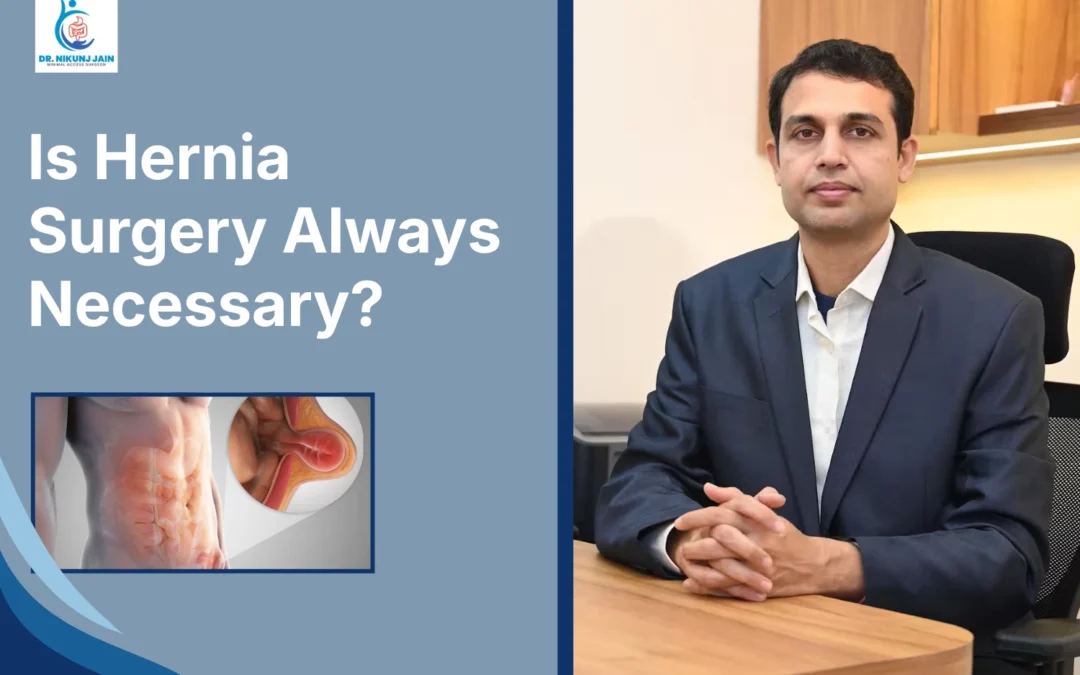
A hernia often starts as a lump that shows up when you are standing, coughing, lifting something heavy or straining. The lump may go away when you lie down and may not hurt, many people wonder if they really need to have an operation. According to Dr. Nikunj Jain, best hernia doctor in Indore, the answer is not the same for every patient. Some hernias can be watched for a while while others should be fixed before they become painful or complicated.
Table of Contents
What Is a Hernia?
A hernia happens when fat, intestine or another internal tissue pushes through a spot in the muscle wall. It can show up in the groin around the belly button at the site of a surgical scar or in another part of the abdominal wall.
Most hernias in adults do not fix themselves. Medicines can help with pain, acidity or constipation but they cannot close the hole in the muscle. Surgery is the way to fix the weak spot. However this does not mean that every person needs to have an operation away.
When Can a Hernia Be Watched?
Careful observation, often called waiting, may be considered for some adults when the hernia is small, soft and easy to push back in and does not cause much discomfort. This approach is commonly considered for men with a mildly symptomatic or symptom-free hernia in the groin.
Watching a hernia does not mean ignoring the problem. Regular medical check-ups are important because a hernia can get bigger or start hurting over time. The patient should also know which warning signs need attention. If symptoms start to affect walking, work, exercise, sleep or everyday comfort, planned surgery may be the more practical option.
When Is Hernia Surgery Usually Recommended?
The hernia lump is increasing in size.
Pain, burning, dragging sensation or discomfort is becoming frequent.
The hernia is affecting daily activities, work or movement.
The lump does not go back inside easily or keeps coming out again.
There is a risk of the hernia becoming trapped or strangulated.
Surgery may also be advised for recurrent hernias, incisional hernias, certain high-risk hernias and hernias in children.
The decision depends on the patient’s age, overall health, weight, previous surgeries and risk of complications.
Warning Signs That Need Immediate Care
Sudden and severe pain in the hernia lump
The lump becomes hard, tender or red
The lump cannot be pushed back inside
Vomiting or nausea
Swelling of the abdomen
Fever
Inability to pass stool or gas
Increasing pain or discomfort
Can Exercise, Belts or Medicines Fix a Hernia?
Exercise can improve fitness but it cannot fix a hernia. Heavy lifting or exercises that put much pressure on the abdominal wall can make symptoms worse. A hernia belt may provide support in some cases but it is not a permanent fix and should only be used after talking to an expert hernia doctor in Indore.Taking care of constipation, long-term coughing and excess weight can reduce strain on the wall. These steps can help with treatment and recovery. They do not replace surgery when it is needed.
Conclusion
Hernia repair can be done through open surgery or laparoscopic surgery. The right method depends on the hernia’s size, location whether it is on one or both sides past surgery and the patients overall health. The goal is not just to remove the lump but to put the tissue back in its place and strengthen the weak spot.
Hernia surgery is not always needed away but a hernia should never be self-diagnosed or ignored. Small painless hernias may sometimes be watched safely while painful, growing, trapped or high-risk hernias usually need to be fixed. Talking to Dr. Nikunj Jain, best laparoscopic surgeon in Indore can help patients understand their condition, look at treatment options and choose the time for surgery without unnecessary fear or delay.
FAQ’s
Q1. Is hernia surgery always necessary?
No, hernia surgery is not always required immediately. Small and painless hernias may sometimes be monitored under medical guidance. Dr. Nikunj Jain, hernia doctor in Indore can assess the hernia and advise whether observation or surgery is the safer option.
Q2. Can a hernia heal without surgery?
Most adult hernias do not heal on their own because the weak area in the muscle wall cannot close naturally. Medicines, exercise and hernia belts may reduce discomfort, but they cannot permanently repair the hernia.
Q3. When should I consult a hernia surgeon in Indore?
You should consult a hernia surgeon in Indore if you notice a lump in the groin, abdomen, belly button or near an old surgical scar. Pain, swelling, heaviness or an increasing lump should not be ignored.
Q4. What happens if a hernia is left untreated?
An untreated hernia may become larger and more painful over time. In some cases, part of the intestine may become trapped, which can lead to blockage or loss of blood supply and require emergency treatment.
Q5. What are the emergency warning signs of a hernia?
Severe pain, vomiting, fever, abdominal swelling, redness around the lump and an inability to pass stool or gas are warning signs. A hard lump that cannot be pushed back also needs immediate medical attention.
Q6. Can exercise make a hernia worse?
Heavy lifting, intense abdominal exercises and activities that increase pressure inside the abdomen may make a hernia larger or more painful. Patients should ask Dr. Nikunj Jain which exercises are safe for their condition.
Q7. Can a hernia belt permanently cure a hernia?
No, a hernia belt cannot permanently cure a hernia. It may provide temporary support in selected cases, but it does not repair the weak muscle. It should only be used after consulting a qualified doctor.
Q8. Which is better for hernia repair: open or laparoscopic surgery?
Both open and laparoscopic hernia surgery can be effective. The right method depends on the size, type and location of the hernia, previous surgeries and the patient’s overall health. A surgeon will recommend the most suitable approach.
Q9. How long does recovery take after hernia surgery?
Recovery time varies depending on the type of surgery and the patient’s health. Many patients return to light activities within a few days, while heavy lifting and strenuous exercise may need to be avoided for several weeks.
Q10. Where can I get hernia treatment in Indore?
Patients looking for hernia treatment in Indore can consult Dr. Nikunj Jain for proper diagnosis and personalised treatment guidance. Early evaluation can help prevent complications and support a safer recovery.
Finding the best hernia surgeon in Indore can feel overwhelming, especially when searching for experienced professionals who prioritize your health and recovery. With numerous hernia surgery clinics in Indore and modern hernia treatment centers in Indore, understanding what sets the best apart is crucial. In this blog, we will explore why selecting the right surgeon matters, what makes Indore a hub for hernia treatment, and how to identify experienced hernia surgeons for your needs.
Table of Contents
Why Choose a Specialist for Hernia Surgery?
Hernias can lead to serious complications if not treated promptly. Opting for the best hernia surgeon in Indore ensures:
Precise Diagnosis: Specialists identify the exact nature and severity of the hernia.
Advanced Techniques: Access to minimally invasive methods such as laparoscopic surgery.
Quicker Recovery: Skilled surgeons help reduce downtime and post-surgery discomfort.
Indore is known for its excellent medical infrastructure, boasting several hernia surgery clinics equipped with state-of-the-art technology. Here’s why patients from across India seek treatment in Indore:
Top-Notch Facilities: From diagnostic tools to advanced surgical suites, Indore’s hernia treatment centers are well-equipped.
Experienced Surgeons: The city is home to highly skilled and experienced hernia surgeons, offering both open and laparoscopic surgery.
Affordable Care: Patients can access world-class treatment at a fraction of the cost compared to metro cities.
Indore is home to numerous hernia surgery clinics renowned for their high success rates and advanced care. These clinics typically offer:
Comprehensive diagnostic services.
Treatment for all types of hernias, including inguinal, umbilical, and incisional hernias.
Post-surgery rehabilitation programs to ensure a swift recovery.
Hernia Treatment Centers in Indore: What to Expect?
At hernia treatment centers in Indore, you can expect:
Personalized Treatment Plans: Customized care plans tailored to individual patient needs.
Advanced Surgical Options: Access to laparoscopic and open hernia repair techniques.
Pre- and Post-Surgical Care: Comprehensive support to ensure seamless recovery.
How to Choose the Best Hernia Surgeon in Indore?
Here are some steps to help you make an informed decision:
Check Credentials: Verify the surgeon’s qualifications and certifications.
Read Reviews: Look for testimonials from previous patients.
Evaluate Facilities: Ensure the clinic or treatment center is equipped with modern tools.
Discuss Techniques: Ask about the type of surgery they specialize in—laparoscopic, robotic, or open surgery.
Why Laparoscopic Surgery is a Popular Choice
Laparoscopic surgery is becoming the gold standard for hernia repair due to its benefits, including:
Minimal scarring and reduced pain.
Shorter hospital stays and quicker recovery times.
Lower risk of complications.
Indore’s experienced hernia surgeons are highly skilled in performing this advanced procedure, making it a preferred choice for many patients.
Experienced Hernia Surgeons in Indore: Setting the Benchmark
With decades of experience, many surgeons in Indore have gained a reputation for their expertise and compassionate care. They use the latest techniques to deliver successful outcomes, prioritizing patient safety and comfort.
FAQs
Who is the best hernia surgeon in Indore? Several highly skilled surgeons are available in Indore. Choosing one depends on your specific needs, the complexity of your hernia, and the surgeon’s experience.
What are the top hernia surgery clinics in Indore? Indore boasts several renowned clinics equipped with advanced facilities. Look for clinics offering personalized care and laparoscopic surgery options.
How much does hernia surgery cost in Indore? The cost varies depending on the type of surgery (laparoscopic or open) and the clinic. However, Indore offers cost-effective treatment compared to larger cities.
What are the symptoms of a hernia? Common symptoms include a noticeable bulge, discomfort or pain, and difficulty lifting heavy objects. Consult a specialist if you experience these symptoms.
Is laparoscopic surgery better than open surgery for hernia repair? Laparoscopic surgery is less invasive, leading to quicker recovery times and minimal scarring, making it a preferred option for many patients.
Are there any risks associated with hernia surgery? While hernia surgery is generally safe, potential risks include infection, recurrence, and anesthesia complications. Opting for an experienced surgeon minimizes these risks.
Conclusion
Selecting the best hernia surgeon in Indore can make all the difference in ensuring a smooth and successful recovery. With top-notch hernia surgery clinics in Indore and cutting-edge hernia treatment centers, the city offers unparalleled care for hernia repair. Whether you need laparoscopic or open surgery, the experienced hernia surgeons in Indore provide expert solutions tailored to your needs.
Hernias can be a real hassle for those experiencing them, leading to pain, discomfort, and disruption to daily life. While they’re common, many people are unaware of what exactly a hernia is and how it can affect the body. This blog aims to demystify hernia hassles by discussing its causes, types, symptoms, and treatment options, helping you better understand this health condition.
What is a Hernia?
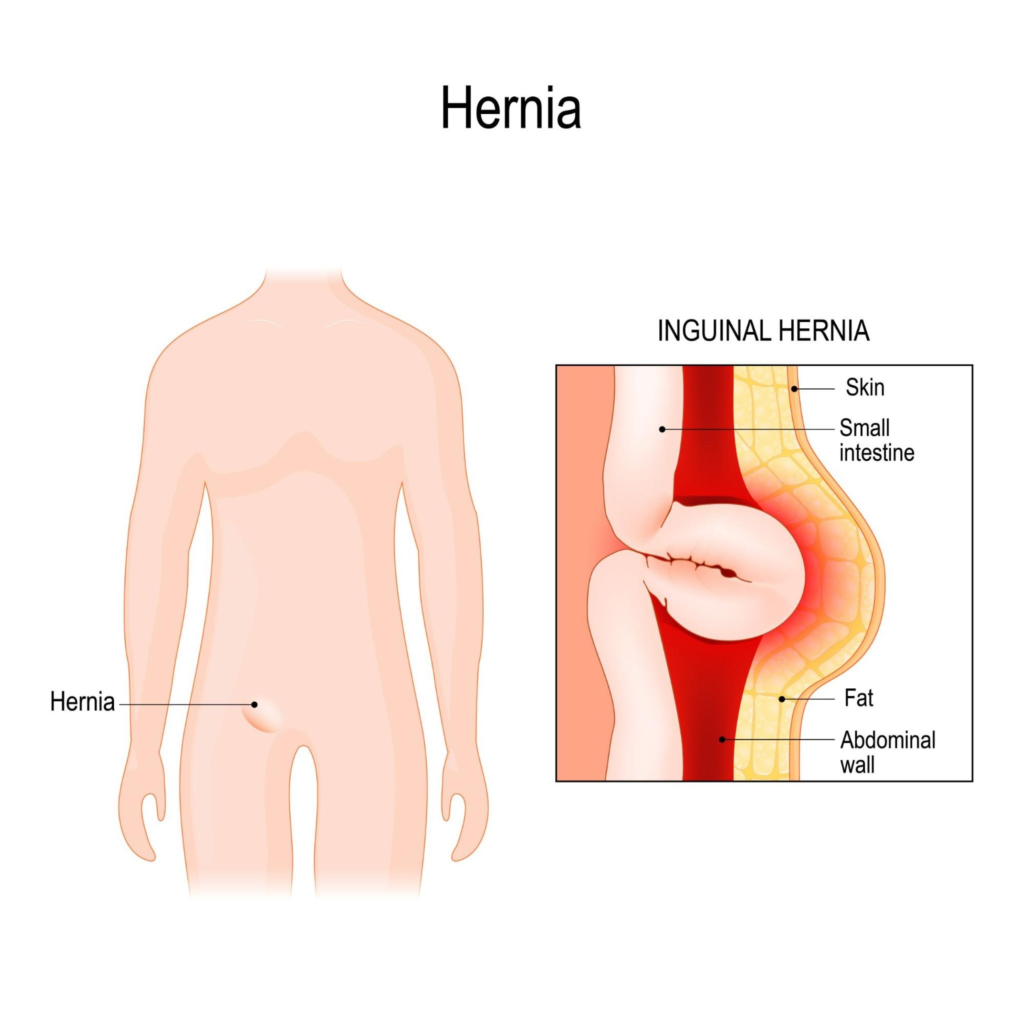
A hernia occurs when an internal organ or tissue pushes through a weak spot in the surrounding muscle or connective tissue. This protrusion often results in a noticeable bulge and may cause pain or discomfort, especially during activities like lifting, coughing, or bending. Hernias are most common in the abdomen but can also occur in the groin, upper thigh, and belly button areas.
Table of Contents
Types of Hernias and Their Hassles
1. Inguinal Hernia
The inguinal hernia is one of the most common types and occurs when tissue pushes through a weak spot in the abdominal muscles, usually near the groin. It’s more common in men and can cause a bulge, pain, and discomfort, particularly when lifting heavy objects or standing for long periods.
2. Femoral Hernia
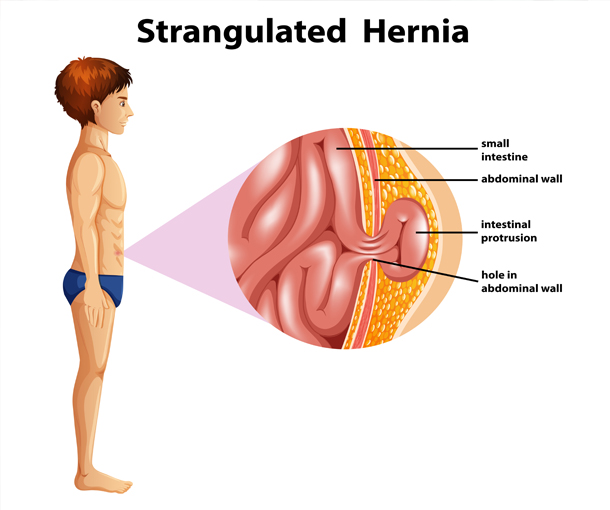
Femoral hernias often occur in women and are located in the upper thigh near the groin. The hassles include pain around the groin area, especially when coughing, bending over, or lifting heavy items. They can be more dangerous than inguinal hernias because they have a higher risk of complications, such as strangulation (when the blood supply is cut off to the affected tissue).
3. Umbilical Hernia
An umbilical hernia happens when part of the intestine protrudes through the abdominal muscles near the belly button. It is more common in infants but can also affect adults, particularly women who have had multiple pregnancies. Hernia hassles in this case involve a visible bulge near the navel, discomfort, and sometimes pain, particularly when straining.
4. Hiatal Hernia
This type of hernia occurs when the stomach bulges through the diaphragm into the chest cavity. The hassles associated with a hiatal hernia include heartburn, acid reflux, and chest pain. These symptoms can be quite bothersome and may worsen after meals.
5. Incisional Hernia
Incisional hernias occur when the intestines push through the site of a previous surgical incision in the abdomen. The hassles include a noticeable bulge, discomfort, and pain around the incision site, especially during physical activity. They often develop after abdominal surgery and can be challenging to manage.
Understanding the causes of hernias can help in prevention and early detection. Here are some factors that contribute to the development of hernias:
Muscle Weakness: A primary cause of hernias is weak muscles or connective tissues, which can be congenital (present from birth) or acquired over time due to factors like aging or injury.
Straining and Heavy Lifting: Activities that put strain on the abdominal area, such as lifting heavy objects, can increase the risk of hernias.
Obesity: Excess body weight puts pressure on the abdominal wall and can lead to the formation of hernias.
Chronic Cough or Constipation: Persistent coughing or straining during bowel movements can weaken the abdominal muscles, making them more susceptible to hernias.
Pregnancy: Pregnancy stretches and weakens the abdominal muscles, which can lead to hernias, particularly umbilical hernias.
Hernias can be asymptomatic in some cases, but they often present with the following symptoms:
Bulge or Lump: A visible bulge or lump in the affected area, which may increase in size when standing, coughing, or straining.
Pain and Discomfort: Mild to severe pain or discomfort around the hernia site, which worsens with physical activity or lifting.
Burning or Aching Sensation: A burning, aching, or heavy feeling in the area of the hernia.
Digestive Issues: Hiatal hernias may cause heartburn, acid reflux, or difficulty swallowing.
If left untreated, hernia hassles can lead to complications, including obstruction (when a portion of the intestine gets stuck) and strangulation (cutting off blood supply), both of which require immediate medical attention.
Diagnosing a Hernia
To diagnose a hernia, a healthcare provider will usually conduct a physical examination to identify any visible bulges or lumps. Additional diagnostic tests may include:
Ultrasound: Imaging to confirm the presence and type of hernia.
CT Scan or MRI: These advanced imaging techniques help in detecting hernias that are difficult to diagnose through a physical exam, such as hiatal hernias.
Endoscopy: For hiatal hernias, an endoscope may be used to view the inside of the stomach and esophagus.
The treatment of hernias depends on their type, size, and severity. Here are the main treatment options:
Watchful Waiting
For small, asymptomatic hernias, watchful waiting might be recommended. Regular monitoring helps ensure that the hernia does not worsen or lead to complications.
Lifestyle Modifications
Lifestyle changes, such as losing weight, avoiding heavy lifting, and managing chronic cough or constipation, can help manage hernia hassles and prevent worsening.
Medications
For hernias like hiatal hernias that cause acid reflux, medications to reduce stomach acid can help alleviate symptoms.
Hernia Surgery
The most effective treatment for hernias is surgical repair. There are two main types:
Open Hernia Repair: Involves a single incision over the hernia site to push the protruding tissue back into place and repair the muscle wall.
Laparoscopic Hernia Repair: A minimally invasive surgery using small incisions and a camera to guide the repair process. This method usually has a shorter recovery time and less postoperative pain.
Preventing Hernia Hassles
While not all hernias are preventable, certain steps can reduce the risk:
Maintain a Healthy Weight: Keeping a healthy weight reduces pressure on the abdominal muscles.
Lift Correctly: Use proper lifting techniques to prevent straining the abdominal area.
Strengthen Core Muscles: Regular exercise can help strengthen the abdominal muscles, providing better support.
Treat Chronic Cough and Constipation: Managing these conditions can reduce the strain on abdominal muscles.
Recovery After Hernia Surgery
Recovery from hernia surgery varies based on the type of surgery and the patient’s overall health. Typically, it includes:
Rest and Limited Activity: Rest is crucial for healing. Avoid heavy lifting and strenuous activities for several weeks.
Pain Management: Pain or discomfort is common after surgery and can be managed with prescribed medications.
Gradual Return to Normal Activities: Slowly reintroducing physical activities and exercises will help regain strength without straining the repaired area.
When to See a Doctor?
If you notice a bulge or lump in your abdomen or groin area, experience pain or discomfort, or have symptoms of a hiatal hernia like severe heartburn, it’s essential to see a healthcare professional. Early diagnosis and treatment can prevent hernia hassles from escalating into more severe health issues.
FAQs
What causes hernias to develop? Hernias can develop due to muscle weakness, strain from lifting heavy objects, obesity, chronic cough, constipation, or pregnancy.
Is surgery always necessary for hernias? Not always. Small, asymptomatic hernias may be monitored, but surgery is recommended if the hernia is large, causes pain, or has a risk of complications.
Can hernias go away on their own? No, hernias typically do not heal by themselves and may require treatment to prevent complications.
Are all hernia surgeries the same? No, there are different types of hernia surgeries, such as open repair and laparoscopic repair. The choice depends on the type of hernia and the patient’s condition.
What are the risks of not treating a hernia? Untreated hernias can lead to complications like bowel obstruction or strangulation, which require emergency surgery.
Can a hernia come back after surgery? Yes, there is a chance of recurrence, particularly if the abdominal muscles are weak, or if preventive measures are not followed after surgery.
Conclusion
Hernia hassles can be inconvenient and sometimes painful, but understanding the causes, symptoms, and treatment options can make managing this condition easier. If you suspect you have a hernia, seeking medical advice is crucial for proper diagnosis and treatment. With early intervention and proper care, you can reduce the impact of hernia hassles on your life and prevent complications.
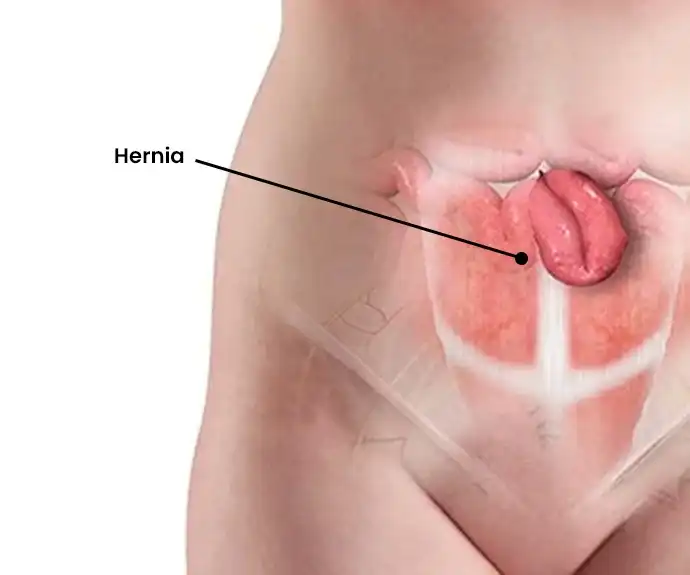
A hernia is an abnormal bulge in the abdomen that occurs when an organ or tissue passes through a weakened area in the abdominal wall. It is most commonly seen in the groin area, but can also occur in the abdominal wall or near the navel. Hernias can be congenital (present at birth) or acquired later in life.
Hernias are among the most common surgical conditions and affect people of all ages. In fact, hernias are the third most common surgical condition after appendicitis and gallbladder disease. Hernias can cause a variety of symptoms, including pain, discomfort, and a feeling of heaviness or fullness in the abdomen.
The most common cause of hernias is a weak spot in the abdominal wall. This can occur due to a congenital defect, a muscle strain or tear, or a surgical incision. Certain activities, such as heavy lifting or straining, can also increase the risk of it.
The treatment of hernias depends on the type and severity of the hernia, as well as the patient’s overall health. In some cases, it may be treated with lifestyle changes and medications. In other cases, surgery may be required to repair the hernia. It’s surgery can involve the placement of a mesh patch to reinforce the weakened area of the abdominal wall.
It is important to see a doctor if you experience any symptoms of a hernia, as the condition can lead to serious complications if left untreated. Early diagnosis and treatment can help prevent the hernia from worsening and can help reduce the risk of complications.
How to fix Hernia
Hernias are a common problem and can be quite uncomfortable and even debilitating in some cases. Fortunately, there are many ways to treat hernias, including surgery. If you have been diagnosed with a hernia and are considering surgery, it is important to understand what the procedure entails and how it can help you.
The first step in hernia repair surgery is to make a small incision in the area of the hernia. This will allow your surgeon to access the hernia and repair it. Depending on the type of hernia you have, the technique used to repair the hernia can vary. For example, if you have an inguinal hernia, your surgeon may use a mesh patch to close the hernia. This is often done with laparoscopic surgery, which uses small incisions and a camera to view the hernia. Other types of it’s repairs may include sutures, staples, or a combination of both.
Once the hernia is repaired, your surgeon will close the incision with sutures or staples.
This is done to ensure it stays closed and doesn’t reopen. You may also need to wear a special support garment for a few weeks after the surgery. This will help keep it closed and reduce the risk of it reopening.
It’s repair surgery is generally safe and effective. However, as with any surgery, there are some risks. These include infection, bleeding, and pain. There is also a risk of the it’s reopening and needing to be repaired again. Your doctor will discuss these risks with you before the surgery.
If you’re considering it’s repair surgery, it’s important to talk to your doctor about the best treatment option for you. Surgery is often the best option for hernias that are large, painful, or causing other problems. However, if your hernia is small and not causing any problems, your doctor may suggest other treatments such as wearing a support garment or taking medications to reduce the size of the it.
No matter what type of treatment you choose for your hernia, it’s important to follow your doctor’s instructions for recovery. This includes getting plenty of rest, taking pain medications as prescribed, and avoiding strenuous activities until your hernia has healed. With the right care and treatment, you can recover from it’s repair surgery and reduce the risk of complications.