
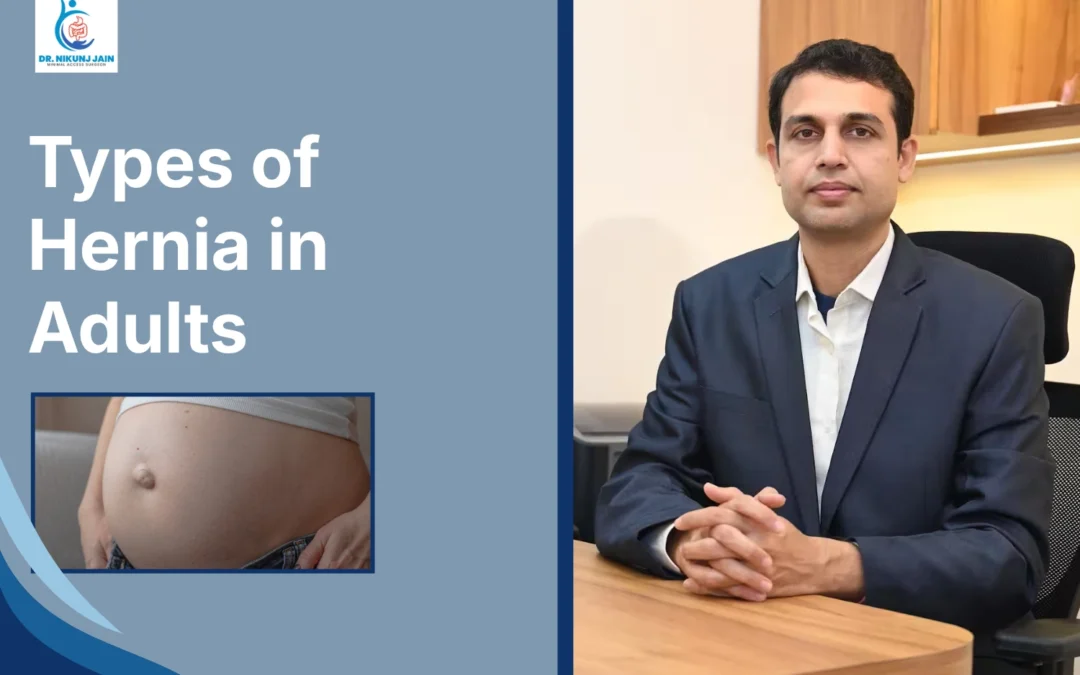
A hernia can start as a lump or a feeling of heaviness or discomfort that you notice when you cough, lift something or stand for a long time. Even though many hernias look the same from the outside they can happen in parts of the body and can have different risks. Dr. Nikunj Jain, hernia doctor in Indore, says that it is important to know what kind of hernia you have because where it’s how it feels and how big it is will affect how it is treated.
Table of Contents
What Is a Hernia?
A hernia happens when fat or part of your intestine pushes through a spot in the muscle or tissue that surrounds it. Some people are born with a spot and some people get one because they are getting older, had a surgery before or have been putting a lot of pressure on their abdomen.
If you cough a lot, are constipated, lift things, are pregnant or are overweight you can put extra strain on a weak spot. Usually a hernia will not get better on its own but not everyone needs to have emergency surgery.
Types of Hernia
Inguinal Hernia
An inguinal hernia happens in the groin area. It is the most common kind of hernia in adults. It happens when tissue pushes through a spot in the lower part of your abdominal wall. You might notice the swelling when you are standing, coughing or straining and it might get smaller when you are lying down.Some people just feel a little heavy while others feel pain, burning or discomfort when they move. Inguinal hernias are more common in men. Women can get them too. You can get them on one side or on both sides.
Femoral Hernia
A femoral hernia happens in the part of your thigh just below the groin. It is not as common but happens more often in women. Because the opening is small the tissue can get stuck easily.This kind of hernia might look like a lump and can be hard to notice. Even if you do not feel pain it is important to see a doctor soon because there is a bigger risk of the tissue getting blocked or not getting enough blood.
Umbilical Hernia
An umbilical hernia happens around your belly button. In adults, it can happen when there is much pressure inside your abdomen and tissue pushes through a weak spot near your navel. Being pregnant, overweight or straining your abdomen a lot can contribute to it. At first the swelling might be soft and not hurt. Over time it can get bigger or hurt more especially when you cough, bend or lift things. How it is treated depends on how big it is, how it feels and how healthy you are.
Epigastric Hernia
An epigastric hernia happens in the middle part of your abdomen between your belly button and breastbone. It usually has tissue in it and might look like a small firm lump. You might feel pain when you cough, exercise or put pressure on your abdomen. Some people have more than one small opening in this area. You might need to have it fixed if the lump hurts, is getting bigger or is affecting your life.
Incisional Hernia
An incisional hernia happens through a spot in the scar from a previous surgery on your abdomen. The wall of your abdomen might not get strong again after surgery and tissue can push through the cut. The lump might appear months or years after the surgery. Big incisional hernias can cause discomfort and make the wall of your abdomen weaker. How it is treated depends on how big the hole is, what surgeries you had before and how healthy the tissue around it is.
Hiatal Hernia
A hiatal hernia is different because it happens inside your body and usually does not make a lump that you can see. It happens when part of your stomach moves up through an opening in your diaphragm and into your chest. Some people do not feel any symptoms. Others feel heartburn, acid reflux, discomfort in their chest belching or have trouble swallowing. Changing your lifestyle and taking medicine might help with symptoms and surgery might be needed if symptoms are bad or if complications happen.
Other Less Common Hernias
Adults can also get a hernia around a stoma, a lumbar hernia near their side or back or a recurrent hernia where they had surgery before. These need to be looked at one by one because treatment can be more complicated.
When Should You See a Doctor for Hernia in Indore?
If you notice a lump in your groin or abdomen you should have it checked. You should get help away if the lump suddenly hurts, is hard, red or you cannot push it back in. If you are vomiting, have a fever your abdomen is swollen or you cannot pass stool or gas it might mean that tissue or intestine is stuck.
There are kinds of hernias in adults and they can vary in where they are, how they feel and what might happen. Finding out what kind of hernia you have can help you decide if you should just watch it or have surgery. Seeing Dr. Nikunj Jain at the time can help you avoid waiting too long and can help you understand what the safest treatment is, for your condition.
FAQ’s
Q1. What are the most common types of hernia in adults?
The most common types of hernia in adults are inguinal, femoral, umbilical, incisional, epigastric and hiatal hernias. Each type develops in a different part of the body and may require a different treatment approach.
Q2. Which is the most common hernia in adults?
An inguinal hernia is the most common type of hernia in adults. It usually appears as a swelling in the groin and may become more noticeable while coughing, lifting or standing.
Q3. Can an adult hernia heal without surgery?
An adult hernia usually does not heal on its own. A small and painless hernia may sometimes be monitored, but surgery is the only permanent way to repair the weak area in the muscle.
Q4. When should I consult a hernia surgeon in Indore?
You should consult a hernia surgeon in Indore if you notice a new lump in the groin, abdomen or near an old surgical scar. Pain, heaviness or an increasing swelling should not be ignored.
Q5. How is a hernia diagnosed?
A hernia is usually diagnosed through a physical examination, where the doctor checks the swelling while the patient stands, coughs or strains. In some cases, ultrasound, CT scan or other imaging tests may be advised to confirm the type and size of the hernia.
Q6. What are the warning signs of a complicated hernia?
Sudden severe pain, vomiting, fever, abdominal swelling and a lump that becomes hard or cannot be pushed back are warning signs. These symptoms require urgent medical attention.
Q7. Is laparoscopic hernia surgery available in Indore?
Yes, laparoscopic hernia surgery is available in Indore for suitable patients. It uses small cuts and may offer less pain, smaller scars and a quicker return to routine activities.
Q8. Can lifting heavy weight cause a hernia?
Heavy lifting may not always directly cause a hernia, but it can increase pressure inside the abdomen and make an existing weak spot worse. People who often lift heavy weights should avoid straining and get checked if they notice swelling or discomfort.
Q9. What happens if an adult hernia is left untreated?
If an adult hernia is left untreated, it may slowly increase in size and cause more pain or discomfort. In some cases, the tissue or intestine can get stuck, which may require urgent medical care.
Q10. Where can I get hernia treatment in Indore?
Patients looking for adult hernia treatment in Indore can consult Dr. Nikunj Jain, hernia doctor in Indore, for diagnosis and a personalised treatment plan. Early assessment can reduce discomfort and help prevent complications.