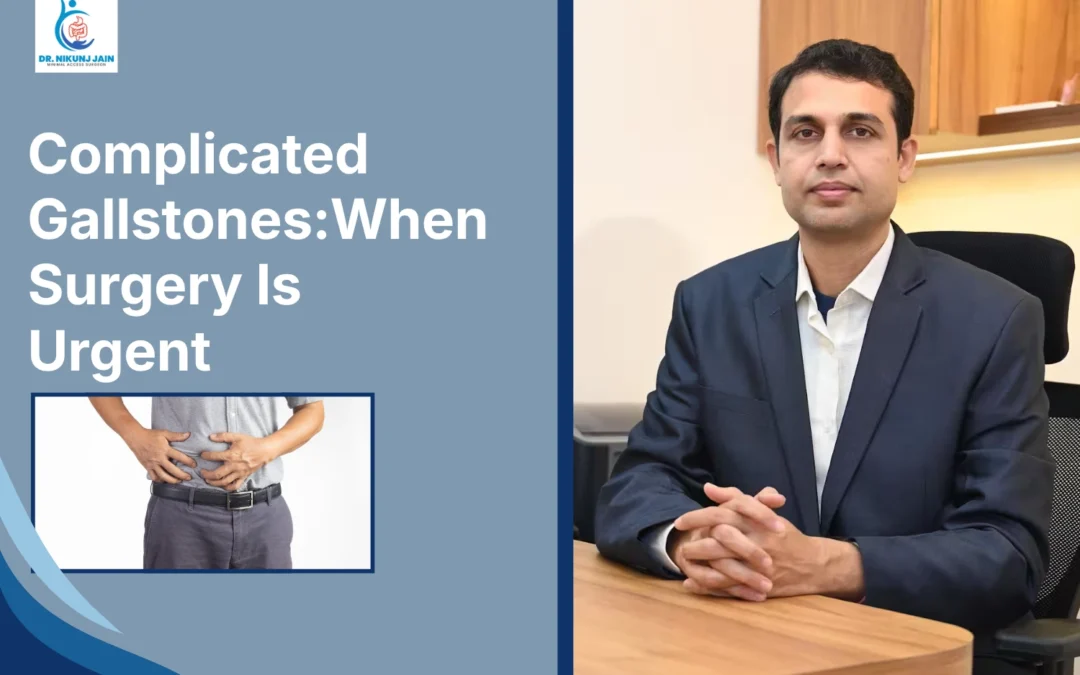
Gallstones can be silent for a time but when they block the gallbladder or bile duct things can get bad quickly. You might feel pain, have a fever or turn yellow. You might even vomit a lot. According to Dr. Nikunj Jain, gastro surgeon in Indore, it is very important to get it checked on time because if you wait the infection or inflammation can get worse.
What Makes Gallstones Complicated?
Gallstones are like rocks that form inside the gallbladder. A lot of people have them and they do not even know it. The problem starts when one of these rocks gets stuck and blocks the bile from flowing
When this happens you might feel a pain in the upper right or middle part of your belly.
This pain can also go to your right shoulder and it often happens after you eat a big meal.
If the blockage does not go away it can cause an infection, make your gallbladder swell or even damage the bile duct or the pancreas.
Acute Cholecystitis
Acute cholecystitis is when your gallbladder gets inflamed usually because a stone is blocking it and the pain can last for hours and it does not go away quickly. You might also have a fever, feel sick, vomit and be tender under your ribs.
This condition usually requires you to go to the hospital, where you can get pain relief, fluids and sometimes antibiotics. Often the doctor will advise you to have your gallbladder removed once you are stable. Having the surgery on time helps prevent attacks of pus from forming or your gallbladder from getting damaged.
Stones in the Common Bile Duct
Sometimes a stone can move from the gallbladder and get stuck in the common bile duct. This can block the bile from flowing, make your skin or eyes turn yellow, your urine dark, your stools pale and you might feel itchy.
Bile duct stones often need to be removed through a procedure called ERCP. During this procedure, a flexible camera is put through your mouth to reach the bile duct and remove the stone. Usually after the stone is removed, you will need to have your gallbladder taken out to prevent another blockage.
Cholangitis and Gallstone Pancreatitis
When the blocked bile duct gets infected it is called cholangitis. You will know it because you will have a fever, chills, belly pain and turn yellow. You need to go to the hospital, get antibiotics and have the blockage cleared.
Gallstones can also block the duct and cause acute pancreatitis. This can give you belly pain that moves to your back. You might vomit so you need to be in the hospital so the doctors can watch you. Once the inflammation goes down you might need to have your gallbladder removed either during your hospital stay or soon after depending on how you’re feeling.
Warning Signs That Need Immediate Care
Severe gallstone pain that lasts for several hours or keeps returning
Fever or chills
Frequent or persistent vomiting
Yellowing of the skin or eyes
Increasing abdominal tenderness or swelling
Confusion, weakness, or feeling very unwell
Pain that becomes stronger or does not improve
Painkillers may provide temporary relief, but they cannot remove the blockage or treat an infection. Do not try to manage severe or recurring symptoms at home. Visit a hospital as soon as possible to check whether the gallbladder, bile duct, or pancreas has been affected.
How Doctors Decide Whether Surgery Is Urgent
The doctor decides if you need surgery away based on your symptoms and what they find when they examine your blood tests and scans. Often they start with an ultrasound. They also do tests to see if the bile duct or pancreas is involved. Sometimes they might do an MRCP or CT scan.
Urgent surgery does not always mean you have to have the operation right that minute. First the doctors might focus on controlling your pain, giving you fluids and treating any infection then they choose the time to do the laparoscopic gallbladder removal. If you are too sick for surgery you might need to have a drain put in your gallbladder.
What Happens During Gallbladder Surgery?
Gallbladder surgery is usually done by laparoscopic cholecystectomy.
Small cuts are made in the abdomen to remove the gallbladder using a camera and special tools.
Only removing stones is not enough, as stones may form again.
Open surgery may be needed if the gallbladder is severely inflamed or difficult to reach.
Surgery is usually advised for pain, fever, infection, jaundice, or bile duct blockage.
Consult Dr. Nikunj Jain for proper diagnosis and safe treatment planning.
FAQ’s
Q1. Do all gallstones require surgery?
No, gallstones that do not cause symptoms may not need immediate surgery. However, if they cause repeated pain, infection, jaundice or pancreatitis, gallbladder surgery may be advised. Dr. Nikunj Jain in Indore can evaluate the condition and recommend suitable treatment.
Q2. When do gallstones become an emergency?
Gallstones may become an emergency when they block the gallbladder or bile duct. Severe abdominal pain, fever, chills, vomiting, jaundice or increasing tenderness require immediate medical attention.
Q3. What are the symptoms of complicated gallstones?
Common symptoms include severe pain in the upper-right abdomen, fever, vomiting, yellowing of the skin or eyes, dark urine and pale stools. Some patients may also experience pain that travels to the back or right shoulder.
Q4. Can gallstones cause jaundice?
Yes, jaundice can occur when a gallstone blocks the common bile duct and prevents bile from flowing properly. Patients with yellow skin or eyes should consult a gallstone specialist in Indore without delay.
Q5. What is acute cholecystitis?
Acute cholecystitis is inflammation of the gallbladder, usually caused by a gallstone blocking its opening. It can lead to persistent abdominal pain, fever, nausea and vomiting and often requires hospital treatment.
Q6. Can gallstones cause pancreatitis?
Yes, gallstones can block the pancreatic duct and cause gallstone pancreatitis. This condition may lead to severe abdominal pain that spreads to the back, repeated vomiting and the need for hospital care.
Q7. What is ERCP, and when is it needed for gallstones?
ERCP is an endoscopic procedure used to remove stones trapped in the common bile duct. A flexible camera is passed through the mouth to reach the bile duct and clear the blockage before gallbladder surgery is planned.
Q8. How is gallstone disease diagnosed in Indore?
Gallstones are usually diagnosed through symptoms, physical examination, blood tests and an abdominal ultrasound. Dr. Nikunj Jain may also recommend MRCP or a CT scan if the bile duct or pancreas may be affected.
Q9. Is laparoscopic gallbladder surgery safe?
Laparoscopic gallbladder surgery is a commonly performed procedure in which the gallbladder is removed through small cuts. The safest approach depends on the amount of inflammation, the patient’s health and the complexity of the condition.
Q10. Where can I get treatment for complicated gallstones in Indore?
Patients with gallstone pain, jaundice, infection or bile duct blockage can consult Dr. Nikunj Jain in Indore. Timely diagnosis and treatment can reduce the risk of serious complications and help plan surgery safely.
The human gallbladder, a seemingly inconspicuous organ, can become the source of significant discomfort when gallstones make their presence known. In this comprehensive exploration, What causes Gallstones? we aim to unravel the complexities surrounding gallstones – small yet potent formations that can disrupt the delicate balance within our digestive system. By understanding the factors contributing to gallstone formation, we empower ourselves with the knowledge necessary for prevention and management.
A Closer Look at Gallstones
Understanding Gallstones
Gallstones are solid particles that form in the gallbladder, a small organ located beneath the liver. The gallbladder plays a crucial role in digestion by storing and releasing bile, a digestive fluid produced by the liver. When the components of bile, namely cholesterol, bile salts, and bilirubin, become imbalanced, gallstones can form within the gallbladder.
Types of Gallstones
There are two primary types of gallstones: cholesterol stones and pigment stones. Cholesterol stones, the more common variety, form when there is an excess of cholesterol in the bile. On the other hand, pigment stones develop when there is an abundance of bilirubin, a pigment derived from the breakdown of red blood cells.
The Culprits Behind Gallstone Formation
Cholesterol Dominance
Cholesterol stones often originate from an imbalance in the components of bile, particularly an excessive amount of cholesterol. When the concentration of cholesterol in the bile surpasses the capacity of bile salts to dissolve it, crystals form. Over time, these crystals aggregate to form stones. Various factors, such as obesity, a diet high in saturated fats, and rapid weight loss, contribute to elevated cholesterol levels in the bile.
Gallbladder Sluggishness
The efficient functioning of the gallbladder is crucial in preventing gallstone formation. When the gallbladder fails to contract and release bile properly, a condition known as biliary stasis occurs. This stagnant environment promotes the crystallization of cholesterol and the formation of stones. Factors like obesity, pregnancy, and certain diseases can lead to gallbladder sluggishness.
Pigment Stones: Unveiling the Other Culprit
Pigment stones, although less common, pose a significant risk. They develop when there is an excess of bilirubin in the bile. Conditions such as liver cirrhosis, hemolytic anemia (accelerated breakdown of red blood cells), and biliary tract infections contribute to elevated bilirubin levels, fostering the creation of pigment stones.
Demystifying Risk Factors
Gender Disparities
Women are more prone to gallstone formation than men, with hormonal factors playing a pivotal role. Hormones, such as estrogen, can increase cholesterol levels in bile and reduce gallbladder motility, creating an environment conducive to stone formation. Women who are pregnant or take hormonal contraceptives face an elevated risk.
Age Matters
Age is a significant factor influencing the likelihood of gallstones. Individuals over the age of 40 are more susceptible due to age-related changes in metabolism and an increased concentration of cholesterol in the bile. Moreover, decreased gallbladder motility with age contributes to the accumulation of bile, fostering stone development.
Genetic Predisposition
Genetics also play a role in gallstone formation. Individuals with a family history of gallstones are at a higher risk, suggesting a genetic predisposition. While specific genetic factors are still being studied, it is clear that familial tendencies contribute to an individual’s susceptibility to gallstones.
Conclusion
In unraveling the causes of gallstones, we uncover a multifaceted interplay of factors ranging from dietary choices to genetic predispositions. Armed with this knowledge, individuals can adopt proactive measures to reduce their risk of gallstone formation. Understanding the intricate dynamics of gallstones allows us to navigate towards prevention, emphasizing the importance of a balanced lifestyle, healthy dietary choices, and regular medical check-ups to maintain gallbladder health.
Meet Your Doctor
The Best Laparoscopic Surgeon in Indore
Dr. Nikunj Jain is a renowned Gastro & Minimal Access Laparoscopic Surgeon.
He is a Surgical Gastroenterologist, Consultant Surgeon at Apollo Hospital, Indore having expertise in laparoscopic, Laser, and Robotic Surgery.
You can be confident that with Dr. Nikunj Jain your well-being is in the capable hands of a highly-skilled Minimally Invasive Laparoscopic & Robotic Surgeon. Dr. Nikunj Jain strives to treat his patients with an honest, straightforward, and caring nature in a safe and comfortable environment.
Dr. Nikunj Jain has been awarded Dr. B. Ramamurthi National Gold Medal by National Board of Examination.
drnikunjjain@gmail.com
Email your reports
+91-97114-59697
Call Now to book Appointment
Head Quarter Building
3rd Floor, Satya Sai Square, Vijay Nagar, Indore – MP
The gallbladder, a small organ located beneath the liver, plays a crucial role in the digestive system by storing and releasing bile to aid in the digestion of fats. However, sometimes, small, hard particles known as gallstones can form within the gallbladder, causing discomfort and potential complications. In this comprehensive blog, we will delve into the world of gallbladder stones, exploring their causes, symptoms, diagnosis, treatment options, and preventive measures.
Anatomy and Function of the Gallbladder
Before we dive into gallstones, let’s understand the anatomy and function of the gallbladder. The gallbladder is a pear-shaped organ that stores bile, a digestive fluid produced by the liver.
What are Gallbladder Stones?
Gallstones, also known as cholelithiasis, are solid particles that form in the gallbladder. These stones can vary in size, from small grains to larger masses. There are two main types of gallstones:
Cholesterol Stones: These are the most common type of gallstones, formed when there is an excess of cholesterol in the bile.
Pigment Stones: These stones are made up of bilirubin and are more common in conditions where there is excessive breakdown of red blood cells.
Causes of Gallbladder Stones
Several factors contribute to the formation of gallstones, including:
Excess Cholesterol in the Bile: When the liver produces more cholesterol than the bile can dissolve, it can lead to the formation of cholesterol stones.
Bile Imbalance: An imbalance in the substances that make up bile, such as bilirubin, can contribute to the development of gallstones.
Obesity: People who are overweight or obese are at a higher risk of developing gallstones.
Rapid Weight Loss: Losing weight too quickly can cause the liver to release extra cholesterol into the bile, leading to gallstone formation.
Pregnancy: Hormonal changes during pregnancy can increase the risk of gallstones.
Genetics: A family history of gallstones may increase an individual’s susceptibility to developing them.
Symptoms of Gallbladder Stones
Gallstones often do not cause symptoms until they obstruct the normal flow of bile. Common symptoms include:
Pain: The most common symptom is a sudden, intense pain in the upper abdomen, known as biliary colic. This pain may radiate to the back or shoulder.
Nausea and Vomiting: Gallstones can cause nausea and vomiting, especially after meals.
Jaundice: If a gallstone blocks the bile duct, it can lead to jaundice, characterized by yellowing of the skin and eyes.
Fever and Infection: In some cases, gallstones can lead to inflammation of the gallbladder (cholecystitis) or infection in the bile ducts.
Diagnosis of Gallbladder Stones
Ultrasound: This non-invasive imaging test is often the first choice for diagnosing gallstones.
Blood Tests: Blood tests can help identify signs of infection or inflammation in the gallbladder.
CT Scan: A computed tomography (CT) scan may be performed to get a detailed view of the gallbladder and surrounding structures.
HIDA Scan: This nuclear medicine test involves injecting a radioactive substance into the body to track the flow of bile.
Treatment Options for Gallbladder Stones
The treatment approach for gallstones depends on the severity of symptoms and the presence of complications. Common treatment options include:
Watchful Waiting: If the gallstones are not causing symptoms, a healthcare provider may adopt a wait-and-see approach.
Medications: Certain medications, such as ursodiol, may be prescribed to dissolve cholesterol stones.
Laparoscopic Cholecystectomy: This minimally invasive surgery involves removing the gallbladder and is often recommended for symptomatic gallstones.
Endoscopic Retrograde Cholangiopancreatography (ERCP): This procedure can be used to remove gallstones that have migrated into the bile ducts.
Extracorporeal Shock Wave Lithotripsy (ESWL): This non-invasive procedure uses shock waves to break gallstones into smaller pieces, making them easier to pass.
Preventive Measures for Gallbladder Stones
Taking steps to prevent the formation of gallstones is essential, especially for individuals at higher risk. Key preventive measures include:
Maintaining a Healthy Weight: Adopting a healthy lifestyle with a balanced diet and regular exercise can help prevent obesity-related gallstones.
Balanced Diet: A diet low in saturated fats and cholesterol and high in fiber can help prevent the formation of cholesterol stones.
Hydration: Staying well-hydrated is crucial for maintaining bile fluidity and preventing stone formation.
Regular Physical Activity: Engaging in regular exercise not only aids in weight management but also promotes overall digestive health.
Conclusion
Gallbladder stones are a common and often painful condition that can affect individuals of all ages. Understanding the causes, symptoms, diagnosis, treatment options, and preventive measures is crucial for managing and preventing gallstones. If you suspect you have gallstones or are experiencing symptoms, it is important to consult with a healthcare professional for an accurate diagnosis and appropriate treatment plan.
Meet Your Doctor
The Best Laparoscopic Surgeon in Indore
Dr. Nikunj Jain is a renowned Gastro & Minimal Access Laparoscopic Surgeon.
He is a Surgical Gastroenterologist, Consultant Surgeon at Apollo Hospital, Indore having expertise in laparoscopic, Laser, and Robotic Surgery.
You can be confident that with Dr. Nikunj Jain your well-being is in the capable hands of a highly-skilled Minimally Invasive Laparoscopic & RoboticSurgeon. Dr. Nikunj Jain strives to treat his patients with an honest, straightforward, and caring nature in a safe and comfortable environment.
Dr. Nikunj Jain has been awarded Dr. B. Ramamurthi National Gold Medal by National Board of Examination.
drnikunjjain@gmail.com
Email your reports
+91-97114-59697
Call Now to book Appointment
Head Quarter Building
3rd Floor, Satya Sai Square, Vijay Nagar, Indore – MP