Hernia surgery is one of the most common surgeries performed today. The hernia itself is formed as a result of the protrusion of organs or tissues through the weakened area of the muscle or abdominal wall. This weakness may need to be surgically strengthened if the hernia is large or of a certain type.
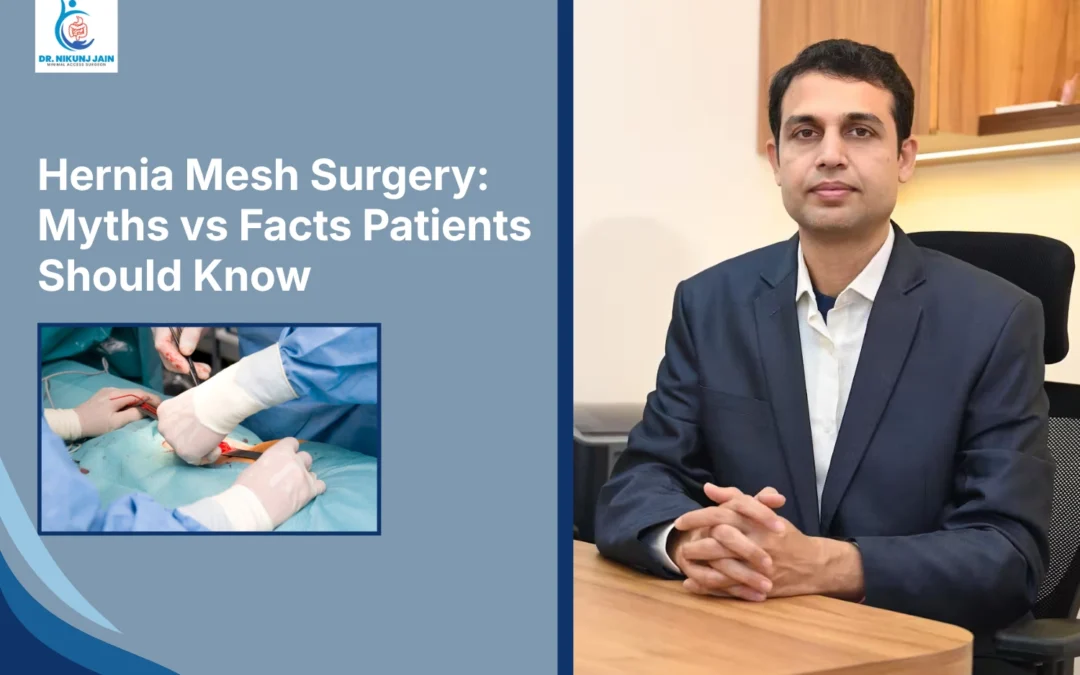
Most often, a hernia is reinforced with a special mesh, which is widely used in hernia surgery, although there are many different theories and opinions about it. So, in most cases, hernia repair surgery involves hernia mesh. However, hernia mesh is not recommended for all patients, since each case is considered individually, depending on the characteristics of the hernia and the patient’s body. Dr. Nikunj Jain, hernia surgeon in Indore, will help you understand hernia mesh and choose the right hernia treatment.
Table of Contents
Myth 1: Hernia Mesh is Inherently Unsafe
Fact:Hernia mesh is not necessarily unsafe, surgical mesh has been used for many years to help repair hernias. When used on the right patient, hernia mesh can give strength and support to the repaired tissue, thus reducing the risk of hernia recurrence.
However, this does not mean that hernia mesh is entirely safe, like any foreign protein, mesh can cause adverse reactions such as infection, pain, adhesion, recurrence of hernia, or the need for additional surgery. Therefore, it is very important to consult your doctor and surgeon and choose the right hernia treatment individually for your body.
Myth 2: All Hernias Require Mesh Repair
Fact: Not all hernias require mesh repair. Although hernia mesh is often used to treat hernias, in some cases, hernias can be repaired without the use of mesh. The decision to use hernia mesh is made by the doctor during the examination, taking into account many factors, such as the size and location of the hernia, the patient’s health, and the likelihood of infection and recurrence.
Mesh is commonly used in many hernia repairs, but it may not be suitable for every patient. The decision depends on the type of hernia, its size, location, and the patient’s overall condition. Your surgeon will decide whether mesh is the right option for your case.
Myth 3: Mesh Prevents Hernia from Recurring
Fact:Hernia mesh significantly reduces the risk of hernia recurrence, but it cannot completely eliminate this risk. The reason for hernia recurrence can be the characteristics of the hernia itself, injury during surgery, obesity, tissue weakness, or other reasons.
In addition, proper post-operative rehabilitation is also important to prevent hernia recurrence. Therefore, it is important to follow the recommendations of Dr. Nikunj Jain or another hernia surgeon after surgery.
Myth 4: All Hernia Meshes Are the Same
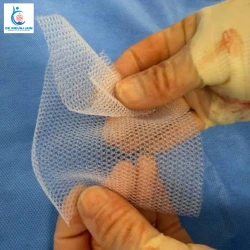
Fact: There are many types of surgical meshes used in hernia surgery. All meshes differ in characteristics and technologies for strengthening tissue repair, as well as the degree of absorption. Mesh that is not absorbed is used when long-term support is needed for tissue healing.
The choice of mesh also depends on the type of hernia, the method of hernia repair (laparoscopic or open), and surgeon’s preferences.
Myth 5: Mesh Can Only Be Used in Open Surgery
Fact: Mesh can be used both in open and laparoscopic hernia repair. In addition, both methods can be used regardless of the type of mesh. So, in laparoscopic hernia repair, the surgeon makes a few incisions through which special tools are inserted to strengthen the hernia and place the mesh.
Myth 6: The Body Always Rejected the Mesh
Fact: Unfortunately, there are many complications associated with hernia mesh, which can be classified as early, late, or very late. In addition, each hernia repair with mesh has the potential for infection and related reactions, ranging from mild irritation to severe infection.
However, this does not mean that every person who has had hernia mesh surgery will experience rejection. There are many cases when patients have successfully tolerated hernia mesh repair without complications. However, if you have suspicions or feelings of discomfort after hernia mesh surgery, you should contact your doctor.
Myth 7: Recovery After Mesh Surgery Takes a Very Long Time
Fact: There are many different factors that affect postoperative recovery after hernia mesh surgery. So, the time of recovery after hernia surgery depends on the type of hernia, the type of hernia repair (open or laparoscopic), the size of the hernia, and the patient’s health.
Therefore, it is important to take things easy at first, while the body is recovering. In addition, it is necessary to follow the recommendations of Dr. Nikunj Jain, best hernia doctor in Indore, who will monitor your health after hernia surgery.
When to Contact a Doctor?
It is time to contact your doctor if you feel that your hernia is getting bigger, or if you have severe pain or discomfort. These symptoms may indicate that the hernia is becoming strangulated or incarcerated, which requires immediate surgical intervention. In addition, you should contact a doctor if you feel any discomfort or suspect that something is wrong.
Consultation with the surgeon is also necessary if you have any doubts or concerns about hernia surgery with mesh. You should ask your doctor what type of mesh he plans to use, what other options are available, what risks and benefits you may have with this particular surgery, and what to do if any complications arise. The FDA also asks to ask these questions if you are considering hernia mesh surgery.
Conclusion
When considering hernia mesh surgery, it is important to understand that hernia mesh is not a universal method for hernia repair. Although it may be a great option for many hernia patients, hernia mesh is not right for every hernia and every patient. The decision to use hernia mesh and choose the method of hernia repair depends on many factors and is made individually for each patient. Dr. Nikunj Jain, best laparoscopic GI surgeon in Indore, will help determine which hernia treatment is more appropriate for your case, surgery with mesh, open hernia repair or other methods.
FAQs
Q1. Is hernia mesh surgery safe? Hernia mesh surgery can be a suitable option for many patients when appropriately selected and performed. However, like every surgical procedure, it carries possible risks such as pain, infection, recurrence, and mesh-related complications.
Q2. Who should you consult for hernia mesh surgery in Indore? You can consult Dr. Nikunj Jain in Indore for evaluation of your hernia and to understand whether mesh-based, laparoscopic, open, or another repair technique may be suitable.
Q3. Does every hernia require mesh surgery? No. Some hernias can be repaired using stitches alone. The decision depends on the type, size, location, and complexity of the hernia as well as individual patient factors.
Q4. Can a hernia return after mesh surgery? Yes. Mesh may reduce the risk of recurrence, but no hernia repair method can guarantee that the hernia will never return.
Q5. What types of mesh are used for hernia repair? Hernia meshes may be absorbable or non-absorbable. The appropriate choice depends on the location and type of repair as well as the patient’s condition.
Q6. Can mesh be used in laparoscopic hernia surgery in Indore? Yes. Mesh can be placed during laparoscopic hernia repair through small incisions using specialised instruments.
Q7. What are the possible complications of hernia mesh? Reported problems can include pain, infection, adhesions, inflammation, recurrence, and, in some cases, the need for an additional surgical procedure.
Q8. How long does recovery take after hernia mesh surgery?
Recovery varies depending on the type of hernia, surgical technique, and the patient’s overall health. Many patients can gradually return to routine activities within a few weeks, following their surgeon’s advice.
Q9. Is open surgery the only way to perform mesh hernia repair? No. Mesh may be used in both open and laparoscopic hernia repair depending on the individual situation.
Q10. When should I consult a hernia surgeon in Indore?
Consult a hernia surgeon if you notice a persistent lump or swelling, pain or discomfort during activity, or an existing hernia that is increasing in size. Sudden severe pain, vomiting, or a lump that cannot be pushed back requires urgent medical evaluation.
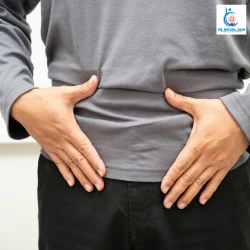
Hernias are commonly associated with men but women can develop them too. The problem is that hernia in women may not always cause a lump or swelling. Symptoms can appear mild during certain activities or feel similar to other abdominal and pelvic problems because of this women may live with discomfort for months before finding the cause.
Dr. Nikunj Jain, best hernia doctor in Indore, explains that persistent pain in the abdomen, groin or pelvic region should not be ignored, especially when it becomes worse with coughing, lifting, standing or physical activity. Understanding the signs can help women seek medical advice before the condition becomes more troublesome.
Table of Contents
What Is a Hernia?
A hernia develops when an organ or fatty tissue pushes through a weak area in the surrounding muscle or connective tissue. It may create a bulge but this does not happen in every case.
Hernias can develop in different areas of the body. In women, groin and abdominal hernias can sometimes be difficult to recognize because the swelling may be small or located deeper beneath the tissues.
Some hernias remain relatively mild for a time while others gradually become painful or increase in size.
Why Can Hernia Symptoms Be Missed in Women?
One reason hernias are sometimes overlooked in women is that symptoms can resemble other conditions. Groin discomfort, lower abdominal pain or pelvic pressure may initially be linked to muscle strain, menstrual problems, urinary conditions or gynaecological concerns.
Women may also have a hernia without a visible bulge, Pain may go and come depending on body position or activity. A person may feel comfortable while resting but notice pain after standing for hours exercising, coughing or lifting something heavy.
This changing pattern can make the problem harder to identify without examination.
Common Hernia Symptoms in Women
Swelling or a small lump in the groin or abdomen
Bulge that becomes more noticeable while standing, coughing, lifting, or straining
Bulge that may reduce or disappear while lying down
Pulling, aching, or burning sensation in the groin or lower abdomen
Feeling of heaviness or pressure in the affected area
Sharp or persistent pain around the groin or abdomen
Pain or discomfort that increases during walking, climbing stairs, or exercising
Discomfort while lifting heavy objects or doing household activities
Pain, swelling, or a bulge near a previous surgical scar
Types of Hernia That Can Affect Women
Inguinal Hernia: Develops in the groin area and can affect both men and women. It may appear as a swelling or bulge that becomes more noticeable during coughing, standing, or straining.
Femoral Hernia: Occurs in the upper thigh or lower groin area, usually slightly below an inguinal hernia. It requires timely medical attention because there is a higher risk of the hernia becoming trapped.
Umbilical Hernia: Develops around the belly button and may appear as a visible bulge. The swelling can become more prominent while coughing, lifting, or straining.
Incisional Hernia:Can develop near the site of a previous abdominal surgery when the abdominal wall becomes weak. It may cause swelling, discomfort, or a bulge around the surgical scar.
How Is Hernia Diagnosed in Women?
Diagnosis usually begins with observing history and physical examination. The doctor may examine the abdomen or groin while the patient is standing, coughing or gently straining. If the hernia is small, deep or difficult to feel imaging tests such as an ultrasound CT scan or other appropriate investigation may sometimes be advised.
The goal is not to confirm whether a hernia is present but also to understand its location, size and whether there are signs of complications.
Treatment for Hernia in Women
Treatment depends on the type, size and location of the hernia, the severity of symptoms, the patient’s overall health and the risk of complications.
Observation and Regular Monitoring: Small hernias that are not causing significant pain or discomfort may sometimes be monitored under a doctor’s supervision. However, hernias usually do not heal on their own because the weakness in the abdominal wall remains.
Open Hernia Surgery: In open surgery, the surgeon makes an incision near the hernia, returns the protruding tissue to its proper position and repairs the weakened area of the abdominal wall.
Mesh Hernia Repair: A surgical mesh may be used to strengthen the weakened abdominal wall and reduce the risk of the hernia recurring. The use of mesh depends on the type of hernia, its location and the patient’s individual condition.
Laparoscopic Hernia Surgery: Laparoscopic repair is performed through a few small incisions using a camera and specialised instruments. In suitable patients, it may offer smaller scars, less postoperative discomfort and a faster recovery.
Robotic Hernia Surgery: Robotic-assisted surgery is another minimally invasive approach that provides the surgeon with enhanced precision and visualisation. It may be considered for selected or more complex hernias.
Emergency Hernia Surgery: Urgent surgery may be required if the hernia becomes trapped or its blood supply is affected, especially when there is sudden severe pain, vomiting or a painful swelling that does not reduce.
The most suitable treatment should be decided after a proper clinical examination and evaluation by a hernia surgeon, as the best surgical approach can vary from one patient to another.
When Should You See a Doctor?
Recurring groin pain or abdominal discomfort should not automatically be assumed to be a muscle strain. If pain keeps returning, becomes worse while coughing or lifting or is accompanied by swelling a medical evaluation can help identify the cause. Early diagnosis is especially useful when the symptoms are mild or there is no bulge.
Conclusion
Hernias in women can sometimes be difficult to recognize because symptoms may be subtle and may resemble abdominal or pelvic conditions. Paying attention to repeated groin pain, pressure, swelling or discomfort during activity can help with earlier diagnosis.
If you notice persistent or worsening symptoms consult Dr. Nikunj Jain, best gastro surgeon in Indore, for evaluation and guidance. Timely diagnosis can help determine the type of hernia, understand the risk of complications and choose the suitable treatment approach.
FAQ’s
Q1. Can women develop hernias?
Yes. Women can develop several types of hernias, including inguinal, femoral, umbilical, incisional and hiatal hernias. Some may be more difficult to identify because there is no obvious external swelling.
Q2. What does a hernia feel like in a woman?
A woman may experience aching, pulling, burning, pressure or heaviness in the groin or abdomen. Symptoms may become worse with coughing, lifting, exercising or standing for a long time.
Q3. Can a woman have a hernia without a lump?
Yes. Some hernias are small or located deeper within the tissues, so a visible lump may not always be present. Persistent unexplained groin or abdominal pain should therefore be evaluated.
Q4. Where is hernia pain usually felt in women?
The location depends on the type of hernia. Pain may occur around the groin, lower abdomen, belly button or a previous abdominal surgery scar.
Q5. Is groin pain always a sign of a hernia?
No. Groin pain can have many causes, including muscle injuries and other medical conditions. However, pain that repeatedly increases during coughing, lifting or straining should be examined.
Q6. Are femoral hernias more serious?
Femoral hernias can have a higher risk of becoming trapped because they pass through a relatively narrow space. A doctor should evaluate a suspected femoral hernia to determine the appropriate treatment.
Q7. Can pregnancy cause a hernia?
Pregnancy increases pressure on the abdominal wall and may contribute to the development or appearance of certain hernias, especially when an area of the abdominal wall is already weak.
Q8. Can a hernia heal without surgery?
A true hernia generally does not close on its own because the weakness in the abdominal wall remains. However, not every hernia requires immediate surgery. Treatment depends on symptoms, type and risk of complications.
Q9. How is a hernia in women diagnosed?
A doctor usually begins with a physical examination. When the diagnosis is uncertain or the hernia is not easily felt, imaging such as an ultrasound or CT scan may be recommended.
Q10. How can I choose the best hernia doctor in Indore?
Dr. Nikunj Jain is an experienced hernia surgeon in Indore who provides evaluation and treatment for different types of hernias, including inguinal, femoral, umbilical and incisional hernias. Depending on the patient’s condition, he may recommend open, laparoscopic, or advanced hernia repair techniques after a detailed clinical assessment.
Many people think of a hernia as something that happens to babies but it can also happen to adults. An umbilical hernia happens when part of the intestine or fat moves through a spot in the stomach area near the belly button. Some hernias stay small and don’t cause any pain for a long time but others can get bigger and might need a doctor’s help. Dr. Nikunj Jain, best hernia doctor in Indore, says that finding out early is important to stop problems from getting worse and to handle things away.
Table of Contents
What Is an Umbilical Hernia?
An umbilical hernia is a bulge that shows up around or near the navel. It happens when the muscles around the belly button get weak letting stomach tissue push through the hole.
Unlike the hernias that children get, adult umbilical hernias usually don’t go away on their own and they often need a doctor’s check-up.
What Causes Umbilical Hernia in Adults?
Several things can push on the stomach and cause an umbilical hernia.
Common causes are:
Obesity
Pregnancy (especially having more than one baby)
Lifting things
Coughing a lot
Having constipation all the time
Having surgery on the stomach before
Fluid building up in the stomach (ascites)
Getting older and the muscles in the stomach getting weaker
Many adults have an umbilical hernia because of a mix of these reasons.
Symptoms of Umbilical Hernia
The signs can be different based on how big the hernia is and if there are any problems.
Common symptoms are:
A bulge near the belly button
Swelling that gets bigger when you cough or stand up
A little pain or hurt around the navel
A feeling of pressure in the stomach
Pain when you lift things
Discomfort during exercise
Some small hernias might not hurt at first.
When Is an Umbilical Hernia Dangerous?
Even though umbilical hernias are not an emergency, problems can happen if the tissue gets stuck. Go to the best hernia doctor near me right away if you have:
Sudden and very bad pain
A bulge that feels hard and hurts
Red or dark color over the swelling
Feeling sick to your stomach
Throwing up
Fever
Not being able to push the hernia back in
These signs might mean the tissue is stuck or not getting enough blood, which needs quick surgery.
How Is Umbilical Hernia Diagnosed?
Doctors usually check with:
A physical exam
A look at your history
An ultrasound (if needed)
A CT scan for more complicated hernias
Most simple umbilical hernias can be found during a normal doctor visit.
Do All Umbilical Hernias Need Surgery?
Not every hernia needs surgery away but adult umbilical hernias usually don’t go away without help.
Surgery is usually suggested if:
The hernia is getting bigger
You have pain or feel uncomfortable
Your daily tasks are affected
There is a chance of problems
The hernia gets stuck or loses blood supply
Your doctor will tell you the way to treat it based on how big the hernia is and your overall health.
Umbilical Hernia Treatment Options
Open Hernia Repair
The doctor makes a cut near the hernia, puts the tissue back in place and uses stitches or a mesh to fix the weak area.
Laparoscopic Hernia Surgery
This is a surgery that uses small cuts and a camera to fix the hernia.
Benefits include:
Smaller scars
Less pain
Faster healing
Shorter time in the hospital
Getting back to normal activities sooner
Not everyone can have this type of surgery and the way to fix it depends on what the doctor thinks is best.
Recovery After Umbilical Hernia Surgery
Most people get better after surgery. Common recovery steps are:
Going back to light work in 1 to 2 weeks
Avoiding heavy lifting for a few weeks
Following instructions for food and caring for the wound
Going to check-up visits
Recovery time depends on the type of surgery and how healthy you are.
Can You Prevent an Umbilical Hernia?
Not all hernias can be stopped. You can lower your chance by:
Keeping a healthy weight
Doing exercise regularly
Avoiding lifting heavy things the wrong way
Treating a cough that won’t go away
Keeping from getting constipated
Taking care of any health issues you have
Healthy habits help lower the pressure on the stomach area.
Umbilical Hernia Surgery Cost in Indore
The cost of umbilical hernia surgery in Indore generally ranges from ₹50,000 to ₹1,20,000. The final cost depends on whether open or laparoscopic surgery is performed, the size of the hernia, use of mesh, hospital facilities, surgeon’s fees, medical tests and the duration of hospital stay. Laparoscopic umbilical hernia repair may cost around ₹1,00,000 on average. Patients should consult a qualified hernia surgeon for an examination and an accurate cost estimate based on their condition.
Conclusion
An umbilical hernia in adults should not be ignored, even if it doesn’t hurt much. Finding it early and getting the right help can stop big problems and make things better in the long run. If you see a swelling near your belly button or feel pain that doesn’t go away talk to a doctor who knows about hernias. Dr. Nikunj Jain, best hernia doctor in Indore, offers expert help and advanced surgery for hernias helping people get better safely and feel confident in their daily lives.
FAQ’s
Q1. What causes an umbilical hernia in adults?
Common causes include obesity, pregnancy, chronic coughing, constipation, heavy lifting, previous abdominal surgery, and weakened abdominal muscles.
Q2. Can an umbilical hernia heal without surgery?
In adults, umbilical hernias usually do not heal on their own and may gradually increase in size.
Q3. Is every umbilical hernia dangerous?
No. However, untreated hernias can become trapped or strangulated, making emergency surgery necessary.
Q4. What are the symptoms of an umbilical hernia?
Typical symptoms include a bulge near the belly button, pain, swelling, discomfort during activity, and pressure around the navel.
Q5. When should I consider surgery for an umbilical hernia?
Surgery is generally recommended if the hernia is painful, enlarging, affecting daily life, or at risk of complications.
Q6. Is laparoscopic umbilical hernia surgery better?
For suitable patients, laparoscopic surgery offers smaller incisions, less pain, quicker recovery, and shorter hospital stays.
Q7. How long does recovery take after umbilical hernia surgery?
Most patients return to light activities within 1–2 weeks, while complete recovery usually takes 4–6 weeks depending on the procedure.
Q8. Who is the best gastroenterologist surgeon in Indore for umbilical hernia surgery?
Dr. Nikunj Jain is experienced in advanced laparoscopic and minimally invasive hernia surgery, providing personalized treatment for adult umbilical hernias in Indore.
Q9. What is the cost of umbilical hernia surgery in Indore? The cost of umbilical hernia surgery in Indore generally ranges from ₹50,000 to ₹1,20,000. It may vary depending on the surgical technique, hernia size, mesh used, hospital facilities, medical tests and duration of stay.
Q10. Can an umbilical hernia return after surgery?
Recurrence is uncommon when surgery is performed appropriately and patients follow post-operative care instructions, including avoiding heavy lifting during recovery.
A hernia can slowly start to affect your life by causing pain, discomfort and problems with doing normal things. Surgery is the way to fix most hernias but many people are worried about one big question: How long does it take to get better after hernia surgery? According to Dr. Nikunj Jain, best hernia doctor in Indore, how long it takes to recover depends on things, including the kind of hernia, the way the surgery is done, how healthy you are and how well you follow what the doctor says after the operation. Knowing what to expect during recovery can help you heal comfortably and get back to life with confidence.
Table of Contents
What Determines Hernia Surgery Recovery Time?
There is no recovery time that works for everyone. Many things affect how fast you get better including:
The size and kind of hernia
Open surgery or laparoscopic surgery
Your age and how fit you’re
If you have other health issues like diabetes or obesity
Following the care instructions after the surgery
New laparoscopic and less invasive methods often mean faster recovery than old open surgery even though both are safe and work well when used correctly.
First 24 Hours
Most people are told to stand up and walk a while after surgery. Walking helps blood move better and lowers the chance of blood clots.
You might feel:
Some pain near the cut
A swelling
Tiredness
Mild discomfort when standing or walking
Pain medicines usually help keep the pain under control.
First Week
During the first week, most people see better pain and movement.
You should:
Walk
Eat good food
Drink lots of water
Avoid lifting heavy things
Keep the cut clean and dry
Many people with office jobs can go back to work after a few days depending on how they feel and what the surgeon says.
Two to Four Weeks
At this point the pain is usually much less. Most people can:
Do light daily tasks
Drive if they’re not in pain and not on strong pain medicines
Return to office work
Keep doing easy exercises like walking
Hard activities, gym work and lifting heavy things should still be avoided unless the surgeon says it is okay.
Four to Six Weeks
Most people get much better this time. Many people can safely go back to:
Moderate exercise
Housework
Normal walking
Office work
Fun activities
The exact time depends on how well you heal and the type of surgery done.
Six to Eight Weeks
By now many people are back to their life, including hard work and exercise. People who do heavy work might need more time to get ready to lift heavy things or do tough jobs.
Tips for Faster Recovery
Even though healing takes time, a few simple things can help you get faster.
Stay Active
Walking gently helps blood move and reduces stiffness. Don’t stay in bed long unless the doctor says so.
Follow Medication Instructions
Take pain medicines and any other medicines exactly as the doctor says.
Eat a Healthy Diet
Choose foods rich in:
Protein
Fruits
Vegetables
Whole grains
Fibre
Good food helps the body heal and stops constipation.
Prevent Constipation
Straining when you go to the bathroom can push on the belly.
Include:
Fiber-rich food
Lots of water
Stool softeners if the doctor says so
Avoid Lifting
Lifting heavy things too soon can hurt the repair. Wait until the surgeon says it is okay.
Attend Follow-Up Visits
Regular check-ups help make sure everything is healing right and catch any problems early.
When Should You Contact Your Hernia Surgeon?
Even though problems are rare call the doctor if you see:
Fever
Redness near the cut
Pus or bad-smelling fluid
Big swelling
Ongoing throwing up
Trouble peeing
Sudden strong pain
The bulge comes back
Getting help early can stop problems.
Can Hernia Come Back After Surgery?
Modern ways to fix hernias have long-term success. The hernia can come back if too much stress is put on the repair before it is fully healed or if some risk factors are there.
But the best surgery depends on the person and should be chosen after checking carefully.
Conclusion
Getting better after hernia surgery is usually easy if people follow the doctor’s advice and let their bodies take the time they need. Most people start to do things again after a few weeks but full healing is different for everyone. If you are thinking about hernia surgery or have questions about recovery, talking to a doctor can help you understand the best plan for your situation. Dr. Nikunj Jain, best hernia doctor in Indore, offers checking and modern surgery to help patients heal safely and get back to their daily life with confidence.
FAQ’s
Q1. How long does it take to recover after hernia surgery?
Most patients recover enough to resume routine activities within 2–6 weeks, although complete healing may take longer depending on the type of surgery and overall health.
Q2. When can I return to work after hernia surgery?
Desk workers often return within a few days to two weeks, while physically demanding jobs may require 4–8 weeks of recovery.
Q3. Is recovery faster after laparoscopic hernia surgery?
Yes. For many patients, laparoscopic surgery causes less pain, leaves smaller scars, and helps them return to normal activities sooner than open surgery.
Q4. Can I climb stairs after hernia surgery?
Yes. Most patients can climb stairs slowly within the first day or two after surgery, provided they feel comfortable.
Q5. When can I start exercising after hernia surgery?
Light walking can begin immediately, but strenuous exercise and heavy lifting should only be resumed after your surgeon confirms that healing is adequate.
Q6. Who is the best gastroenterologist surgeon in Indore for hernia surgery?
Dr. Nikunj Jain is experienced in managing various types of hernias using advanced laparoscopic and minimally invasive surgical techniques in Indore.
Q7. What foods should I eat during hernia surgery recovery?
A diet rich in protein, fibre, fruits, vegetables, and adequate fluids helps promote healing and prevents constipation during recovery.
Q8. Is hernia surgery painful?
Some discomfort is normal during the first few days, but pain is generally manageable with prescribed medications and gradually improves.
Q9. Who is the best hernia doctor in Indore?
Dr. Nikunj Jain is considered one of the best hernia doctors in Indore, offering expert diagnosis and personalised treatment for different types of hernias.
Q10. Can a hernia return after surgery?
Although recurrence is uncommon with modern surgical techniques, maintaining a healthy lifestyle and following post-operative instructions significantly reduces the risk.
A hernia can start as a lump or a feeling of heaviness or discomfort that you notice when you cough, lift something or stand for a long time. Even though many hernias look the same from the outside they can happen in parts of the body and can have different risks. Dr. Nikunj Jain, hernia doctor in Indore, says that it is important to know what kind of hernia you have because where it’s how it feels and how big it is will affect how it is treated.
Table of Contents
What Is a Hernia?
A hernia happens when fat or part of your intestine pushes through a spot in the muscle or tissue that surrounds it. Some people are born with a spot and some people get one because they are getting older, had a surgery before or have been putting a lot of pressure on their abdomen.
If you cough a lot, are constipated, lift things, are pregnant or are overweight you can put extra strain on a weak spot. Usually a hernia will not get better on its own but not everyone needs to have emergency surgery.
An inguinal hernia happens in the groin area. It is the most common kind of hernia in adults. It happens when tissue pushes through a spot in the lower part of your abdominal wall. You might notice the swelling when you are standing, coughing or straining and it might get smaller when you are lying down.Some people just feel a little heavy while others feel pain, burning or discomfort when they move. Inguinal hernias are more common in men. Women can get them too. You can get them on one side or on both sides.
A femoral hernia happens in the part of your thigh just below the groin. It is not as common but happens more often in women. Because the opening is small the tissue can get stuck easily.This kind of hernia might look like a lump and can be hard to notice. Even if you do not feel pain it is important to see a doctor soon because there is a bigger risk of the tissue getting blocked or not getting enough blood.
An umbilical hernia happens around your belly button. In adults, it can happen when there is much pressure inside your abdomen and tissue pushes through a weak spot near your navel. Being pregnant, overweight or straining your abdomen a lot can contribute to it. At first the swelling might be soft and not hurt. Over time it can get bigger or hurt more especially when you cough, bend or lift things. How it is treated depends on how big it is, how it feels and how healthy you are.
An epigastric hernia happens in the middle part of your abdomen between your belly button and breastbone. It usually has tissue in it and might look like a small firm lump. You might feel pain when you cough, exercise or put pressure on your abdomen. Some people have more than one small opening in this area. You might need to have it fixed if the lump hurts, is getting bigger or is affecting your life.
An incisional hernia happens through a spot in the scar from a previous surgery on your abdomen. The wall of your abdomen might not get strong again after surgery and tissue can push through the cut. The lump might appear months or years after the surgery. Big incisional hernias can cause discomfort and make the wall of your abdomen weaker. How it is treated depends on how big the hole is, what surgeries you had before and how healthy the tissue around it is.
A hiatal hernia is different because it happens inside your body and usually does not make a lump that you can see. It happens when part of your stomach moves up through an opening in your diaphragm and into your chest. Some people do not feel any symptoms. Others feel heartburn, acid reflux, discomfort in their chest belching or have trouble swallowing. Changing your lifestyle and taking medicine might help with symptoms and surgery might be needed if symptoms are bad or if complications happen.
Other Less Common Hernias
Adults can also get a hernia around a stoma, a lumbar hernia near their side or back or a recurrent hernia where they had surgery before. These need to be looked at one by one because treatment can be more complicated.
When Should You See a Doctor for Hernia in Indore?
If you notice a lump in your groin or abdomen you should have it checked. You should get help away if the lump suddenly hurts, is hard, red or you cannot push it back in. If you are vomiting, have a fever your abdomen is swollen or you cannot pass stool or gas it might mean that tissue or intestine is stuck.
There are kinds of hernias in adults and they can vary in where they are, how they feel and what might happen. Finding out what kind of hernia you have can help you decide if you should just watch it or have surgery. Seeing Dr. Nikunj Jain at the time can help you avoid waiting too long and can help you understand what the safest treatment is, for your condition.
FAQ’s Q1. What are the most common types of hernia in adults?
The most common types of hernia in adults are inguinal, femoral, umbilical, incisional, epigastric and hiatal hernias. Each type develops in a different part of the body and may require a different treatment approach.
Q2. Which is the most common hernia in adults?
An inguinal hernia is the most common type of hernia in adults. It usually appears as a swelling in the groin and may become more noticeable while coughing, lifting or standing.
Q3. Can an adult hernia heal without surgery?
An adult hernia usually does not heal on its own. A small and painless hernia may sometimes be monitored, but surgery is the only permanent way to repair the weak area in the muscle.
Q4. When should I consult a hernia surgeon in Indore?
You should consult a hernia surgeon in Indore if you notice a new lump in the groin, abdomen or near an old surgical scar. Pain, heaviness or an increasing swelling should not be ignored.
Q5. How is a hernia diagnosed?
A hernia is usually diagnosed through a physical examination, where the doctor checks the swelling while the patient stands, coughs or strains. In some cases, ultrasound, CT scan or other imaging tests may be advised to confirm the type and size of the hernia.
Q6. What are the warning signs of a complicated hernia?
Sudden severe pain, vomiting, fever, abdominal swelling and a lump that becomes hard or cannot be pushed back are warning signs. These symptoms require urgent medical attention.
Q7. Is laparoscopic hernia surgery available in Indore?
Yes, laparoscopic hernia surgery is available in Indore for suitable patients. It uses small cuts and may offer less pain, smaller scars and a quicker return to routine activities.
Q8. Can lifting heavy weight cause a hernia?
Heavy lifting may not always directly cause a hernia, but it can increase pressure inside the abdomen and make an existing weak spot worse. People who often lift heavy weights should avoid straining and get checked if they notice swelling or discomfort.
Q9. What happens if an adult hernia is left untreated?
If an adult hernia is left untreated, it may slowly increase in size and cause more pain or discomfort. In some cases, the tissue or intestine can get stuck, which may require urgent medical care.
Q10. Where can I get hernia treatment in Indore?
Patients looking for adult hernia treatment in Indore can consult Dr. Nikunj Jain, hernia doctor in Indore, for diagnosis and a personalised treatment plan. Early assessment can reduce discomfort and help prevent complications.