
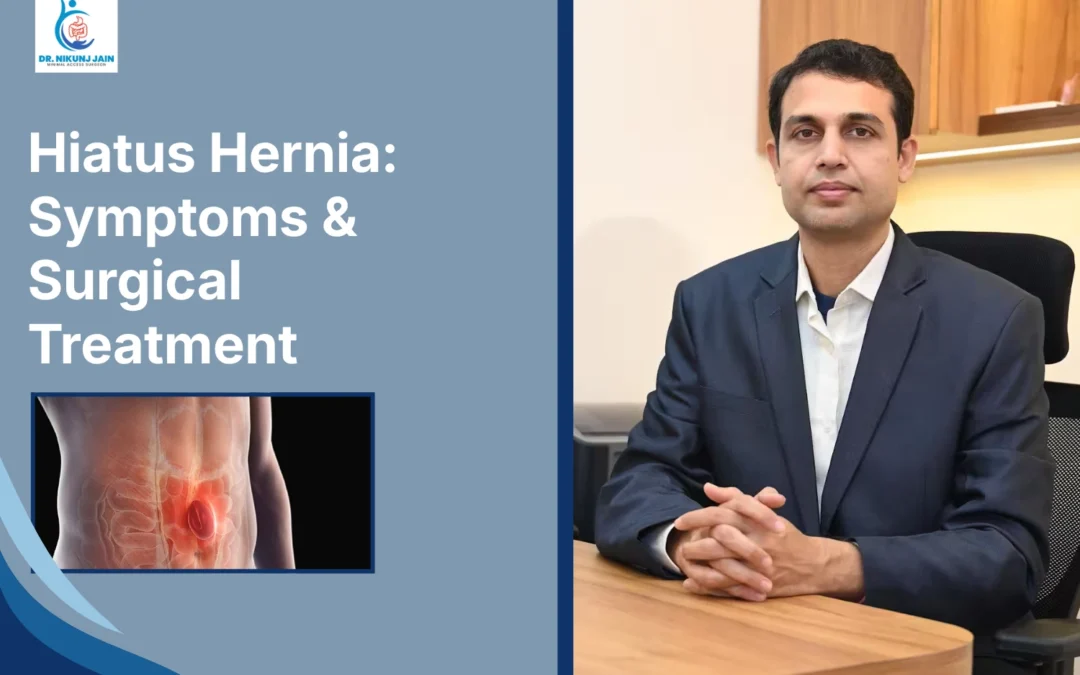
A hiatus hernia is a condition that affects the digestive system. It happens when the upper part of the stomach pushes up into the chest area through the diaphragm. Some people do not even notice it at first but for others it can cause acidity or heartburn. Dr. Nikunj Jain, best hernia doctor in Indore, says that when people get heartburn or reflux symptoms over and over they need to get checked.
Table of Contents
What Is A Hiatus Hernia?
The diaphragm is a muscle that separates the chest from the stomach. It has a hole that lets the food pipe pass through. In a hiatus hernia part of the stomach slips through this hole. This can cause problems with the barrier between the stomach and the food pipe letting acid move up.
There are two main types of hiatus hernia:
- Sliding hiatus hernia: This is the more common type. It can cause acid reflux symptoms because part of the stomach slides up through the diaphragm.
- Paraesophageal hernia: This type is less common but can be more serious. Part of the stomach remains pushed up into the chest, which may lead to complications.
Small hiatus hernias often do not cause any symptoms. However, larger hernias may require medical evaluation and treatment.
Common Symptoms Of Hiatus Hernia
The symptoms of a hiatus hernia can feel like acidity or heartburn. This is why people often take antacids without knowing what is really wrong.
Common symptoms include:
- Heartburn after eating or when lying down
- A sour or bitter taste in the mouth
- Bloating a lot
- Chest burning or discomfort
- Food or liquid coming back up
- Trouble swallowing
- Feeling like food is stuck
- Feeling sick after eating
- A chronic & Sore throat
- Bad breath from reflux
Some people feel worse after eating spicy food, big meals, tea, coffee, fried food or dinner late at night. Symptoms can also get worse when bending, sleeping flat or lying down after eating.
When Should You Not Ignore The Symptoms?
It is normal to get heartburn because of what we eat. If it keeps happening we should not ignore it. If symptoms are affecting sleep, appetite or daily life it is an idea to see a specialist. If someone has trouble swallowing vomited blood, has stools, loses weight without trying, has severe chest pain or vomits a lot they need to see a doctor right away.
If acid reflux happens for a long time it can irritate the food pipe and cause problems. This is why we need to find out what is wrong with just taking medicine to feel better for a little while.
How Is Hiatus Hernia Diagnosed?
To diagnose a hiatus hernia the doctor will first talk to the patient about their symptoms, eating habits, medical history and when the reflux happens. The doctor may order tests like a GI endoscopy, barium swallow test, pH study or manometry. These tests help the doctor understand how big the hernia is, how bad the acid reflux is and how well the food pipe is working.
A proper diagnosis helps the doctor decide if the patient needs medicine, lifestyle changes or surgery.
Lifestyle Changes And Medical Treatment
- Not everyone with a hiatus hernia needs surgery.
- In some cases, symptoms can be managed with lifestyle changes and medicine.
- Eating meals on time, avoiding late-night meals, limiting spicy and oily foods, maintaining a healthy weight, and sleeping with your head elevated can help reduce acid reflux symptoms.
Medicine can help control acid production and heal the food pipe.Medicine does not fix the hernia. If symptoms come back or if the hernia is big the doctor may talk about surgery.
When Is Surgery Needed?
Surgery may be needed if acid reflux is severe, medications are not providing enough relief, swallowing becomes difficult, the hernia is large, or there is a risk of complications. It may also be considered for patients who prefer not to take long-term medication, after a thorough evaluation by the doctor.
Hiatus hernia surgery is usually performed using a laparoscopic method. During the procedure, the stomach is moved back into its normal position, the opening in the diaphragm is repaired, and steps are taken to reduce acid reflux into the food pipe. Laparoscopic surgery is performed through small, minimally invasive incisions rather than deep cuts, which can help reduce pain, support faster recovery, and shorten the hospital stay.
Recovery After Hiatus Hernia Surgery
Recovery depends on the patient’s age, the size of the hernia, overall health, and the type of surgery performed. After surgery, patients are usually advised to start with liquids and soft foods for a short period. Eating slowly, chewing food properly, taking small meals, and avoiding heavy, spicy, or oily foods can help support a smoother recovery.
Some temporary bloating, trouble swallowing or discomfort may happen at first. It usually gets better with time and the right guidance. Regular check-ups help ensure healing and better long-term results.
Conclusion
A hiatus hernia may seem like heartburn but repeated symptoms should not be ignored. If heartburn reflux, chest burning, trouble swallowing or bloating keeps happening a proper diagnosis can help find the cause. With the treatment plan many patients can get relief and improve their quality of life. For evaluation and suitable surgical guidance Dr. Nikunj Jain, best hernia doctor in Indore, can help patients understand the best treatment option, for hiatus hernia and acid reflux.
FAQ’s
Q1. What is a hiatus hernia?
A hiatus hernia happens when the upper part of the stomach pushes upward through the diaphragm into the chest area. It can cause acidity, heartburn and reflux symptoms.
Q2. What are the common symptoms of hiatus hernia?
Common symptoms include heartburn, chest burning, sour taste in the mouth, burping, bloating, regurgitation, throat irritation and difficulty swallowing.
Q3. Is hiatus hernia the same as acidity?
No. Acidity can happen for many reasons, but hiatus hernia may cause repeated acid reflux because the stomach position affects the natural acid barrier.
Q4. Can hiatus hernia go away on its own?
A hiatus hernia usually does not go away on its own. Small hernias may be managed with medicines and lifestyle changes, but larger or severe cases may need surgery.
Q5. When should I see a doctor for hiatus hernia symptoms?
You should consult a doctor if acidity, heartburn, chest burning, food regurgitation or swallowing difficulty keeps coming back despite medicines or lifestyle changes.
Q6. Can a hiatus hernia cause chest pain?
Yes. A hiatus hernia can sometimes cause chest discomfort or a burning sensation, especially after meals or while lying down. However, chest pain can have other causes too, so it is important to get it properly evaluated by a doctor.
Q7. Is surgery always needed for hiatus hernia?
No. Surgery is not needed for every patient. It is usually considered when symptoms are severe, medicines do not give lasting relief, or the hernia is large.
Q8. What is laparoscopic hiatus hernia surgery?
Laparoscopic surgery is a minimally invasive procedure where small cuts are used to bring the stomach back to its correct position and repair the hernia opening.
Q9. How long does recovery take after hiatus hernia surgery?
Recovery varies from person to person. Many patients recover faster with laparoscopic surgery, but diet changes, rest and follow-up care are important after surgery.
Q10. Where can I consult for hiatus hernia treatment in Indore?
For proper diagnosis and treatment planning, you can consult Dr. Nikunj Jain for hiatus hernia treatment in Indore.