
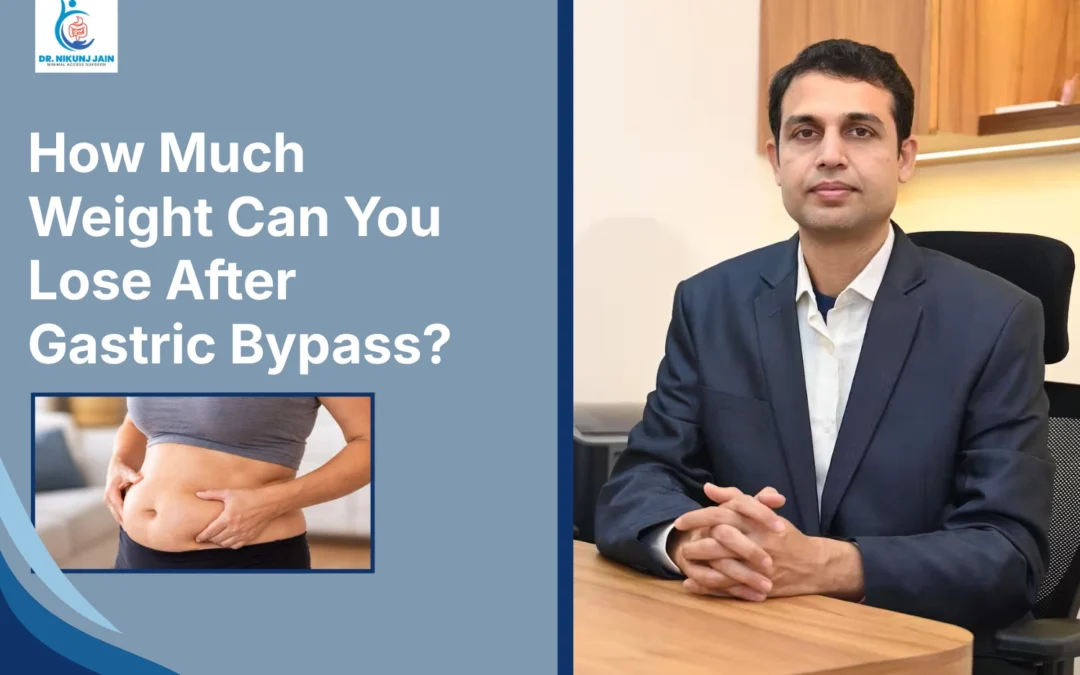
Gastric bypass is one of the best surgeries for people who have a lot of weight to lose and health problems because of it. Many patients who meet Dr. Nikunj Jain for a consultation ask one question first: “How much weight can I actually lose after gastric bypass?” The answer depends on how much you weigh your BMI, how you live, what you eat, how active you are and if you follow doctors advice.
Table of Contents
What is a Gastric Bypass?
Gastric bypass is not a fix or a cosmetic procedure. It is a surgery that changes how your stomach and small intestine handle food. During the procedure a small stomach pouch is connected to a part of the small intestine. This helps you feel full with meals and also changes hunger and fullness signals in the body.
Most patients lose a lot of their weight within the first 12 to 24 months after gastric bypass. According to the American Society for Metabolic and Bariatric Surgery patients may lose up to 60% of weight by six months and around 77% of extra weight as early as 12 months after surgery. Mayo Clinic also notes that gastric bypass can help patients lose about 70% or more of weight within two years depending on lifestyle and individual factors.
For example if a person has 50 kg of weight, losing 60% of extra weight means losing around 30 kg. This number can vary from person to person.
What Happens in the First Months?
- Weight loss is usually faster in the first few months after surgery because food intake is limited and the body starts using stored fat for energy.
- The diet is slowly planned in stages, starting with liquids, then soft foods and gradually moving to balanced meals.
- Many patients notice changes within 3 to 6 months, such as loose clothes, better energy, easier movement and reduced body heaviness.
- During this phase, protein intake, hydration, vitamin supplements and regular follow-ups are very important.
- By one year, many patients achieve good weight loss and health problems like diabetes, high BP, sleep apnea, joint pain and fatty liver may improve.
- Gastric bypass gives a good start, but long-term success depends on mindful eating, physical activity and avoiding high-calorie foods, sugary drinks and frequent snacking.
Can Weight Come Back After Gastric Bypass?
Some weight gain can happen after a year especially if lifestyle habits are not maintained. Studies show that long-term weight loss can remain strong after bypass but some patients may regain part of the weight they lost over time.
Research has shown that many patients still maintain weight loss even 10 years after Roux-en-Y gastric bypass. This is why follow-up care is so important. Weight regain does not always mean surgery has failed.
It may happen because of increased calorie intake, reduced activity, emotional eating, lack of protein, poor sleep or missed follow-ups.
Your final weight loss depends on things. These include:
- Your starting BMI
- Age
- Medical conditions
- Eating pattern
- Physical activity
- Hormonal health
- How well you follow the surgery plan
Important habits after gastric bypass include:
- Protein-rich meals
- Controlled portions
- Avoiding sugary foods
- staying active
Vitamin and mineral supplements are also necessary because the body may absorb some nutrients differently after surgery.
Is Gastric Bypass Right for Everyone?
- Gastric bypass may be recommended for people struggling with obesity, especially when it is linked with diabetes, high blood pressure, sleep apnea, fatty liver or joint problems.
- However, this surgery is not suitable for every patient.
- A proper medical evaluation is needed before deciding on gastric bypass surgery.
- The surgeon checks factors like BMI, health history, current medicines, eating habits, past weight loss attempts and readiness for lifestyle changes.
- The main goal is not just weight loss, but safe improvement in overall health.
- Many patients may lose around 60% to 70% or more of their excess weight within 1 to 2 years, but results differ from person to person.
- The best results come when surgery is combined with healthy eating, regular activity, proper supplements and long-term medical follow-up.
Conclusion
Dr. Nikunj Jain, best gastro surgeon in Indore, explains that gastric bypass surgery can be a life-changing treatment option for people struggling with severe obesity and obesity-related health problems. It may help patients achieve meaningful weight loss and can also support better control of conditions like type 2 diabetes, high blood pressure, sleep apnea, fatty liver and joint pain.
However, gastric bypass is not just a surgery; it is the beginning of a long-term health journey. The best results are seen when patients follow a proper diet plan, stay physically active, take recommended supplements and continue regular medical follow-ups. With expert guidance, disciplined lifestyle changes and the right post-surgery care, gastric bypass surgery in Indore can help patients move toward better health, improved confidence and a better quality of life.
FAQ’s
Q1. How much weight can you lose after gastric bypass?
Many patients may lose around 60% to 70% or more of their excess weight within 1 to 2 years after gastric bypass. However, the result depends on BMI, diet, activity level, health condition and follow-up care.
Q2. Is gastric bypass surgery only for weight loss?
No. Gastric bypass is not just for weight loss. It may also help improve obesity-related health problems such as type 2 diabetes, high blood pressure, sleep apnea, fatty liver and joint pain.
Q3. Who can consider gastric bypass surgery in Indore?
People with severe obesity, high BMI or weight-related health problems may consider gastric bypass surgery in Indore after proper evaluation by a qualified bariatric or gastro surgeon.
Q4. How soon does weight loss start after gastric bypass?
Weight loss usually starts soon after surgery. In the first few months, weight loss may be faster because food intake is reduced and the body begins using stored fat for energy.
Q5. What happens in the first 3 to 6 months after gastric bypass?
During the first 3 to 6 months, patients may notice loose clothes, better energy, easier movement and gradual improvement in daily activity. Diet, hydration, protein intake and supplements are very important during this phase.
Q6. Can weight come back after gastric bypass surgery?
Yes, some weight regain can happen if healthy habits are not maintained. Frequent snacking, sugary drinks, high-calorie foods, low activity and missed follow-ups may affect long-term results.
Q7. Is gastric bypass right for everyone?
No. Gastric bypass is not suitable for every patient. A surgeon checks BMI, medical history, current medicines, eating habits, previous weight loss attempts and readiness for lifestyle changes before advising surgery.
Q8. Why are supplements needed after gastric bypass?
After gastric bypass, the body may absorb some nutrients differently. Vitamin and mineral supplements help prevent deficiencies and support safe recovery and long-term health.
Q9. Why choose Dr. Nikunj Jain for gastric bypass consultation in Indore?
Dr. Nikunj Jain, best gastro surgeon in Indore, guides patients with proper evaluation, treatment planning and follow-up care for obesity and weight-related health problems.
Q10. What gives the best results after gastric bypass surgery?
The best results come from a combination of surgery, healthy eating, regular physical activity, protein-rich meals, proper supplements, discipline and long-term medical follow-up.