
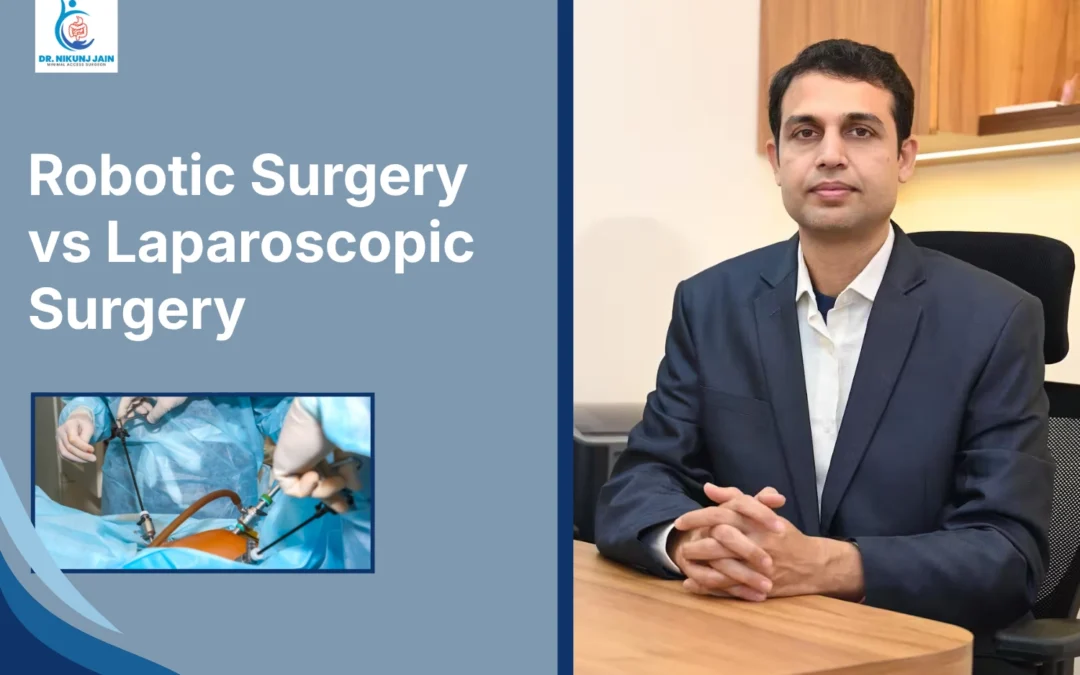
Robotic surgery vs laparoscopic surgery are two techniques that have changed how many stomach and digestive problems are treated today. Both methods are less invasive than open surgery. They are commonly used for procedures related to hernia, gallbladder, appendix, colorectal conditions and other digestive health concerns.
According to Dr. Nikunj Jain, gastroenterologist surgeon in Indore, understanding the difference between these two techniques helps patients feel more confident before choosing the treatment option.
Earlier surgeries required cuts, longer hospital stays and more recovery time. With modern methods, the focus has shifted towards smaller cuts, better precision, less pain and faster healing.This is where laparoscopic and robotic surgery play an important role.
Table of Contents
What is Laparoscopic Surgery?
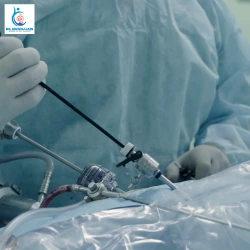
Laparoscopic surgery is also known as minimally invasive surgery. In this technique, the surgeon makes small cuts in the body instead of one large incision. A thin camera called a laparoscope is inserted through one of the cuts.
This camera shows the view of the body on a screen. The surgeon then uses instruments to perform the surgery with care. Laparoscopic surgery is widely used because it is safe, effective and suitable for many conditions.
It is often used for gallbladder stone surgery, appendix surgery, hernia repair and many other abdominal procedures. One of the benefits of laparoscopic surgery is faster recovery.Since the cuts are small, patients usually experience less pain, less bleeding and a shorter hospital stay. Many people can return to their routine sooner compared to open surgery.
What is Robotic Surgery?
Robotic surgery is also a minimally invasive technique, but it uses a robotic system to assist the surgeon. The surgeon controls robotic arms from a console.
These robotic arms hold instruments and move with high accuracy. The system also provides a magnified view of the surgical area. It is essential to understand that the robot does not perform the surgery on its own.
The surgeon remains fully in control throughout the procedure. The robotic system simply helps the surgeon perform movements with stability and precision. Robotic surgery can be helpful in cases where fine movements are required. It may be used in colorectal, urological and abdominal surgeries depending on the patient’s condition.
Robotic Surgery and Laparoscopic Surgery: Main Difference
| Point | Laparoscopic Surgery | Robotic Surgery |
| Cuts / Incisions | Done through small cuts | Done through small cuts |
| How Surgeon Operates | Surgeon directly holds and moves the instruments | Surgeon controls robotic arms through a computer-assisted system |
| Movement Control | Manually controlled by the surgeon | Controlled through robotic technology |
| Precision | Provides good precision for many routine surgeries | May offer extra precision in selected cases |
| Visualization | Uses a camera for internal view | May provide better visualization in some cases |
| Technology | Older and well-established technique | Newer and advanced technology |
| Common Use | Trusted for several routine procedures | Useful in selected complex cases |
| Is It Always Better? | Not always; depends on the case | Not always better for every patient |
| Best Choice Depends On | Type of surgery, condition, patient health, technology and surgeon’s experience | Type of surgery, condition, patient health, technology and surgeon’s experience |
Benefits of Laparoscopic Surgery
- Laparoscopic surgery is a patient-friendly surgical option.
- It usually causes less pain compared to open surgery.
- Smaller cuts are made during the procedure.
- There is generally less blood loss.
- It lowers the chance of large visible scars.
- Most patients recover faster after surgery.
- Patients can usually return to work and daily life earlier.
- Laparoscopic surgery is widely available.
- It is often more cost-effective than robotic surgery.
- For gastrointestinal and abdominal problems, laparoscopic surgery can give excellent results when performed by an experienced gastro surgeon in Indore like Dr. Nikunj.
Benefits of Robotic Surgery
- Robotic surgery offers better precision during the procedure.
- It gives the surgeon improved control while operating.
- It provides a better 3D view of the surgical area.
- Robotic arms can move in ways that may be difficult with laparoscopic instruments.
- It can be useful in surgeries involving narrow spaces.
- It may help in delicate tissue handling.
- Patients may benefit from smaller cuts.
- It can cause less pain compared to traditional open surgery.
- It may reduce blood loss during surgery.
- Recovery may be faster in selected cases.
- However, robotic surgery can be more costly.
- It may not be required for every condition.
Which Surgery is Better?
There is no answer that fits every patient. Laparoscopic surgery is a good option for routine surgeries. Robotic surgery may be helpful in selected cases where extra precision is required.
The right decision should always be made after diagnosis and consultation. A surgeon checks the patient’s history, symptoms, test reports, condition severity and overall health before suggesting the suitable surgical method.
Patients should not choose a surgery only because it sounds modern. The safest and most effective method is the one that is right for their condition.
Recovery After Robotic and Laparoscopic Surgery
Recovery is usually faster in both laparoscopic surgery and robotic surgery compared to open surgery. Patients may feel pain, swelling or discomfort around the incision area for a few days.
Doctors usually advise rest, light movement, a healthy diet and avoiding heavy lifting for some time. Follow-up visits are crucial to check healing and prevent complications.Patients should contact their doctor if they notice fever, severe pain, vomiting, bleeding or unusual swelling after surgery.
Conclusion
Robotic and laparoscopic surgery both offer minimally invasive treatment options with smaller cuts, faster recovery and better comfort for patients.
Laparoscopic surgery remains a choice for many common surgeries, while robotic surgery can be useful in selected complex cases. Dr. Nikunj Jain, best laparoscopic surgeon in Indore, helps patients in Indore understand their condition clearly and choose the surgical approach based on safety, need and long-term results.
FAQ’s
Q1. What is the difference between robotic surgery and laparoscopic surgery?
Robotic surgery uses a computer-assisted robotic system controlled by the surgeon, while laparoscopic surgery is performed manually using small instruments and a camera. Both are minimally invasive and help patients recover faster.
Q2. Is robotic surgery better than laparoscopic surgery?
Robotic surgery may offer better precision in selected complex cases, but laparoscopic surgery is also highly effective for many common surgeries.
Q3. Is laparoscopic surgery safe?
Yes, laparoscopic surgery is considered safe when performed by an experienced surgeon. It involves small cuts, less pain, faster recovery and shorter hospital stay compared to open surgery.
Q4. Who is the best doctor for laparoscopic surgery in Indore?
Patients looking for minimally invasive surgery can consult Dr. Nikunj Jain in Indore for evaluation and guidance related to laparoscopic and gastrointestinal surgical treatments.
Q5. Does robotic surgery mean the robot performs the operation?
No, the robot does not perform the surgery on its own. The surgeon controls the robotic arms throughout the procedure, while the robotic system helps with precision and clear visibility.
Q6. Which surgeries can be done laparoscopically?
Laparoscopic surgery is commonly used for gallbladder stone surgery, appendix surgery, hernia repair and many abdominal or gastrointestinal procedures.
Q7. Is recovery faster after robotic or laparoscopic surgery?
Both robotic and laparoscopic surgeries usually offer faster recovery than open surgery. Recovery depends on the type of surgery, patient’s health and post-surgery care.
Q8. Is robotic surgery available in Indore?
Robotic surgery options may be available for selected procedures in Indore, depending on the condition and facility. A consultation with Dr. Nikunj Jain can help patients understand whether robotic or laparoscopic surgery is suitable.
Q9. Is laparoscopic surgery painful?
Laparoscopic surgery usually causes less pain than open surgery because only small cuts are made. Mild pain or discomfort may happen for a few days and is usually manageable with medicines.
Q10. When should I consult Dr. Nikunj Jain in Indore for laparoscopic surgery?
You should consult Dr. Nikunj in Indore if you have symptoms related to hernia, gallbladder stones, appendix pain, abdominal swelling, digestive issues or any condition that may need surgical care.