
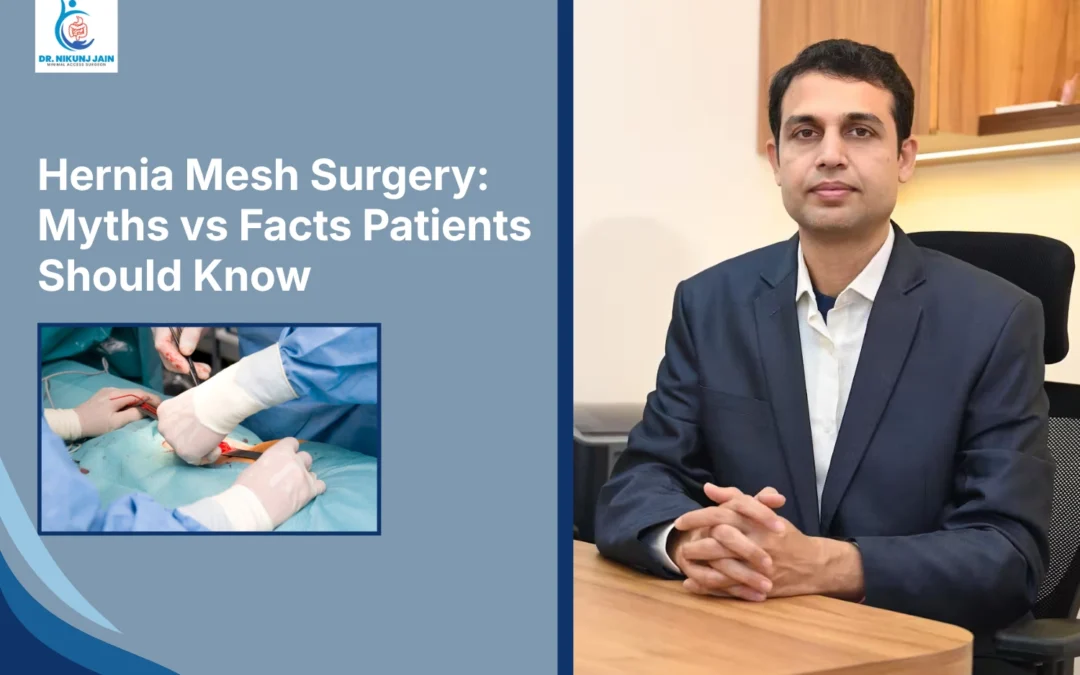
Hernia surgery is one of the most common surgeries performed today. The hernia itself is formed as a result of the protrusion of organs or tissues through the weakened area of the muscle or abdominal wall. This weakness may need to be surgically strengthened if the hernia is large or of a certain type.
Most often, a hernia is reinforced with a special mesh, which is widely used in hernia surgery, although there are many different theories and opinions about it. So, in most cases, hernia repair surgery involves hernia mesh. However, hernia mesh is not recommended for all patients, since each case is considered individually, depending on the characteristics of the hernia and the patient’s body. Dr. Nikunj Jain, hernia surgeon in Indore, will help you understand hernia mesh and choose the right hernia treatment.
Table of Contents
Myth 1: Hernia Mesh is Inherently Unsafe
Fact: Hernia mesh is not necessarily unsafe, surgical mesh has been used for many years to help repair hernias. When used on the right patient, hernia mesh can give strength and support to the repaired tissue, thus reducing the risk of hernia recurrence.
However, this does not mean that hernia mesh is entirely safe, like any foreign protein, mesh can cause adverse reactions such as infection, pain, adhesion, recurrence of hernia, or the need for additional surgery. Therefore, it is very important to consult your doctor and surgeon and choose the right hernia treatment individually for your body.
Myth 2: All Hernias Require Mesh Repair
Fact: Not all hernias require mesh repair. Although hernia mesh is often used to treat hernias, in some cases, hernias can be repaired without the use of mesh. The decision to use hernia mesh is made by the doctor during the examination, taking into account many factors, such as the size and location of the hernia, the patient’s health, and the likelihood of infection and recurrence.
Mesh is commonly used in many hernia repairs, but it may not be suitable for every patient. The decision depends on the type of hernia, its size, location, and the patient’s overall condition. Your surgeon will decide whether mesh is the right option for your case.
Myth 3: Mesh Prevents Hernia from Recurring
Fact: Hernia mesh significantly reduces the risk of hernia recurrence, but it cannot completely eliminate this risk. The reason for hernia recurrence can be the characteristics of the hernia itself, injury during surgery, obesity, tissue weakness, or other reasons.
In addition, proper post-operative rehabilitation is also important to prevent hernia recurrence. Therefore, it is important to follow the recommendations of Dr. Nikunj Jain or another hernia surgeon after surgery.
Myth 4: All Hernia Meshes Are the Same
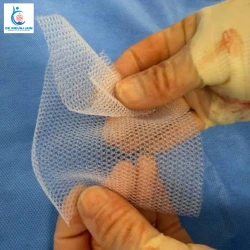
Fact: There are many types of surgical meshes used in hernia surgery. All meshes differ in characteristics and technologies for strengthening tissue repair, as well as the degree of absorption. Mesh that is not absorbed is used when long-term support is needed for tissue healing.
The choice of mesh also depends on the type of hernia, the method of hernia repair (laparoscopic or open), and surgeon’s preferences.
Myth 5: Mesh Can Only Be Used in Open Surgery
Fact: Mesh can be used both in open and laparoscopic hernia repair. In addition, both methods can be used regardless of the type of mesh. So, in laparoscopic hernia repair, the surgeon makes a few incisions through which special tools are inserted to strengthen the hernia and place the mesh.
Myth 6: The Body Always Rejected the Mesh
Fact: Unfortunately, there are many complications associated with hernia mesh, which can be classified as early, late, or very late. In addition, each hernia repair with mesh has the potential for infection and related reactions, ranging from mild irritation to severe infection.
However, this does not mean that every person who has had hernia mesh surgery will experience rejection. There are many cases when patients have successfully tolerated hernia mesh repair without complications. However, if you have suspicions or feelings of discomfort after hernia mesh surgery, you should contact your doctor.
Myth 7: Recovery After Mesh Surgery Takes a Very Long Time
Fact: There are many different factors that affect postoperative recovery after hernia mesh surgery. So, the time of recovery after hernia surgery depends on the type of hernia, the type of hernia repair (open or laparoscopic), the size of the hernia, and the patient’s health.
Therefore, it is important to take things easy at first, while the body is recovering. In addition, it is necessary to follow the recommendations of Dr. Nikunj Jain, best hernia doctor in Indore, who will monitor your health after hernia surgery.
When to Contact a Doctor?
It is time to contact your doctor if you feel that your hernia is getting bigger, or if you have severe pain or discomfort. These symptoms may indicate that the hernia is becoming strangulated or incarcerated, which requires immediate surgical intervention. In addition, you should contact a doctor if you feel any discomfort or suspect that something is wrong.
Consultation with the surgeon is also necessary if you have any doubts or concerns about hernia surgery with mesh. You should ask your doctor what type of mesh he plans to use, what other options are available, what risks and benefits you may have with this particular surgery, and what to do if any complications arise. The FDA also asks to ask these questions if you are considering hernia mesh surgery.
Conclusion
When considering hernia mesh surgery, it is important to understand that hernia mesh is not a universal method for hernia repair. Although it may be a great option for many hernia patients, hernia mesh is not right for every hernia and every patient. The decision to use hernia mesh and choose the method of hernia repair depends on many factors and is made individually for each patient. Dr. Nikunj Jain, best laparoscopic GI surgeon in Indore, will help determine which hernia treatment is more appropriate for your case, surgery with mesh, open hernia repair or other methods.
FAQs
Q1. Is hernia mesh surgery safe?
Hernia mesh surgery can be a suitable option for many patients when appropriately selected and performed. However, like every surgical procedure, it carries possible risks such as pain, infection, recurrence, and mesh-related complications.
Q2. Who should you consult for hernia mesh surgery in Indore?
You can consult Dr. Nikunj Jain in Indore for evaluation of your hernia and to understand whether mesh-based, laparoscopic, open, or another repair technique may be suitable.
Q3. Does every hernia require mesh surgery?
No. Some hernias can be repaired using stitches alone. The decision depends on the type, size, location, and complexity of the hernia as well as individual patient factors.
Q4. Can a hernia return after mesh surgery?
Yes. Mesh may reduce the risk of recurrence, but no hernia repair method can guarantee that the hernia will never return.
Q5. What types of mesh are used for hernia repair?
Hernia meshes may be absorbable or non-absorbable. The appropriate choice depends on the location and type of repair as well as the patient’s condition.
Q6. Can mesh be used in laparoscopic hernia surgery in Indore?
Yes. Mesh can be placed during laparoscopic hernia repair through small incisions using specialised instruments.
Q7. What are the possible complications of hernia mesh?
Reported problems can include pain, infection, adhesions, inflammation, recurrence, and, in some cases, the need for an additional surgical procedure.
Q8. How long does recovery take after hernia mesh surgery?
Recovery varies depending on the type of hernia, surgical technique, and the patient’s overall health. Many patients can gradually return to routine activities within a few weeks, following their surgeon’s advice.
Q9. Is open surgery the only way to perform mesh hernia repair?
No. Mesh may be used in both open and laparoscopic hernia repair depending on the individual situation.
Q10. When should I consult a hernia surgeon in Indore?
Consult a hernia surgeon if you notice a persistent lump or swelling, pain or discomfort during activity, or an existing hernia that is increasing in size. Sudden severe pain, vomiting, or a lump that cannot be pushed back requires urgent medical evaluation.