
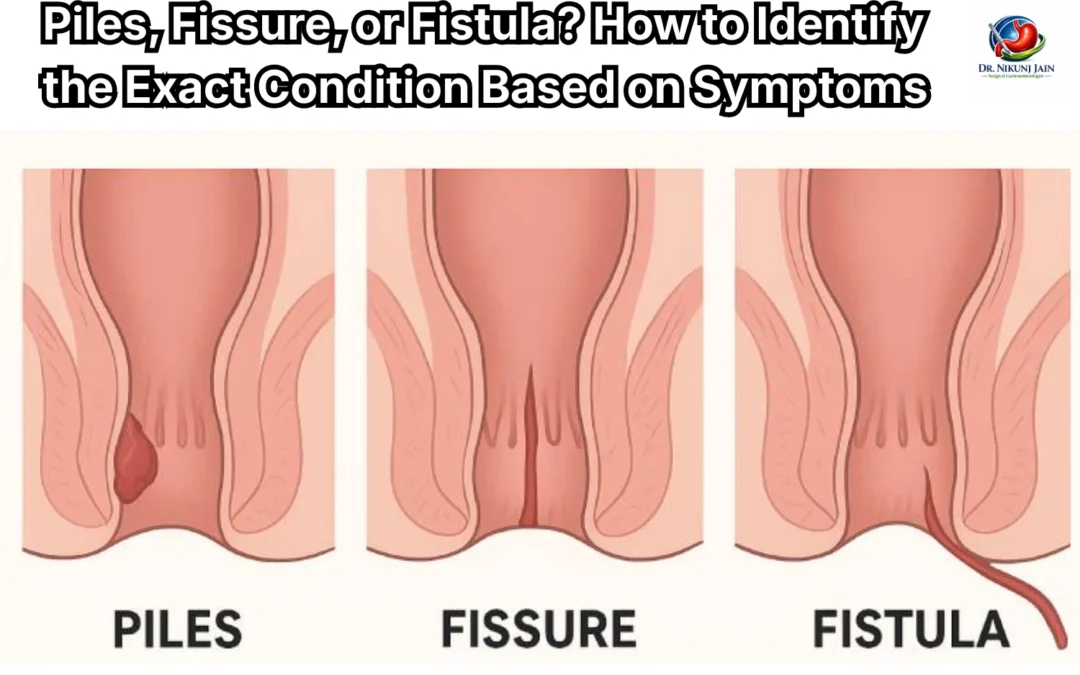
dr Problems like piles, fissures, and fistula are common but often misunderstood. Because all three conditions affect the anal region, many patients get confused about their symptoms and delay treatment. However, each condition is different and requires a specific approach. Understanding the symptoms can help you seek the right medical care at the right time and avoid complications. This blog by Dr. Nikunj Jain, best fistula doctor in Indore, explains all of these and how to identify them.
Table of Contents
What Are Piles?
Piles, also known as hemorrhoids, are swollen blood vessels in or around the anus and rectum. They usually develop due to chronic constipation, straining during bowel movements, prolonged sitting, obesity, or pregnancy. Piles can be internal or external, depending on their location.
Common symptoms of piles include:
- Painless bleeding during or after passing stools
- Itching or irritation around the anus
- Swelling or a lump near the anal opening
- Discomfort or pain, especially while sitting
If piles are ignored, they may increase in size and severity. Timely piles treatment in Indore helps relieve symptoms, reduce bleeding, and prevent the condition from worsening.
What Is an Anal Fissure?
An anal fissure is a small tear or cut in the lining of the anal canal. It is most commonly caused by passing hard stools, chronic constipation, or repeated diarrhea. Fissures can be extremely painful and may significantly affect daily life.
Typical symptoms of an anal fissure include:
- Sharp, burning pain during bowel movements
- Pain that continues for hours after passing stools
- Bright red blood on toilet paper
- Spasm or tightness around the anus
Unlike piles, fissure pain is usually intense. Early fissure treatment in Indore focuses on healing the tear, reducing pain, and preventing recurrence through medical or minimally invasive options.
What Is an Anal Fistula?
An anal fistula is an abnormal tunnel that forms between the anal canal and the skin around the anus. It usually develops as a result of an untreated anal abscess or infection. Fistulas do not heal on their own and almost always require surgical intervention.
Common symptoms of anal fistula include:
- Recurrent pain or swelling near the anus
- Pus or foul-smelling discharge
- Skin irritation around the anal area
- Fever or fatigue in some cases
Because fistulas are deeper infections, delaying fistula treatment in Indore can lead to repeated infections and discomfort.
How to Differentiate Between Piles, Fissures, and Fistula
Although these conditions affect the same area, their symptoms are distinct:
- Piles usually cause painless bleeding and lumps
- Fissures cause severe pain with bowel movements
- Fistulas lead to continuous discharge and recurring infections
If you experience persistent symptoms, self-diagnosis is not recommended. A clinical examination is essential for accurate identification.
Why Early Diagnosis Matters
Delaying treatment can turn a simple condition into a complicated one. Untreated piles may prolapse, fissures may become chronic, and fistulas may branch into complex tracts. Early diagnosis allows doctors to use simpler, less invasive treatment methods with faster recovery.
Treatment Options Available Today
Modern proctology offers safe and effective solutions for all three conditions. Depending on severity, treatment may include lifestyle changes, medications, laser procedures, or surgery. Advanced techniques focus on minimal pain, quick recovery, and long-term relief.
Choosing the Right Specialist
Consulting an experienced doctor ensures accurate diagnosis and proper treatment planning. Dr. Nikunj Jain, best piles doctor in Indore, is widely trusted for managing anorectal conditions using modern, patient-friendly techniques. His approach focuses on comfort, safety, and complete recovery. Patients seeking expert piles treatment in Indore, fissure treatment in Indore, or fistula treatment in Indore benefit from timely care and advanced medical solutions.
Conclusion
Piles, fissure, and fistula may seem similar, but their symptoms and treatments are very different. Recognizing the signs early and seeking professional medical advice is the key to faster healing and long-term relief. If you are experiencing rectal pain, bleeding, or discharge, do not ignore it. Early consultation can help identify the exact condition and guide you toward the right treatment for a healthier, more comfortable life.